
Every clinical reference, organized for the OR.
Helix Anesthesia gives you fast access to the reference you need, when you need it — without the noise.
A quick look at the app, from the CRNA who built it.
Multi-turn chat tuned for anesthesia.
Ask about drug interactions, complex case management, regional anesthesia options, ventilator settings, blood gas interpretation, postop pain regimens. Multi-turn context means follow-up questions reference prior turns automatically.
It searches Helix's own content first. Every drug entry, block, surgical case, crisis checklist, glossary term and clinical answer page is indexed. Answers cite the passage they came from, naming its source where the passage carries one, and citations open the screen they quote. You can check the claim rather than trust it.
And it admits what it does not know. A statement that did not come from that library is labeled general clinical knowledge instead of being delivered with the same confidence — a verdict computed on the server, not by the app. Most assistants sound equally certain either way. This one draws the line for you.
A PHI detector runs on your phone before anything is sent, catching names in clinical context, MRNs, and dates of birth so you can rewrite the question first. The threaded conversation stays on your device. Questions and answers are recorded on our servers so clinical content can be reviewed for accuracy — see the privacy policy for what is kept and for how long.
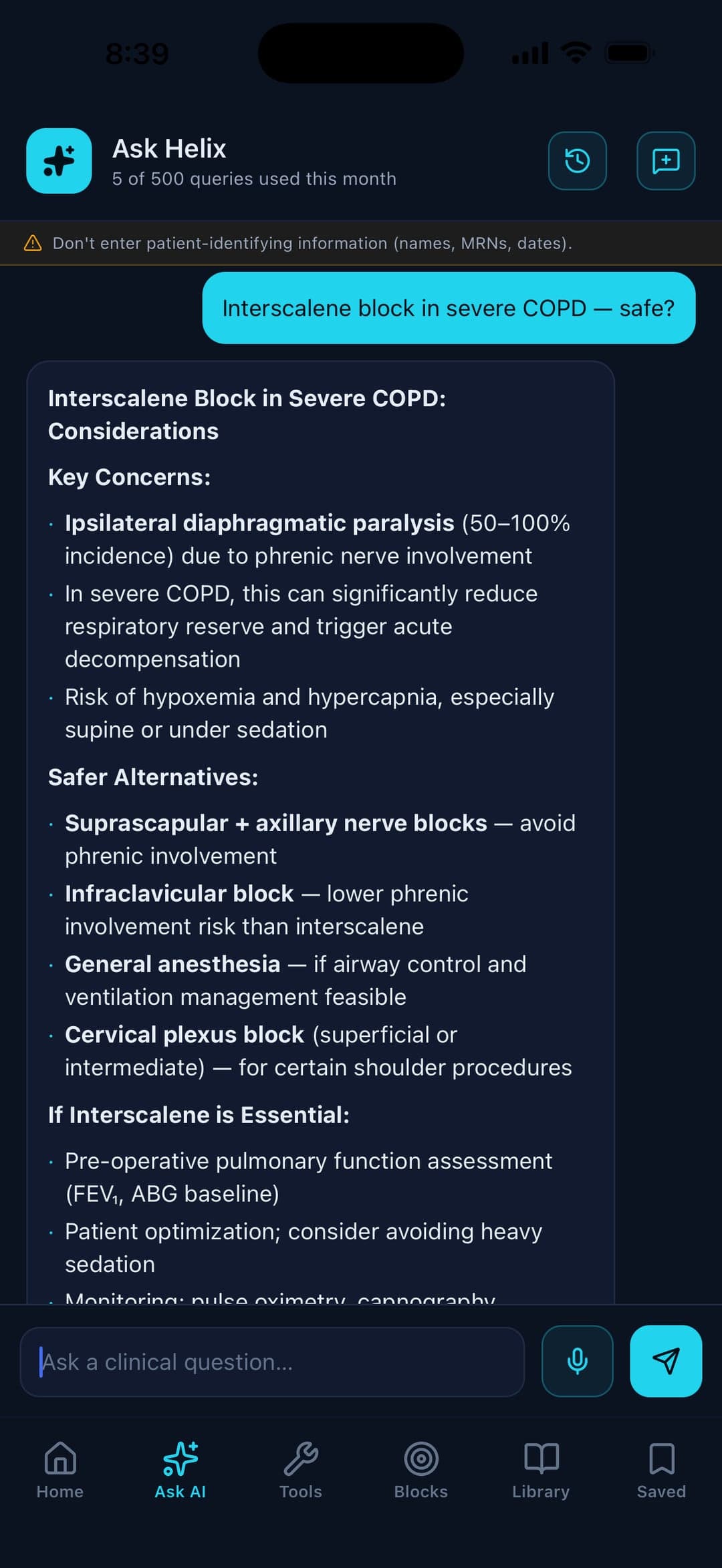
72 drugs, and the number worked out for the patient in front of you.
Enter weight and age once and every dose on the screen recalculates. Each drug carries onset, duration, the range used, and the practical note that actually changes what you do — histamine release, an active metabolite in renal failure, a minimum dose that catches people out. Fifty-two of the sixty-eight compute a dose; the rest are reference entries where a weight-based number would be misleading.
A second tab covers 25 continuous infusions across sedation, analgesia, neuromuscular blockade, vasopressors, inotropes, cardiac, obstetric, hemostasis, diuretic and metabolic — with rate, concentration and on-the-fly unit conversion, so mcg/kg/min and mL/h stop being a mental arithmetic problem.
Every entry shows its source on the same screen as the number — the prescribing information, the society guideline, or the named textbook and edition. Not an appendix, not a bibliography: the citation sits under the dose you are reading.
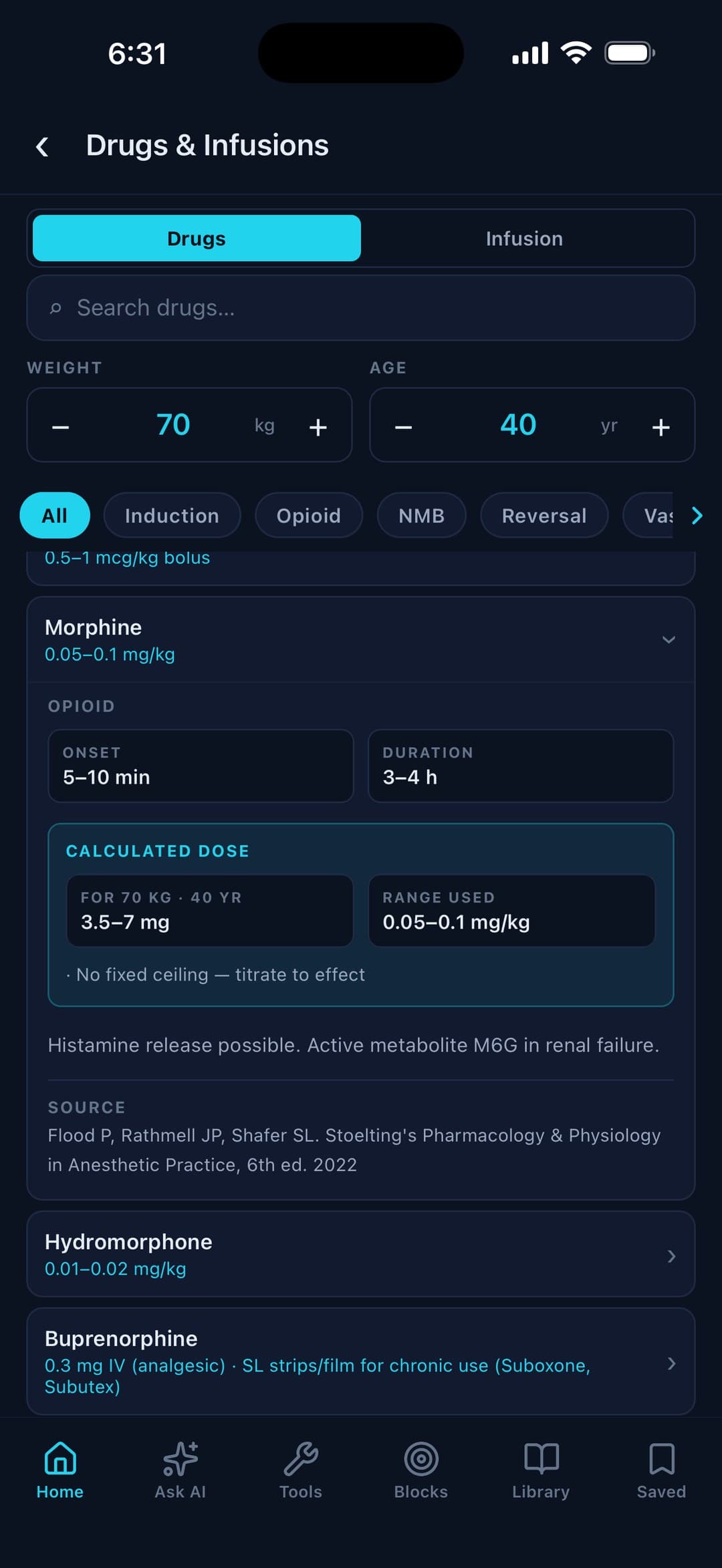
Dose, reverse, mix — by weight, age, and procedure.
Sugammadex reversal at TOF / PTC. Pediatric dosing across induction, emergency, antiemetics, MH protocol. Local anesthetic toxicity calculator with max doses and mixing volumes. Continuous infusion rates with on-the-fly unit conversion.
Adult calculators include IBW, ABW, MABL, BMI. Maintenance fluid (4-2-1 / Holliday-Segar) and NPO deficit calculator. Spinal anesthesia dose by procedure type and patient height — bupivacaine, ropivacaine, mepivacaine, chloroprocaine.
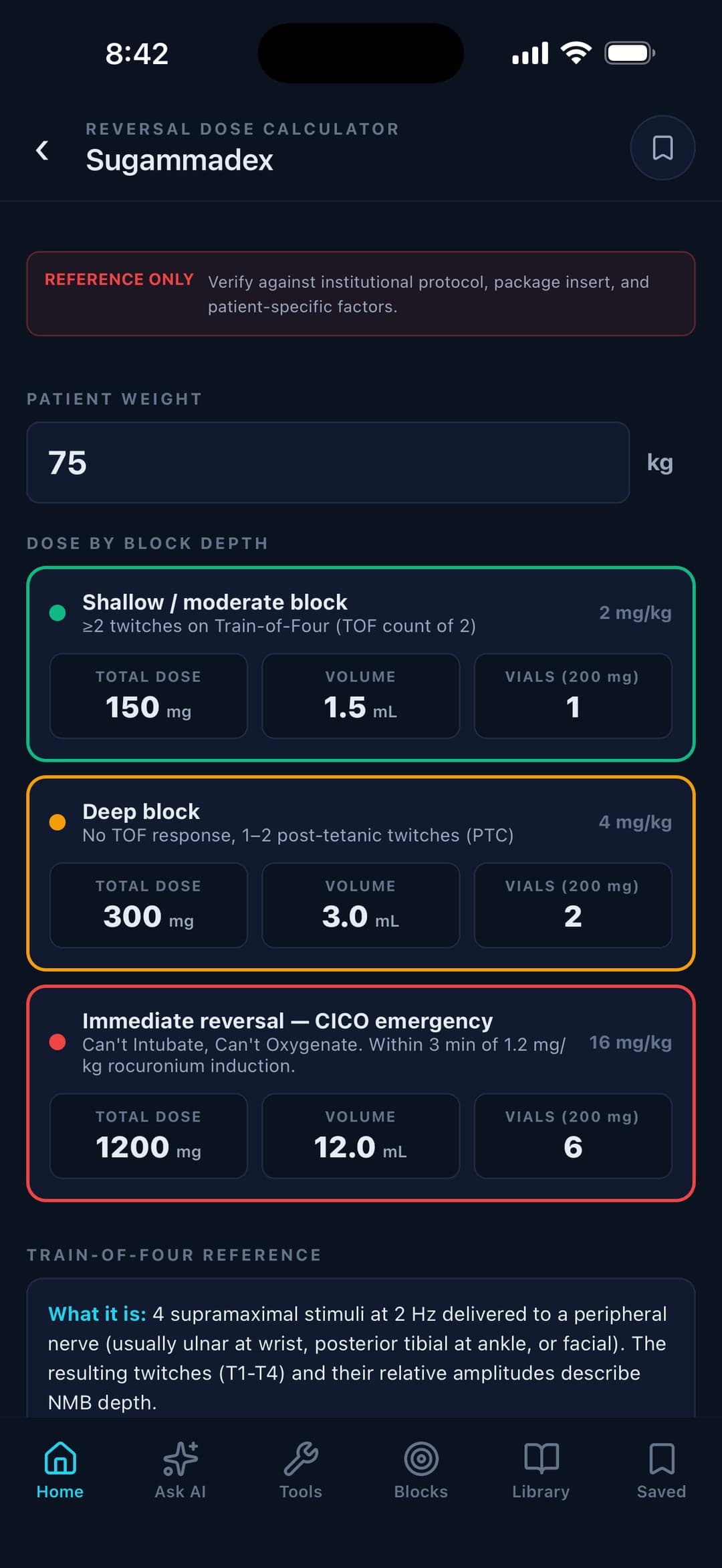
Step-by-step protocols for the rarest, scariest moments.
Malignant hyperthermia, LAST, anaphylaxis, can't-intubate-can't-oxygenate, postpartum hemorrhage, AFE, eclampsia. Each protocol shows the full sequence with a built-in event timer at the top.
Tap a step to mark it done. Reset the timer between events. Modeled on the Stanford Emergency Manual structure but reorganized for two-tap access during a real crisis.
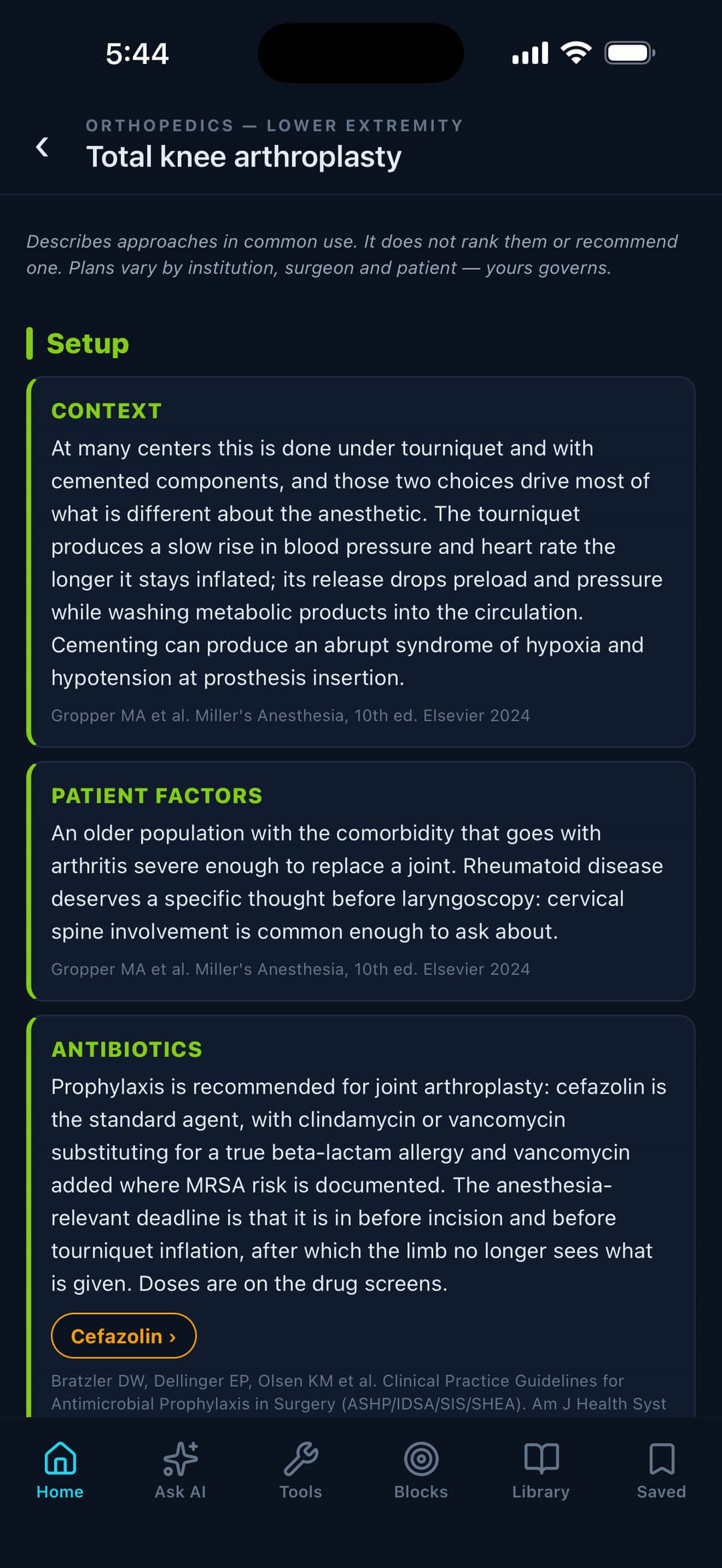
Anesthesia by the operation in front of you.
298 procedures across 22 specialties, each written as the anesthetic actually runs: surgical context, patient factors, antibiotic prophylaxis, positioning, airway, access, monitoring, emergence, analgesia. Search by the name people say out loud — “lap chole” and “gallbladder” both find it.
Approaches are presented unranked, with the trade-offs stated, because the choice belongs to the clinician. Every statement carries its basis on screen — cited to a named source, or marked as practice that varies — and links straight through to the block, the drug, or the crisis checklist it depends on.
Five complete cases are open on the free tier so you can judge the depth before paying.
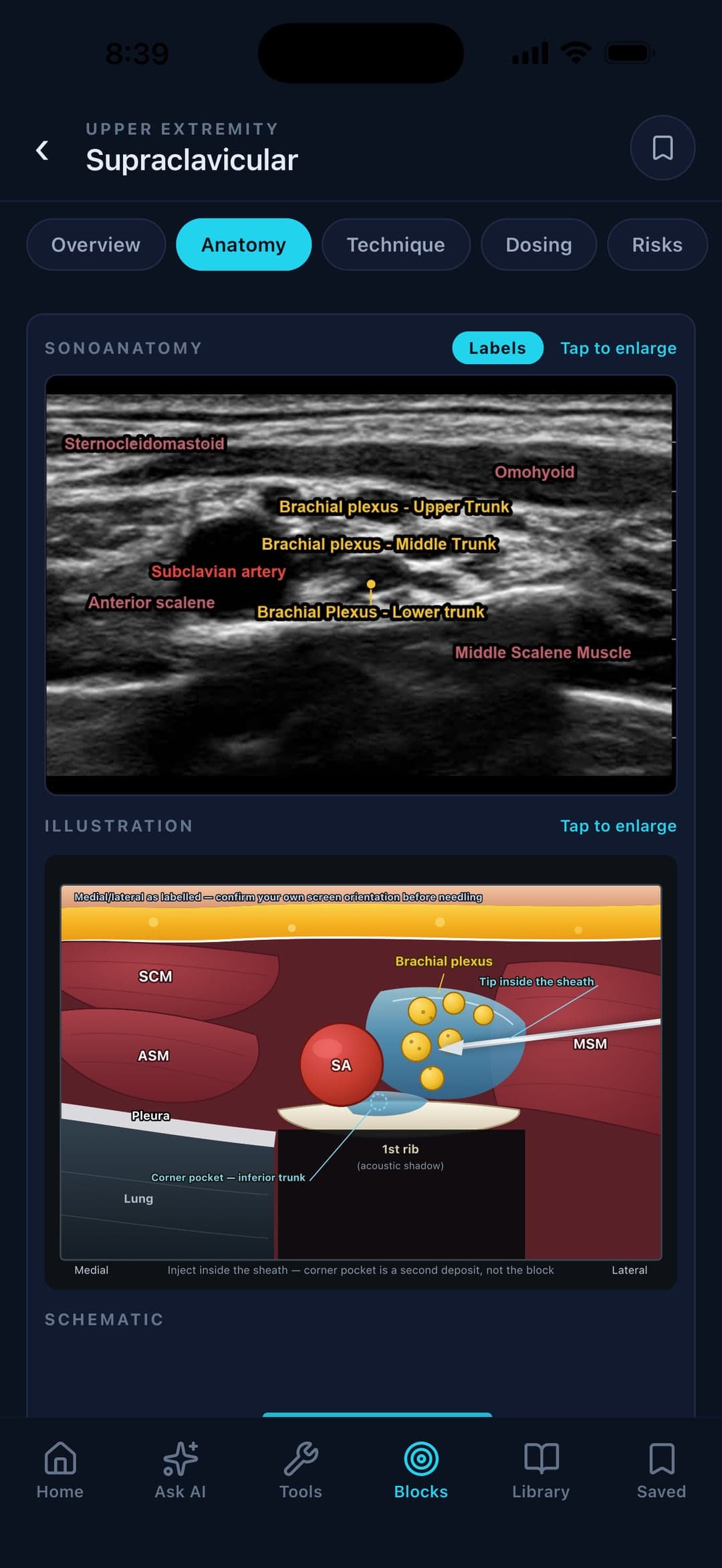
Ultrasound-guided blocks with pearls.
Peripheral nerve blocks for upper and lower extremity, truncal blocks for thoracic and abdominal procedures, and neuraxial techniques. Each block shows anatomy diagrams, indications, contraindications, dose ranges, complications, and clinical pearls.
Includes ASRA 2018 anticoagulation timing tables for safe neuraxial placement.
Max dose math, checked — even when mixing agents.
The LA toxicity calculator does the arithmetic so you can check it against your own. Enter weight, pick an agent, dial in concentration and volume — see the delivered dose, the weight-based max, and the fraction of ceiling you're using.
Mix multiple agents in one calculation. Add a second, third, or fourth cartridge — the calculator tracks additive toxicity across all of them and flags when the combined fraction crosses 1.0. Epinephrine toggle raises the max where clinically appropriate. Covers lidocaine, mepivacaine, bupivacaine, ropivacaine, chloroprocaine, procaine, prilocaine, and tetracaine.
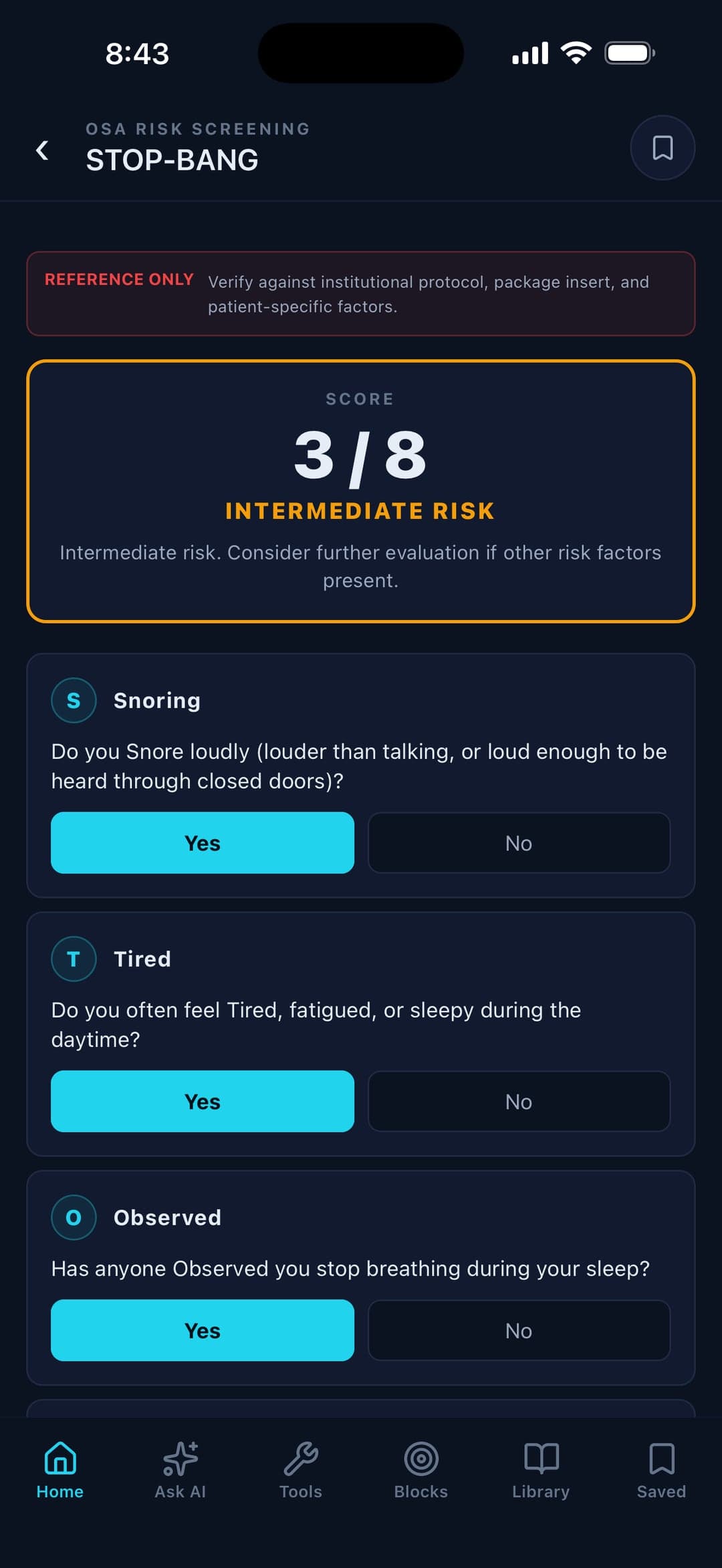
STOP-BANG, RCRI, Gupta MICA — calculated in-app.
STOP-BANG screens for OSA risk in seconds. Lee's RCRI scores cardiac risk for noncardiac surgery. Gupta MICA gives a continuous probability of MI / cardiac arrest based on age, ASA, functional status, surgery type, and creatinine.
Every calculator runs locally on your phone with the published coefficients from the original publication. Citation card on every screen.
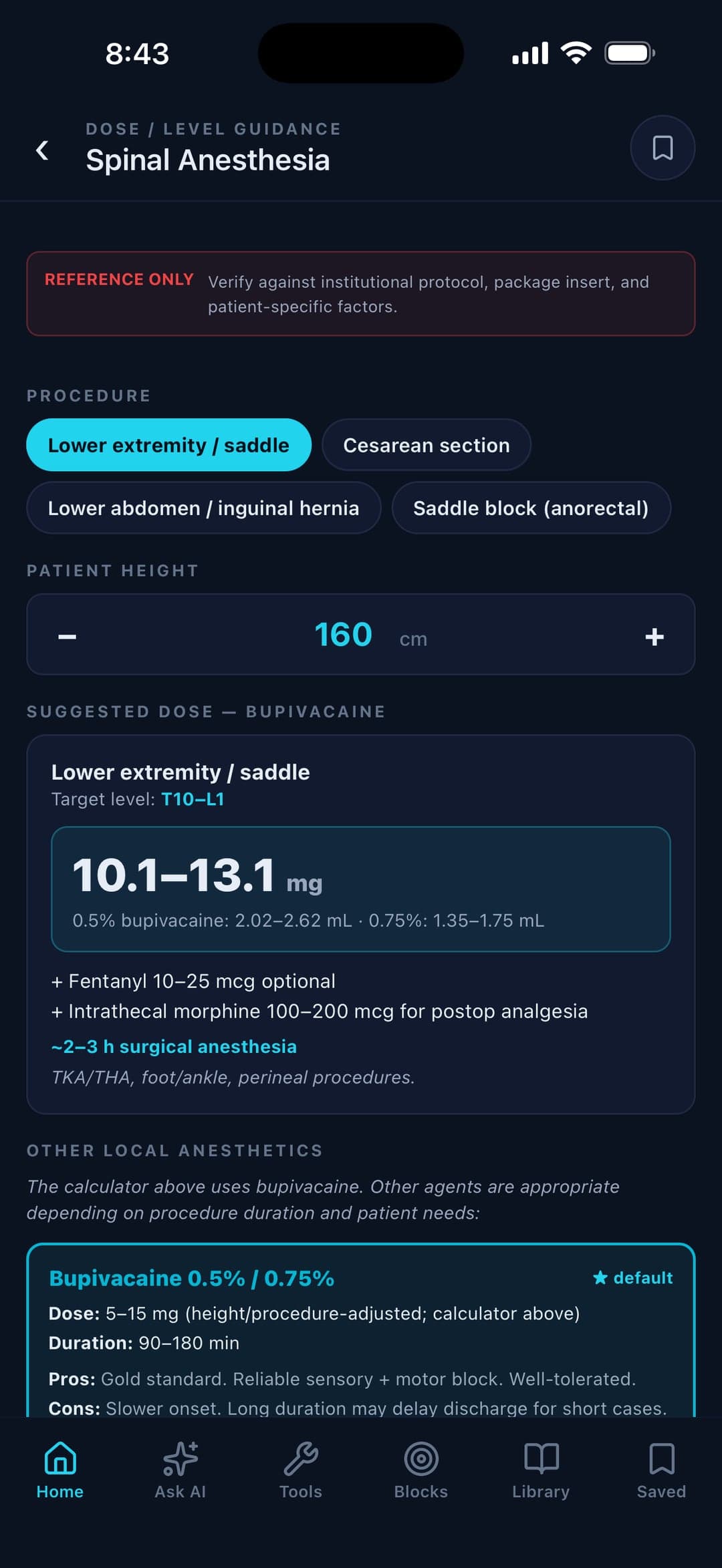
Procedure-aware bupivacaine dose, height-adjusted.
Pick the procedure (lower extremity, C-section, lower abdomen, saddle), enter the patient's height, and Helix Anesthesia suggests a dose range with the appropriate target level (T4, T6–T8, T10–L1, S2–S5).
Compares bupivacaine, ropivacaine, mepivacaine, and chloroprocaine side-by-side with duration, pros, cons, and pearls. Includes baricity quick-reference and a checklist of factors that increase block spread.
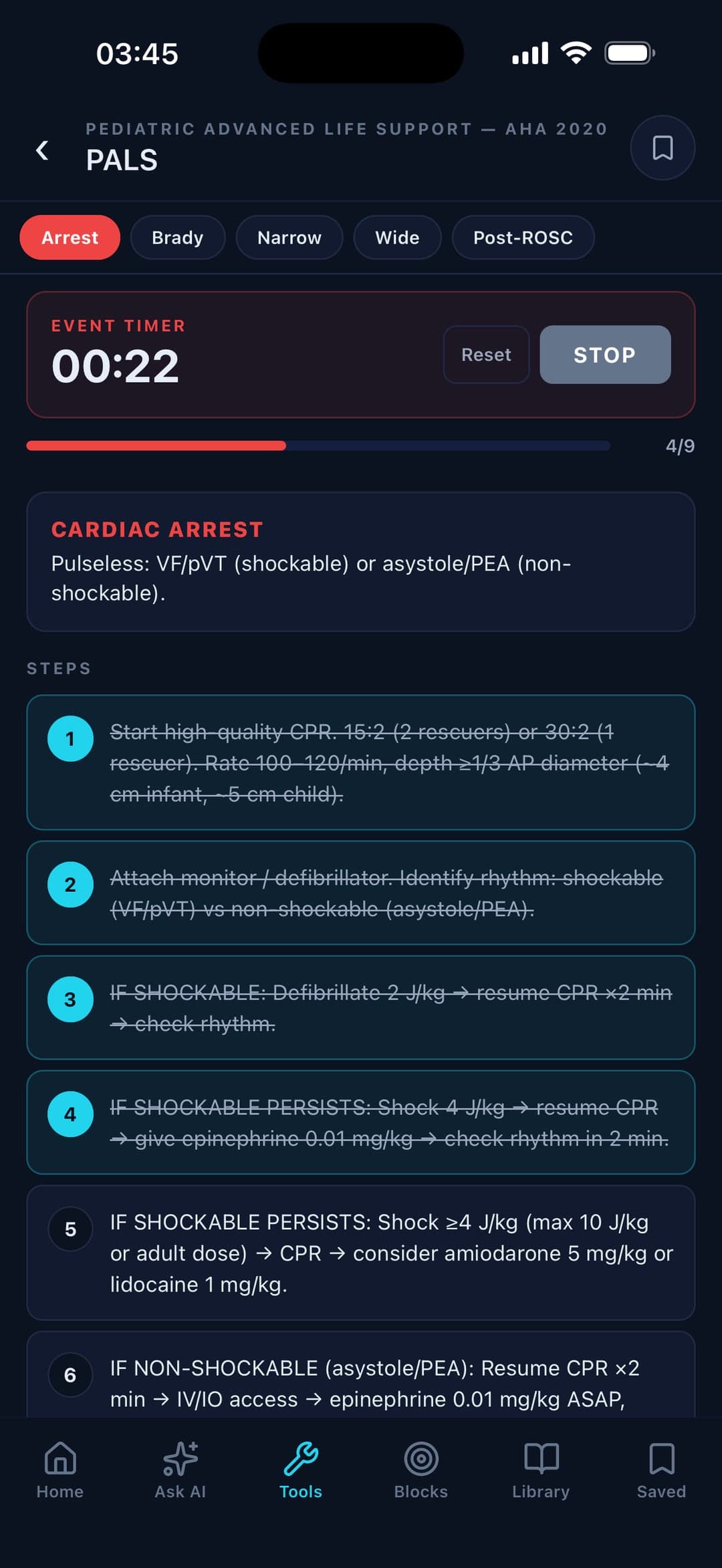
PALS algorithms — every branch, one tap deep.
Cardiac arrest, bradycardia, narrow- and wide-complex tachycardias, and post-ROSC care. Each algorithm shows the full sequence with weight-based defib energies, drug doses, and reversible-cause checklists.
Same step-by-step structure as the adult crisis checklists, with built-in event timer. AHA 2020 guidelines, reviewed annually.
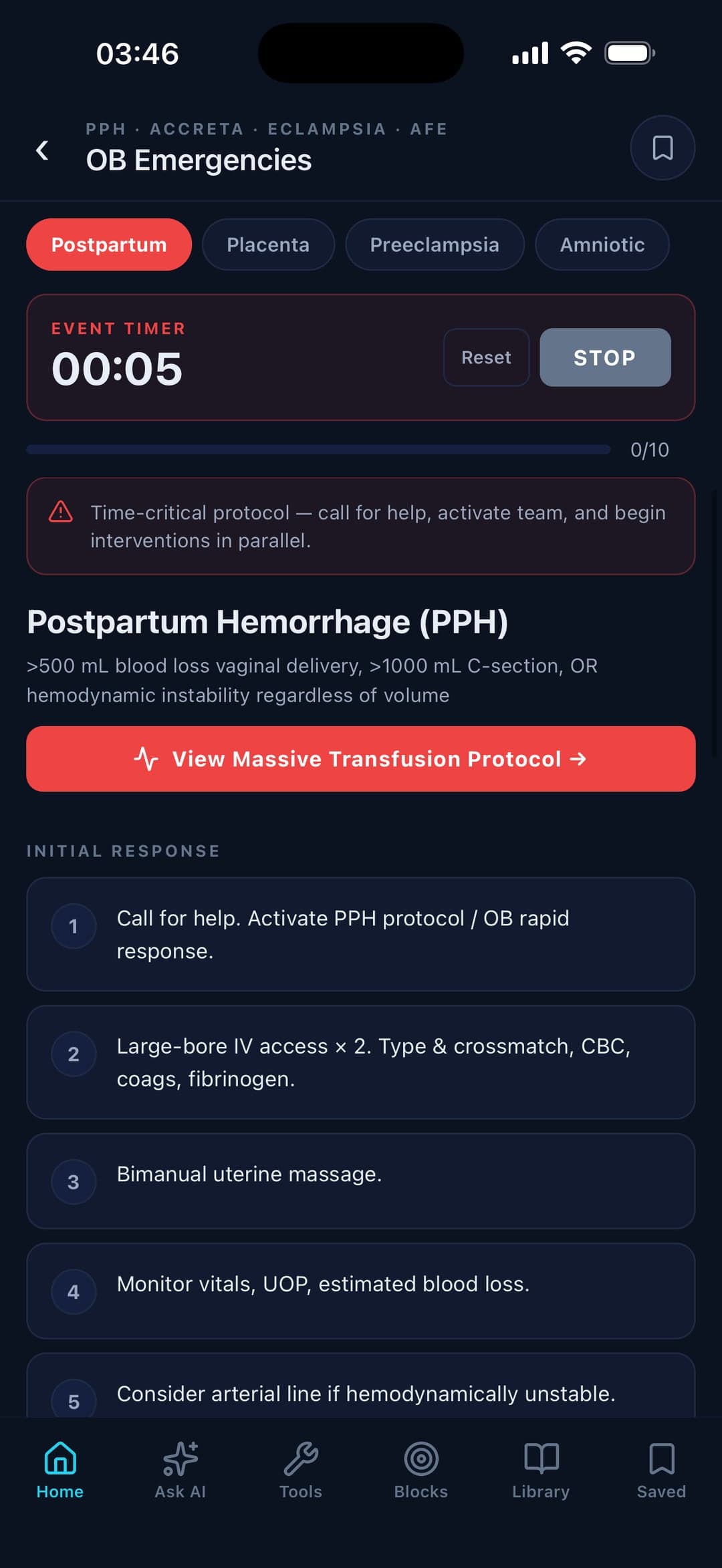
PPH, eclampsia, accreta, AFE — protocols built for the L&D nightmare.
Postpartum hemorrhage, severe preeclampsia / eclampsia, placenta accreta spectrum, amniotic fluid embolism. Each protocol leads with the most likely cause, the immediate-response checklist, and the drug ladder (uterotonics, magnesium, antihypertensives).
Designed for the chaos of an obstetric emergency: large type, color-coded urgency, drug doses one tap from the protocol rather than buried.
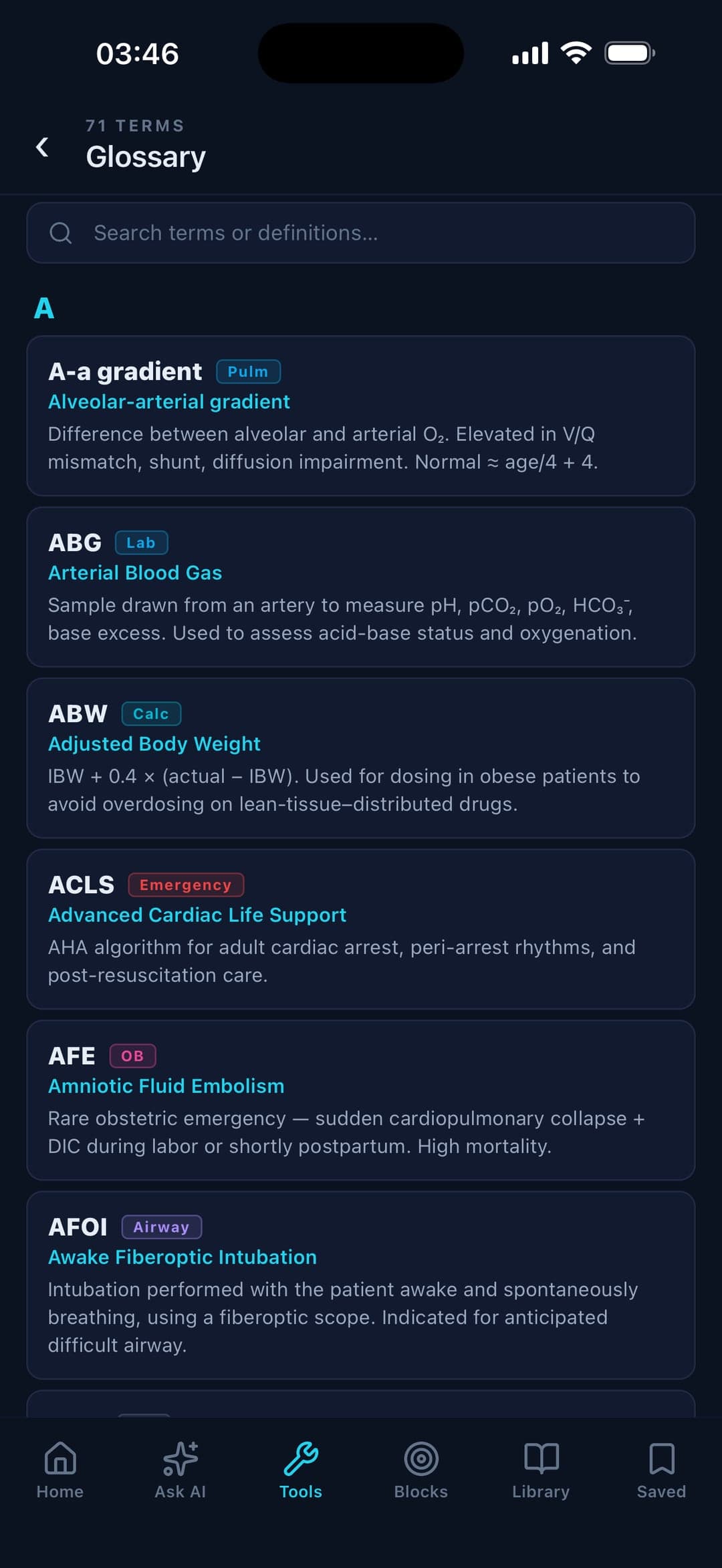
100+ terms, abbreviations and equipment — fully explained.
Searchable index from ABG to VTE across 23 categories. Every entry gives the full expansion plus a paragraph of clinical context. Linked from screens with heavy jargon — Sugammadex, MABL, RCRI — so you never have to leave the app to look one up.
Not just acronyms. Instruments and positions a student meets in the room without ever being told the word: the mouth gag, the throat pack, the axillary roll, beach chair, prone jackknife. Terms that carry two meanings get both — a bougie is an airway introducer and a large-caliber esophageal dilator, and the entry says so.
Weight-based dosing, worked out before you need it.
Enter weight and age once. Emergency and code doses come out in both milligrams and milliliters — epinephrine 1:10,000 and 1:1,000, atropine with its minimum dose, amiodarone, lidocaine, adenosine with the second-dose rule.
Airway sizing alongside it: uncuffed and cuffed ETT, insertion depth, LMA size, and blade. Premedication covers midazolam by three routes, ketamine PO and IM, intranasal dexmedetomidine, and clonidine — each with onset time and the practical note that matters, like mixing midazolam with juice because it is bitter.
Every weight is sanity-checked. A weight that does not fit the age — a decimal in the wrong place, pounds entered as kilograms — raises a confirmation before it becomes a dose. It never blocks and never changes a number: real patients sit outside every threshold, and a calculator that refuses an unusual weight is useless at the moment you most need it. It asks, you confirm, and the doses stay on screen throughout.
Helix Anesthesia is built for licensed anesthesia providers and supports clinical judgment — it does not replace it. It does not diagnose, treat, connect to patient records, or direct patient care. Every calculator and dose reference is cited to its primary source, and every clinical screen carries a reference-only notice. Verify against your institutional protocol, the current package insert, and the patient in front of you.