
Perioperative steroid stress dosing: what’s current
The 300 mg/day regimen came from 1950s case reports about stopping steroids, not from trials about escalating them.
Every clinical claim on this page is cited to its source below. How we source clinical content.
The short answer
Ask first whether the patient has diagnosed adrenal insufficiency or merely takes steroids. Diagnosed insufficiency needs cover: hydrocortisone 100 mg IV at induction, then 200 mg per 24 hours by infusion (or 50 mg IV every 6 hours). For steroid-induced (tertiary) suppression the recommendations genuinely differ — and the split is not geographic. Both current endocrine-society guidelines (the 2020 UK guideline and the 2024 ESE/Endocrine Society joint guideline) call for the same perioperative hydrocortisone cover, while rheumatology and perioperative-medicine sources hold that continuing the usual daily dose uninterrupted is enough for most patients. The 300 mg per day regimen came from 1950s case reports, not trials.
Two questions get conflated here, and separating them answers almost everything: does this patient have adrenal insufficiency, or do they merely take steroids? The answer determines whether they need a stress dose or simply need their usual dose not to be interrupted.
Key takeaways
- Diagnosed adrenal insufficiency always needs stress-dose cover. Hydrocortisone 100 mg IV at induction, then 200 mg per 24 hours by infusion, or 50 mg IV every 6 hours if infusion is not feasible.1,2,3
- Steroid-induced (tertiary) suppression is where the sources differ, and the divide is by specialty, not country. Both endocrine-society guidelines — the 2024 ESE/Endocrine Society joint guideline (European and US) and the 2020 Association of Anaesthetists/RCP/Society for Endocrinology guideline (UK) — recommend perioperative hydrocortisone cover (100 mg IV at induction, then 200 mg/24 h) for surgery under general or regional anesthesia.1,2 Rheumatology and perioperative-medicine sources (the ACR/AAHKS guideline, 2017 and its 2022 update, the Marik–Varon systematic review, and a 2022 endocrine perioperative review) instead recommend simply continuing the usual daily dose for most patients.4,5,6,16 Check which pathway your institution follows.
- The endocrine-society guidelines exempt patients already on high maintenance doses. For moderate/major stress, no increase is typically needed if already taking hydrocortisone ≥200 mg, prednisone ≥50 mg, or dexamethasone ≥6–8 mg daily.1
- The 300 mg/day regimen is historic, derived from 1950s case reports rather than from trials.10
- Adrenal function testing does not help. It is overly sensitive and does not predict who will actually have a crisis.5
- The suppression threshold: prednisolone ≥ 5 mg/day for ≥ 4 weeks (about 1 month), by any route including oral, inhaled, intranasal, intra-articular and topical.1,7
- Perioperative adrenal crisis is rare. The original Cochrane review was withdrawn in 2012 for a poor evidence base; a new Cochrane protocol was registered in 2023, so the question is under active re-review rather than settled.11
Which patient is this?
| Primary or secondary adrenal insufficiency | Glucocorticoid-induced (tertiary) suppression | |
|---|---|---|
| Who | Addison’s disease, post-adrenalectomy, hypopituitarism, congenital adrenal hyperplasia | Anyone on long-term steroids for asthma, IBD, rheumatoid arthritis, transplant |
| Can they mount a cortisol response? | No, structurally | Impaired, variably, and often adequate |
| Stress dose? | Yes, always — these patients are at significant risk of adrenal crisis and must receive it1,2,3 | Sources differ by specialty. Endocrine-society guidelines (ESE/Endocrine Society 2024 and UK 2020) give hydrocortisone 100 mg IV at induction then 200 mg/24 h for surgery under general/regional anesthesia, unless the patient is already on a high maintenance dose.1,2 Rheumatology/perioperative sources continue the usual daily dose only.4,5,6 |
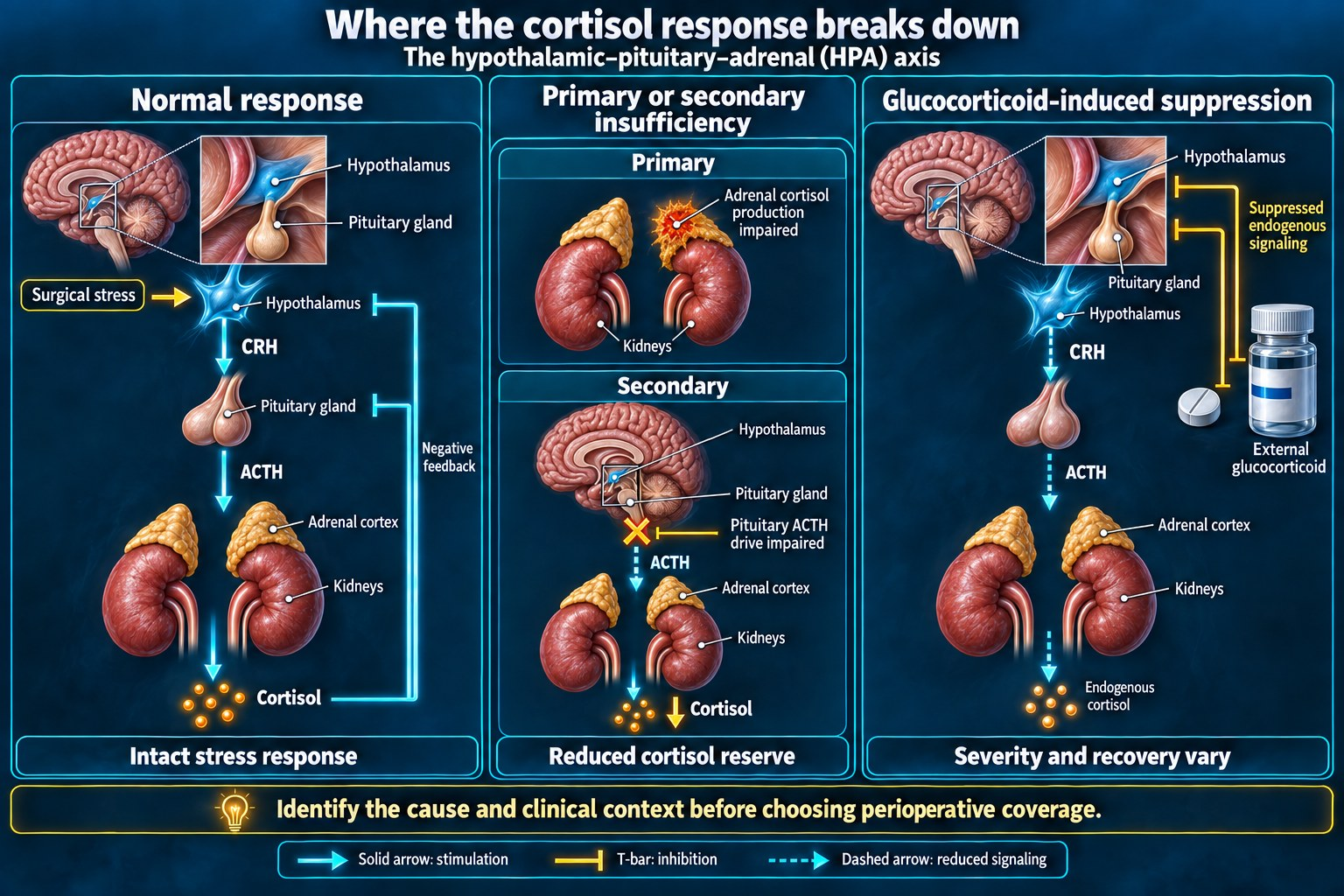
This is the distinction the older blanket protocols missed. A patient on physiologic replacement for a failed adrenal gland cannot respond to surgical stress at all. A patient on 10 mg of prednisone for rheumatoid arthritis has a suppressed but often functional axis, is already receiving about twice the physiologic daily requirement,6 and — on the rheumatology view — mostly needs that dose not to be stopped.4,5,16 Note that this specialty split is real: the 2024 ESE/Endocrine Society guideline still recommends perioperative hydrocortisone cover for these patients, so verify your institutional pathway rather than assuming one answer.1
This is in the app, with the steroid equivalence calculator — free tier, no card. Get it →
Is the axis likely suppressed?
The threshold: a prednisolone-equivalent dose of ≥ 5 mg/day for more than 4 weeks (roughly one month) is high risk for HPA-axis suppression, by any route — oral, inhaled, intranasal, intra-articular or topical. Equivalent high-risk daily doses are dexamethasone ≥ 0.5 mg, hydrocortisone ≥ 15 mg, or budesonide ≥ 1.5 mg; bedtime dosing and concomitant CYP3A4 inhibitors add risk.1,7 Inhaled and topical routes are the ones most often overlooked in a medication history.
| Exposure | Approach |
|---|---|
| Under 5 mg/day prednisone equivalent, or up to 20 mg/day for under 3 weeks | Low risk of suppression; no stress dose needed unless signs of adrenal crisis appear7,13 |
| 5–20 mg/day for 3 weeks or longer | Suppression status uncertain (moderate risk). Refer for HPA testing if time permits7,13 |
| Over 20 mg/day for 3 weeks or longer | Assume suppression13 |
| Stopped long-term steroids within the last year | Still treat as potentially suppressed. Discontinuation of long-term glucocorticoids within the previous 12 months is a moderate-risk category, and full axis recovery may take up to a year, though risk is highest in the first 3–6 months7,14 |
Equivalence, for converting the home dose
The standard oral/IV potency equivalence, per FDA labeling, is 5 mg prednisolone ≈ 20 mg hydrocortisone ≈ 4 mg methylprednisolone ≈ 0.75 mg dexamethasone (also: cortisone 25 mg, betamethasone 0.75 mg).15 Duration of action and mineralocorticoid activity differ, so these are approximations for dose-equivalence rather than interchangeable substitutions, and they apply only to oral or IV routes — relative potencies change with IM or intra-articular injection.15 Some published tables quote hydrocortisone as 15–20 mg and dexamethasone as 0.5 mg; treat 20 mg and 0.75 mg as the reference figures and use your institution’s table rather than any single one as authoritative.
The numbers
Diagnosed adrenal insufficiency
Concordant guidance from the 2024 ESE/Endocrine Society joint guideline1 and the 2020 UK guideline (Association of Anaesthetists, Royal College of Physicians, Society for Endocrinology)2, as summarized in the 2025 JAMA review3:
- Hydrocortisone 100 mg IV at induction, in adults with adrenal insufficiency from any cause.
- Followed by hydrocortisone 200 mg per 24 hours by continuous infusion (preferred), or 50 mg IV every 6 hours if infusion is not feasible, continued until the patient is eating and drinking.
- Postoperative: once eating, resume oral glucocorticoids at an increased dose (about 2–3× baseline) for ~48 hours, then return to the pre-surgical dose; if complications arise (significant pain, infection), maintain the increased dose.1,3
- Dexamethasone alternative: in patients already on adrenosuppressive steroids, IV dexamethasone 6–8 mg will suffice for glucocorticoid coverage for the first 24 hours — a practical option when hydrocortisone infusion is unavailable.2
- Fludrocortisone is not usually needed while on parenteral hydrocortisone, which supplies sufficient mineralocorticoid activity.12
- Obstetric: hydrocortisone 100 mg IV at the onset of labor, then 200 mg/24 h by infusion (or 50 mg IV/IM every 6 hours) until after delivery.1,2
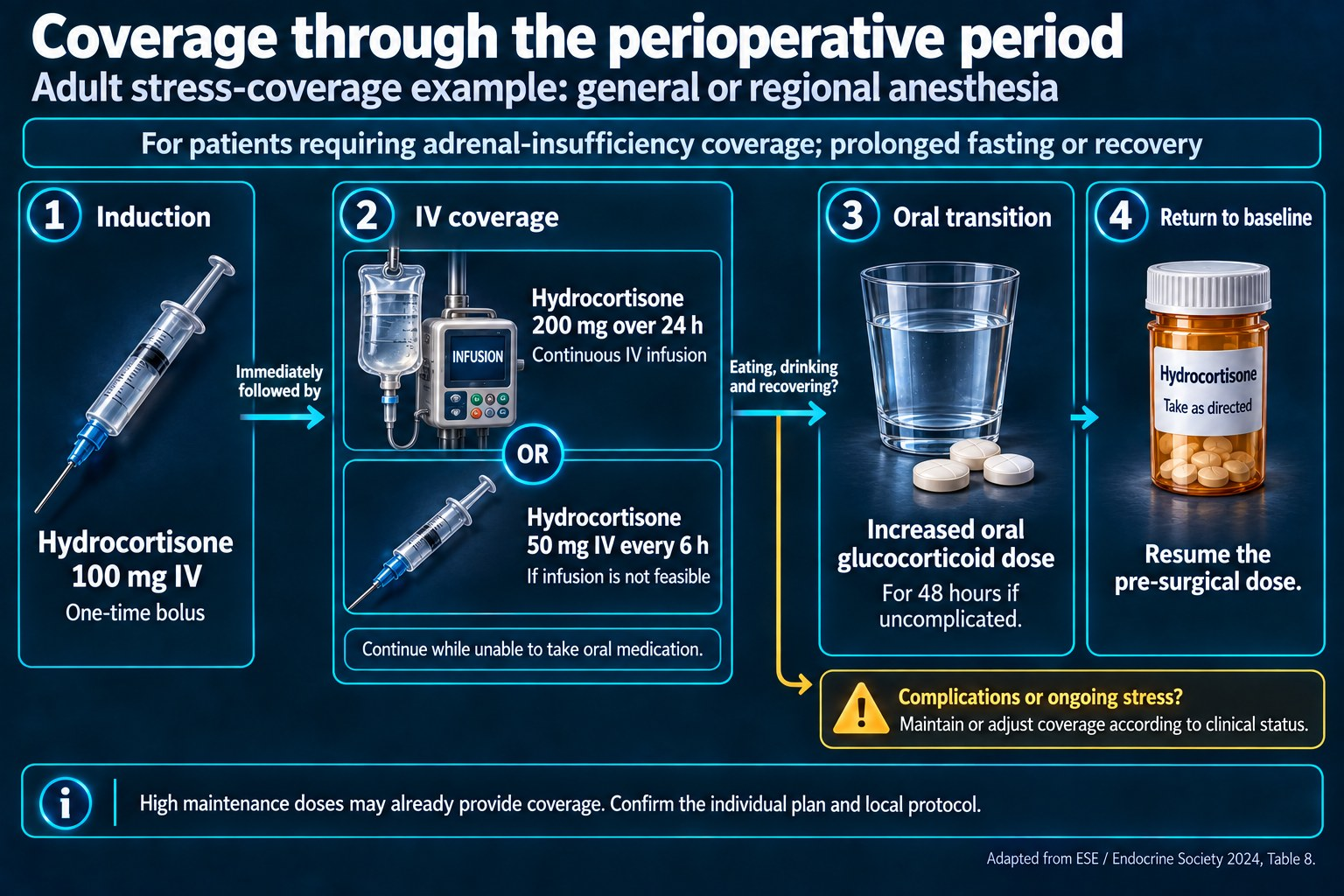
Stress-dose regimen by scenario (2024 ESE/Endocrine Society; 2025 JAMA)
| Scenario | Suggested regimen1,3 |
|---|---|
| Minor surgery / local anesthesia | Hydrocortisone to a 40 mg total daily dose in 3 divided doses (e.g., 20 mg 1 h pre-procedure, 10 mg at 6 h, 10 mg at 12 h), or prednisone increased to 10 mg for the day; continue if unwell. |
| Bowel procedure not under general anesthesia | Continue usual or double the glucocorticoid dose on the day; give an equivalent IV dose if prolonged nil by mouth. |
| Surgery under general/regional anesthesia, short recovery, not NPO | Hydrocortisone 100 mg IV at induction, then 200 mg/24 h infusion (or 50 mg IV q6h). Postop: increased oral dose ×48 h, then pre-surgical dose. |
| Surgery under general/regional anesthesia, NPO or long recovery (incl. cesarean) | Hydrocortisone 100 mg IV at induction, then 200 mg/24 h infusion (or 50 mg IV q6h) while NPO. Once eating: 2–3× basal oral dose, then taper to pre-surgical dose. |
| Already on high maintenance dose | No increase typically needed if already on hydrocortisone ≥200 mg, prednisone ≥50 mg, or dexamethasone ≥6–8 mg daily (moderate/major stress). |
Glucocorticoid-induced suppression
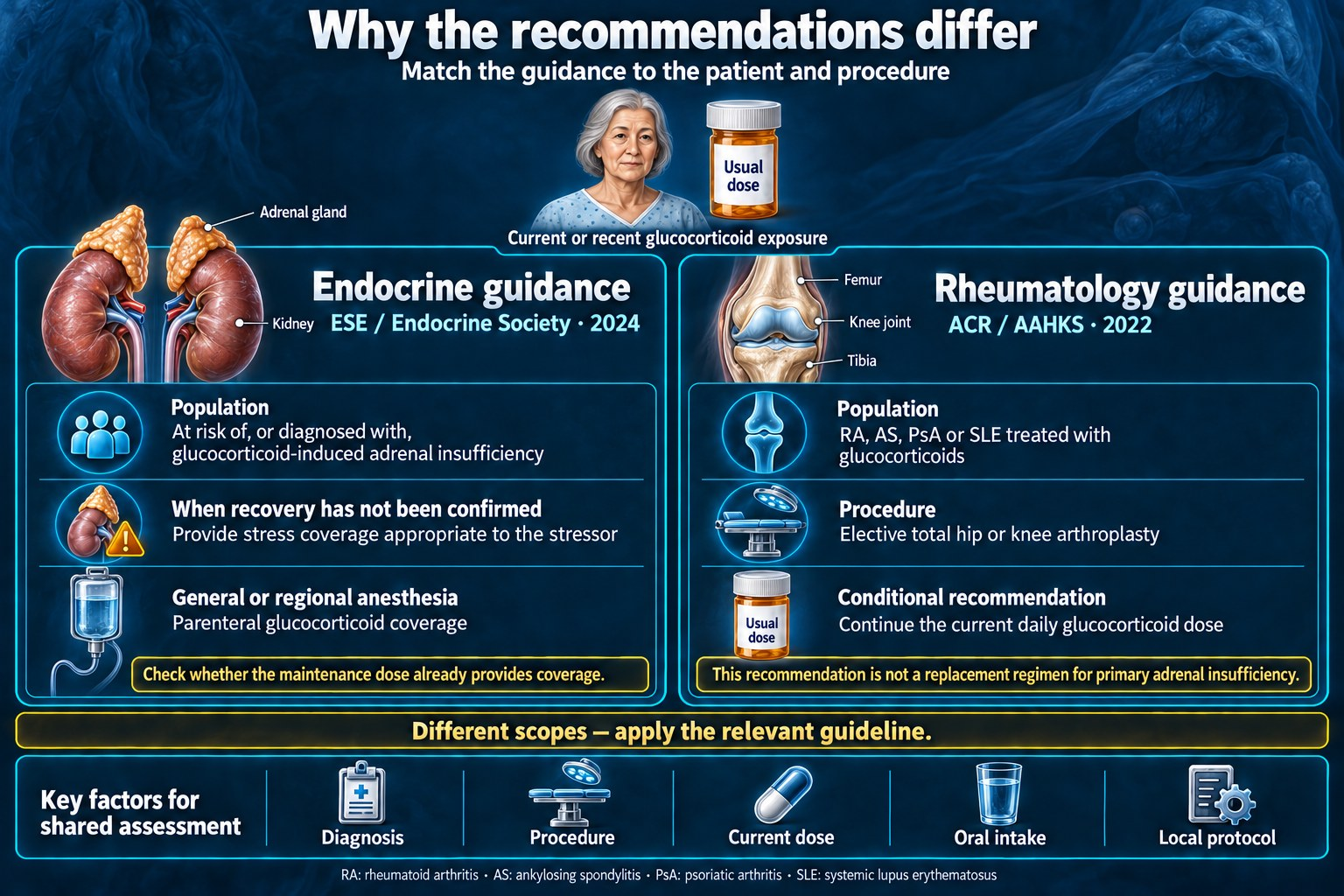
The endocrine-society position (ESE/Endocrine Society 2024 and UK 2020) is to treat suppressed patients as above — i.e., give perioperative hydrocortisone cover for surgery under general/regional anesthesia — unless they are already on a high maintenance dose.1,2
The rheumatology/perioperative-medicine position is to continue the usual daily dose without supraphysiologic stress dosing for most patients. The 2017 ACR/AAHKS guideline explicitly recommends continuing the current daily glucocorticoid dose (rather than stress dosing) in adults taking ≤ 16 mg/day prednisone or equivalent for RA, AS, PsA, or SLE — while explicitly excluding patients treated for primary adrenal insufficiency or primary hypothalamic disease.4 The 2022 update keeps the recommendation: continue the current daily glucocorticoid dose rather than stress dosing in patients with RA, AS, PsA, JIA, or SLE undergoing elective hip or knee arthroplasty.16 A 2022 endocrine perioperative review reaches the same practical conclusion, adding that because oral intake is unreliable early postoperatively, giving the daily glucocorticoid plus a short course of IV hydrocortisone 25–100 mg/day, scaled to surgical stress, is reasonable.6
If your institution uses the older tiered regimen, the tiers and the operations named in them come from Salem 1994. It sets a daily hydrocortisone-equivalent target for each level of surgical stress, on top of the usual preoperative dose, rather than a fixed schedule:8
- Minor (inguinal herniorrhaphy): about 25 mg hydrocortisone equivalent. In the paper’s own example, a patient taking 5 mg prednisone every other day receives that dose preoperatively and nothing further, and returns to the usual dose the next day.
- Moderate (total joint replacement, lower extremity revascularization, segmental colon resection, nonlaparoscopic cholecystectomy, abdominal hysterectomy): 50 to 75 mg per day for 1 to 2 days. The example given is the usual preoperative dose plus hydrocortisone 50 mg IV intraoperatively, then 60 mg (20 mg every 8 hours) on the first postoperative day, and the usual dose again on day 2.
- Major (cardiac surgery on cardiopulmonary bypass, esophagogastrectomy, total proctocolectomy, pancreatoduodenectomy): 100 to 150 mg per day for 2 to 3 days. For a patient on 40 mg prednisone daily the example is that dose preoperatively, then hydrocortisone 50 mg IV every 8 hours for the first 48 to 72 hours.
The lowest tier is not settled. Chilkoti and colleagues print a tiered table that gives 25 mg hydrocortisone at induction for minor surgery (hernias, hand surgery), and for moderate and major surgery adds 100 mg hydrocortisone per day — for 24 hours and for 2 to 3 days respectively — to the usual preoperative steroids and the 25 mg at induction. That table covers patients who have taken more than 10 mg prednisolone or equivalent daily within the last 3 months; all other patients, it says, need no additional steroids.9 So a patient on a small maintenance dose may receive nothing extra under Salem and 25 mg at induction under Chilkoti. Both are in print, and they differ in the direction of more drug rather than less. Check which one your institution follows.
Why the doses came down
The 300 mg/day-for-several-days regimen was never based on trials. It followed reports in the 1950s of surgery-associated adrenal insufficiency after abrupt preoperative withdrawal of glucocorticoids — that is, it was a response to stopping the steroid, treated as though it were evidence for escalating it.10
What the evidence has since shown:
- Marik and Varon, systematic review: patients on therapeutic doses of corticosteroids undergoing surgery do not routinely require stress doses so long as they continue to receive their usual daily dose. Patients on physiologic replacement for primary HPA disease do.5
- ACR/AAHKS 2017: low-quality RCT evidence and observational data showed no significant hemodynamic difference between continuing the usual daily dose and stress dosing in adults on ≤ 16 mg/day prednisone equivalent for rheumatic disease.4
- An RCT of 17 patients on prednisone 5–60 mg/day, all with abnormal cosyntropin stimulation tests, randomized to saline versus 200 mg hydrocortisone tapered over 3 days while continuing their usual dose: no adrenal crisis in the daily-dose-plus-placebo group.6
- A randomized trial in major colorectal surgery found no difference in postural hypotension or adrenal insufficiency between high-dose hydrocortisone (100 mg IV three times daily) and low-dose (the equivalent of the preoperative dose given IV).10
- Cochrane: the original review was withdrawn in 2012 because the evidence base was very poor and limited in size and quality; a new Cochrane protocol was registered in 2023, so the question is again under systematic review.11
On testing
Adrenal function testing is not required in patients on therapeutic doses, because the test is overly sensitive and does not predict which patient will develop an adrenal crisis.5 Even among patients with biochemical adrenal insufficiency, the risk of clinically meaningful crisis remains very low, and correlation between biochemical testing and clinical events is lacking.1,6 A patient with an abnormal stimulation test who sails through surgery is the common case, not the exception.
Practical points
- Ask about route, not just drug. Inhaled, intranasal, topical and intra-articular steroids all suppress the axis at sufficient dose and duration.1,7
- Do not fast a child with adrenal insufficiency more than 6 hours, and check blood glucose hourly after surgery until enteral intake resumes.2
- Hyponatremia postoperatively may indicate inadequate glucocorticoid replacement rather than a fluid problem.12
- Know which pathway your institution follows. The two current answers for tertiary suppression (endocrine-society stress dosing vs. rheumatology continue-usual-dose) are both defensible; blanket recommendations are not appropriate and a pragmatic, individualized approach is advised given the state of the evidence.1,2,4
Frequently asked questions
Do I need stress dose steroids before surgery?
It depends which situation you are in. Patients with diagnosed primary or secondary adrenal insufficiency are at significant risk of adrenal crisis and must receive stress-dose hydrocortisone.1,2 For patients whose axis is suppressed by long-term steroid treatment for another condition, guidance differs: endocrine-society guidelines still recommend perioperative hydrocortisone cover for surgery under anesthesia, whereas rheumatology and perioperative-medicine sources hold that continuing the usual daily dose is sufficient for most patients.1,4,5,6
What is the hydrocortisone dose for major surgery in adrenal insufficiency?
Hydrocortisone 100 mg IV at induction, followed by 200 mg per 24 hours by continuous infusion (or 50 mg IV every 6 hours if infusion is not feasible) until the patient is eating and drinking.1,2,3
How much prednisone suppresses the HPA axis?
A prednisolone-equivalent dose of 5 mg/day or more, given for more than 4 weeks, is high risk for suppression — by oral, inhaled, intranasal, intra-articular or topical route (equivalent high-risk doses: dexamethasone ≥0.5 mg, hydrocortisone ≥15 mg daily).1,7 The non-oral routes are the ones most often missed in a medication history.
Where did the 300 mg hydrocortisone regimen come from?
From case reports in the 1950s of adrenal insufficiency after abrupt preoperative withdrawal of glucocorticoids.10 It was never derived from trials, and subsequent randomized and observational data have not supported it. The original Cochrane review was withdrawn in 2012 for a poor evidence base; a new Cochrane protocol was registered in 2023.11
Should adrenal function be tested before surgery?
Not routinely in patients on therapeutic steroid doses. The test is overly sensitive and does not predict who will develop an adrenal crisis,5 and correlation between biochemical testing and clinical events is lacking.1,6 Testing may be worth doing in patients on 5–20 mg/day for three weeks or longer, where suppression status is genuinely unknown and time permits.13
What if the patient recently stopped steroids?
Treat as potentially suppressed for up to a year after the last dose. Discontinuation of long-term glucocorticoids within the previous 12 months is a moderate-risk category for HPA suppression, and full axis recovery can take that long, with risk highest in the first 3–6 months.7,14 Careful assessment of the axis is recommended in patients who stopped steroid therapy before surgery.6
References
- Beuschlein F, Else T, Bancos I, et al. European Society of Endocrinology and Endocrine Society Joint Clinical Guideline: Diagnosis and Therapy of Glucocorticoid-Induced Adrenal Insufficiency. J Clin Endocrinol Metab. 2024;109(7):1657–1683. PMID 38724043. Table 8: perioperative and stress-dose regimens; high-maintenance-dose exemptions.
- Woodcock T, Barker P, Daniel S, et al. Guidelines for the management of glucocorticoids during the peri-operative period for patients with adrenal insufficiency: guidelines from the Association of Anaesthetists, the Royal College of Physicians and the Society for Endocrinology UK. Anaesthesia. 2020;75(5):654–663. doi:10.1111/anae.14963. PMID 32017012.
- Vaidya A, Findling J, Bancos I. Adrenal Insufficiency in Adults: A Review. JAMA. 2025;334(8). Table 3 reproduces the ESE/Endocrine Society perioperative stress-dose regimen.
- Goodman SM, Springer B, Guyatt G, et al. 2017 American College of Rheumatology/American Association of Hip and Knee Surgeons Guideline for the Perioperative Management of Antirheumatic Medication in Patients With Rheumatic Diseases Undergoing Elective Total Hip or Total Knee Arthroplasty. Arthritis Rheumatol. 2017;69(8):1538–1551. PMID 28620948. Continue current daily dose (≤16 mg/day prednisone equivalent) rather than stress dosing; excludes primary adrenal insufficiency/hypothalamic disease.
- Marik PE, Varon J. Requirement of perioperative stress doses of corticosteroids: a systematic review of the literature. Arch Surg. 2008;143(12):1222–1226. PMID 19075176.
- Chen Cardenas SM, Santhanam P, Morris-Wiseman L, Salvatori R, Hamrahian AH. Perioperative evaluation and management of patients on glucocorticoids. J Endocr Soc. 2022;7(2):bvac185. doi:10.1210/jendso/bvac185. PMID 36545644.
- Martin-Grace J, Tomkins M, O’Reilly MW, Sherlock M. Iatrogenic adrenal insufficiency in adults. Nat Rev Endocrinol. 2024;20(4):209–227. PMID 38272995. Risk stratification for HPA suppression: high-risk dose/duration thresholds by route, and discontinuation within the previous 12 months as a moderate-risk category.
- Salem M, Tainsh RE Jr, Bromberg J, Loriaux DL, Chernow B. Perioperative glucocorticoid coverage. A reassessment 42 years after emergence of a problem. Ann Surg. 1994;219(4):416–425. doi:10.1097/00000658-199404000-00013. PMID 8161268. The minor, moderate and major targets, the operations named in each tier, and the worked examples.
- Chilkoti GT, Singh A, Mohta M, Saxena AK. Perioperative “stress dose” of corticosteroid: pharmacological and clinical perspective. J Anaesthesiol Clin Pharmacol. 2019;35(2):147–152. doi:10.4103/joacp.JOACP_242_17. PMID 31303699. Its Table 3 is the source of the 25 mg hydrocortisone at induction for minor surgery, of the 100 mg per day added for moderate and major surgery, and of the >10 mg prednisolone threshold that table applies to.
- The management of the surgical patient taking glucocorticoids. UpToDate. Accessed September 2026. uptodate.com/contents/the-management-of-the-surgical-patient-taking-glucocorticoids. Describes the historic 300 mg/day practice and its 1950s origin, and summarizes the randomized trial in major colorectal surgery comparing high- and low-dose regimens.
- Wulff TL, Hjortrup PB, Meyhoff TS, et al. Perioperative glucocorticoid stress dose for adult surgical patients at risk of adrenal insufficiency (protocol). Cochrane Database Syst Rev. 2023. doi:10.1002/14651858.CD015241. PMC10440999. New protocol registered in 2023; the earlier review (Yong SL, Coulthard P, Wrzosek A. Supplemental perioperative steroids for surgical patients with adrenal insufficiency) was withdrawn in 2012 for an insufficient evidence base.
- Peri-operative guidance for patients with or at risk of adrenal insufficiency. NHS Highland adult therapeutic guidelines, Right Decisions. Document TAM452, version 2.1, last reviewed 28 August 2025. rightdecisions.scot.nhs.uk. Infusion-versus-bolus preference, fludrocortisone guidance, hyponatraemia note.
- Adrenal insufficiency and perioperative corticosteroids. OpenAnesthesia. Accessed September 2026. openanesthesia.org/keywords/adrenal-insufficiency-and-perioperative-corticosteroids. Summarizes the dose and duration thresholds used for the suppression-likelihood table and the HPA testing recommendation.
- Perioperative stress dose guidelines. Stanford Department of Pediatric Anesthesia. med.stanford.edu/.../perioperative-stress-dose-guidelines.pdf. Accessed September 2026. Notes that HPA axis recovery after the last steroid dose is greatest in the first 3–6 months and may take up to a year.
- Dexamethasone and prednisolone sodium phosphate. US Food and Drug Administration prescribing information. Accessed 2026. Glucocorticoid potency equivalence table (oral/IV): hydrocortisone 20 mg ≈ cortisone 25 mg ≈ prednisolone/prednisone 5 mg ≈ methylprednisolone/triamcinolone 4 mg ≈ dexamethasone/betamethasone 0.75 mg. Relative potencies apply to oral or IV administration and change with IM or intra-articular injection.
- Goodman SM, Springer BD, Chen AF, et al. 2022 American College of Rheumatology/American Association of Hip and Knee Surgeons Guideline for the Perioperative Management of Antirheumatic Medication in Patients With Rheumatic Diseases Undergoing Elective Total Hip or Total Knee Arthroplasty. Arthritis Care Res (Hoboken). 2022;74(9):1399–1408. doi:10.1002/acr.24893. Updates reference 4; continues to recommend the current daily glucocorticoid dose rather than stress dosing.
Disclaimer. Reference information for licensed clinicians and students. Not a medical device, and not a substitute for clinical judgment. Recommendations for glucocorticoid-treated (tertiary) patients differ between endocrine-society guidelines and rheumatology/perioperative sources; glucocorticoid equivalence tables also differ between sources. Verify against your institutional protocol and current package inserts.
Perioperative medication guidance like this ships inside Helix Anesthesia — a point-of-care reference built by a practicing CRNA, cited and available offline. See how we source clinical content.
Built for the anesthesia machine, not the desk. It opens in one tap, works with no signal in an OR that has none, and shows the citation on screen beside the number rather than making you go and find it.
Free tier, no card: every calculator, every crisis checklist, the full drug library and glossary, three complete regional blocks, five complete surgical cases, and 15 AI questions a month.
Get Helix Anesthesia How we source itSign up for our newsletter and special offers. New answer pages, improvements to the ones already here, and the occasional offer. Nothing else, and not often.
Medications before surgery
- GLP-1 agonists — start here