
Clopidogrel hold time before neuraxial and pain procedures
There is no single number, and that is the answer. Three regional/interventional guidelines govern this depending on what you are about to do — and cardiology and surgical guidance add a fourth, shorter figure.
Every clinical claim on this page is cited to its source below. How we source clinical content.
The short answer
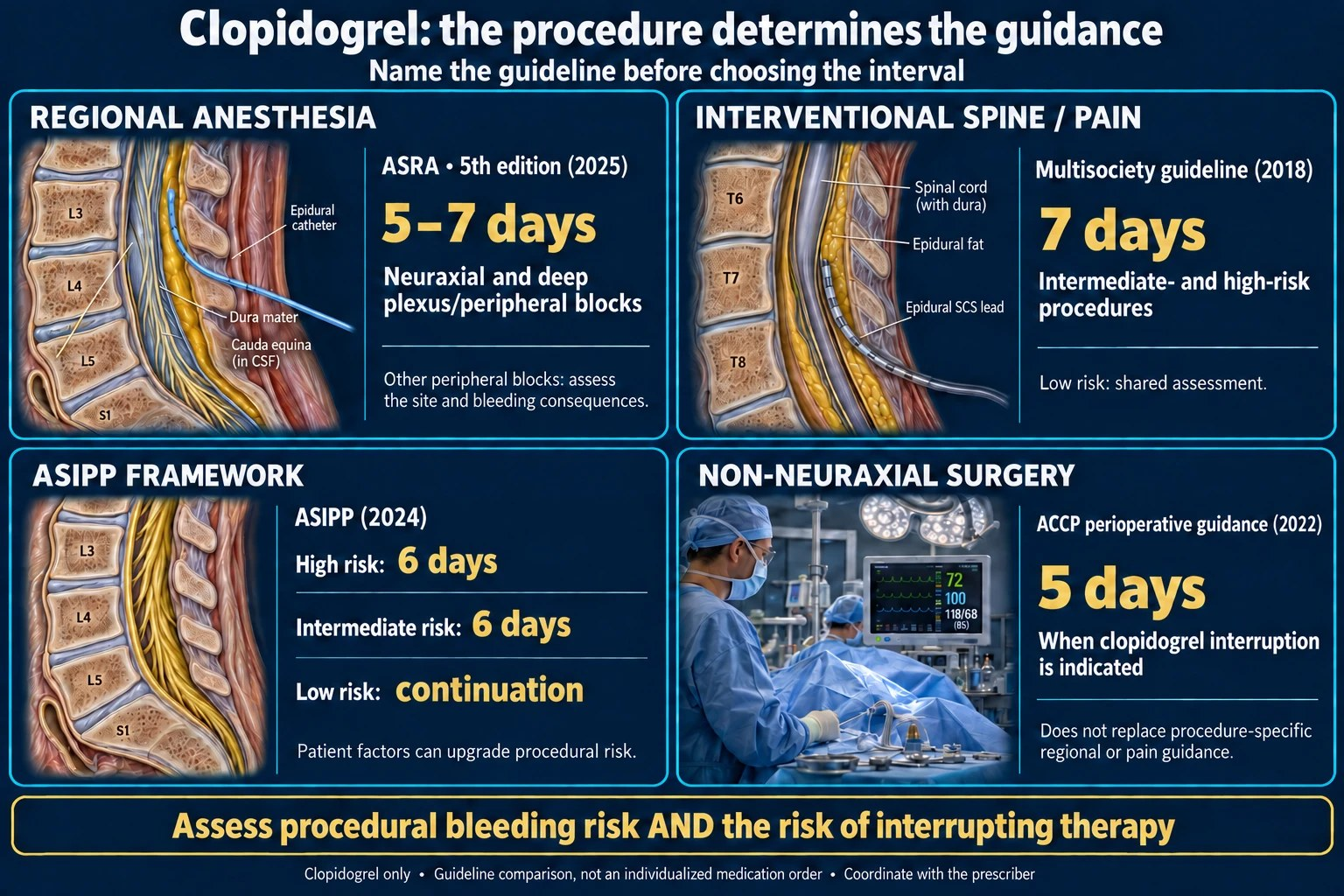
There is no single hold time, and that is the answer. For neuraxial and peripheral blocks, the fifth edition of the ASRA guideline says 5–7 days. For interventional spine and pain procedures, a separate multisociety guideline says 7 days. ASIPP says 6 days for high- and intermediate-risk work. Cardiology and surgical guidance say 5 days. Only the interventional guideline attaches a role for platelet function testing.
Key takeaways
- Neuraxial and peripheral blocks: 5–7 days. ASRA Pain Medicine, fifth edition (2025), graded IIC.
- Interventional spine and pain procedures: 7 days. A separate multi-society guideline, and it is the one that names platelet function testing.
- A third society says 6 days. ASIPP recommends 6 days for high and intermediate risk interventional techniques and continuation for low risk.
- Cardiology and surgical guidance: 5 days. The 2022 ACCP guideline and the 2026 ACC scientific statement both recommend stopping clopidogrel 5 days before surgery — which is why anesthesiology and cardiology so often collide at the bedside.
- The five-day-plus-testing option is narrower than commonly described. It applies when the managing cardiologist or vascular physician recommends five days — the shorter interval is driven by thrombotic risk, and the platelet test is the safety check on it.
- Restart intervals differ between the two anesthesia/pain guidelines too — immediately versus twelve hours — which is the same problem in the other direction.
- The 2025 ASRA update moved toward assay-guided decisions for anticoagulants and did not do so for antiplatelets. That asymmetry is deliberate, and it explains why a normal platelet assay is not a substitute for the interval before a spinal.
Why there is no single number
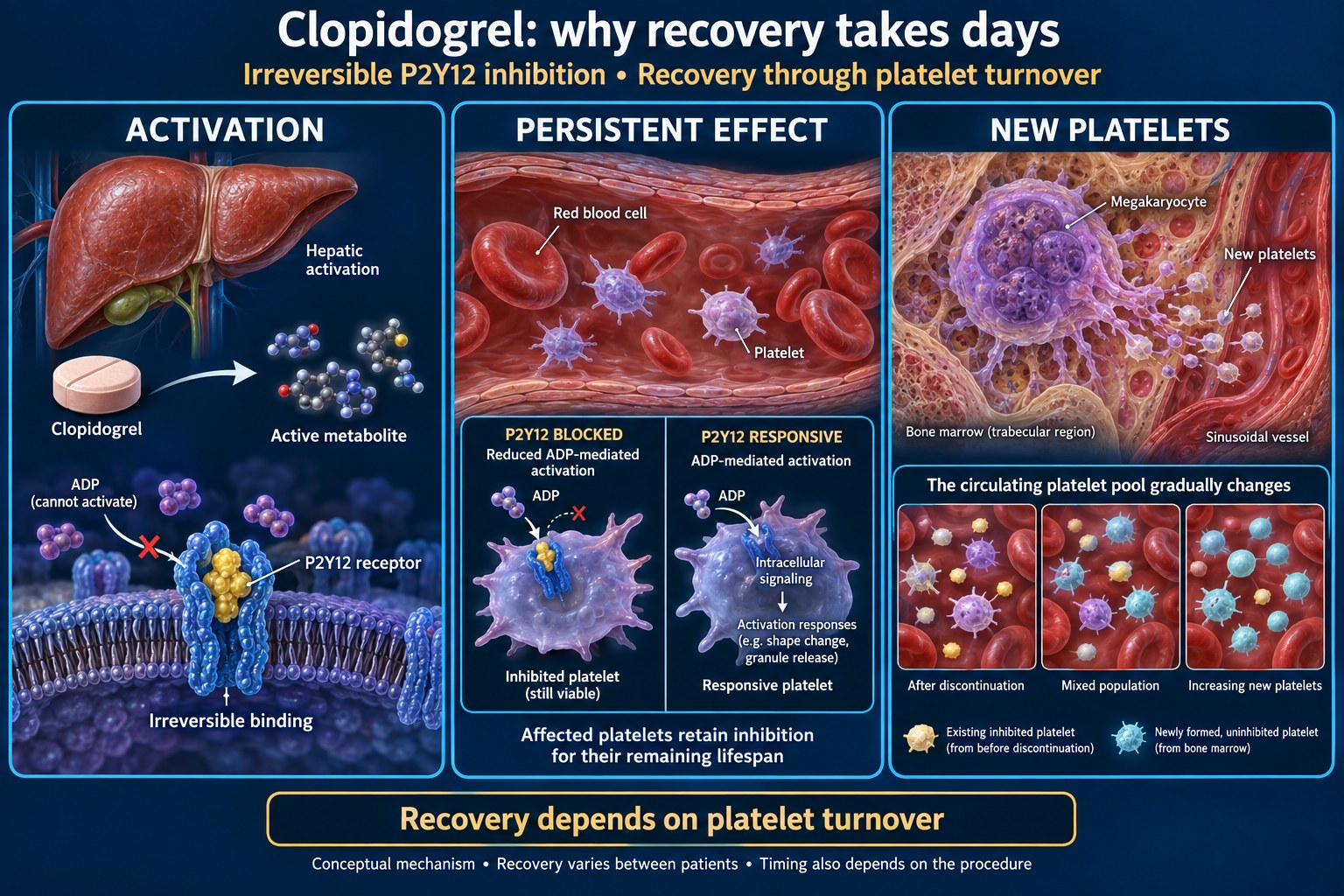
Clopidogrel is a prodrug requiring two metabolic steps to form the active compound, and its active metabolite binds the platelet P2Y12 receptor irreversibly.1 That binding lasts for the life of the platelet, so recovery of function depends on producing new platelets rather than on clearing the drug. Platelet turnover is roughly 10–15% per day, which is where a five-to-seven-day interval comes from.
Several features of the drug make the interval less predictable than that arithmetic suggests:
- Maximum inhibition is only about 40–60% with a 75 mg maintenance dose, and platelet aggregation and bleeding time generally return toward baseline about 5 days after discontinuation, even though receptor blockade persists over the full platelet lifespan.14 Unlike aspirin, clopidogrel does not shut platelet function down completely, which is part of why shorter intervals have been argued for.
- Up to roughly 40% of patients respond poorly or not at all — so-called clopidogrel resistance, driven largely by insufficient generation of the active metabolite, by drug interactions, and by CYP2C19 genetic polymorphism.15 A meaningful fraction of patients holding the drug for a week were never well inhibited by it.
- Onset is slow. Time to peak effect can be as long as 24 hours with a maintenance dose, though a loading dose of 300–600 mg shortens that to 4–6 hours.1 This is why the guidelines treat loading doses separately from maintenance doses at every decision point.
- Renal impairment further reduces predictability. Platelet inhibition is diminished in renal impairment, and reported spinal hematomas despite a 7-day hold have clustered in patients with renal impairment and traumatic procedures — a reason to favor the longer end of any interval in these patients.14
This is in the app, with the anticoagulant hold-time tool — free tier, no card. Get it →
Neuraxial and peripheral blocks: 5–7 days
For spinal, epidural, deep plexus, and peripheral blocks, the ASRA Pain Medicine evidence-based guidelines, fifth edition, published January 2025, apply.2
| Decision point | Recommendation | Grade |
|---|---|---|
| Interval before needle placement | 5–7 days for clopidogrel (7–10 days for prasugrel) | IIC |
| Catheter maintenance | May be maintained 1–2 days, provided no loading dose is given. Not applicable to prasugrel or ticagrelor, whose onset is too rapid. | IIC |
| Resumption | May be resumed immediately after needle placement or catheter removal, provided no loading dose is given. Where a loading dose is used, a 6-hour interval between catheter removal and administration is suggested. | IIC |
Related P2Y12 agents in the same guideline: ticagrelor 5 days, and cangrelor 3 hours given its very short half-life.2,3
Aspirin is generally continued. The scenario in practice is usually a patient on clopidogrel plus low-dose aspirin. Guidelines across the anesthesia, surgical, and hematology literature continue low-dose aspirin through neuraxial and interventional pain procedures; it is the P2Y12 agent that drives the hold.16
On testing before a neuraxial block
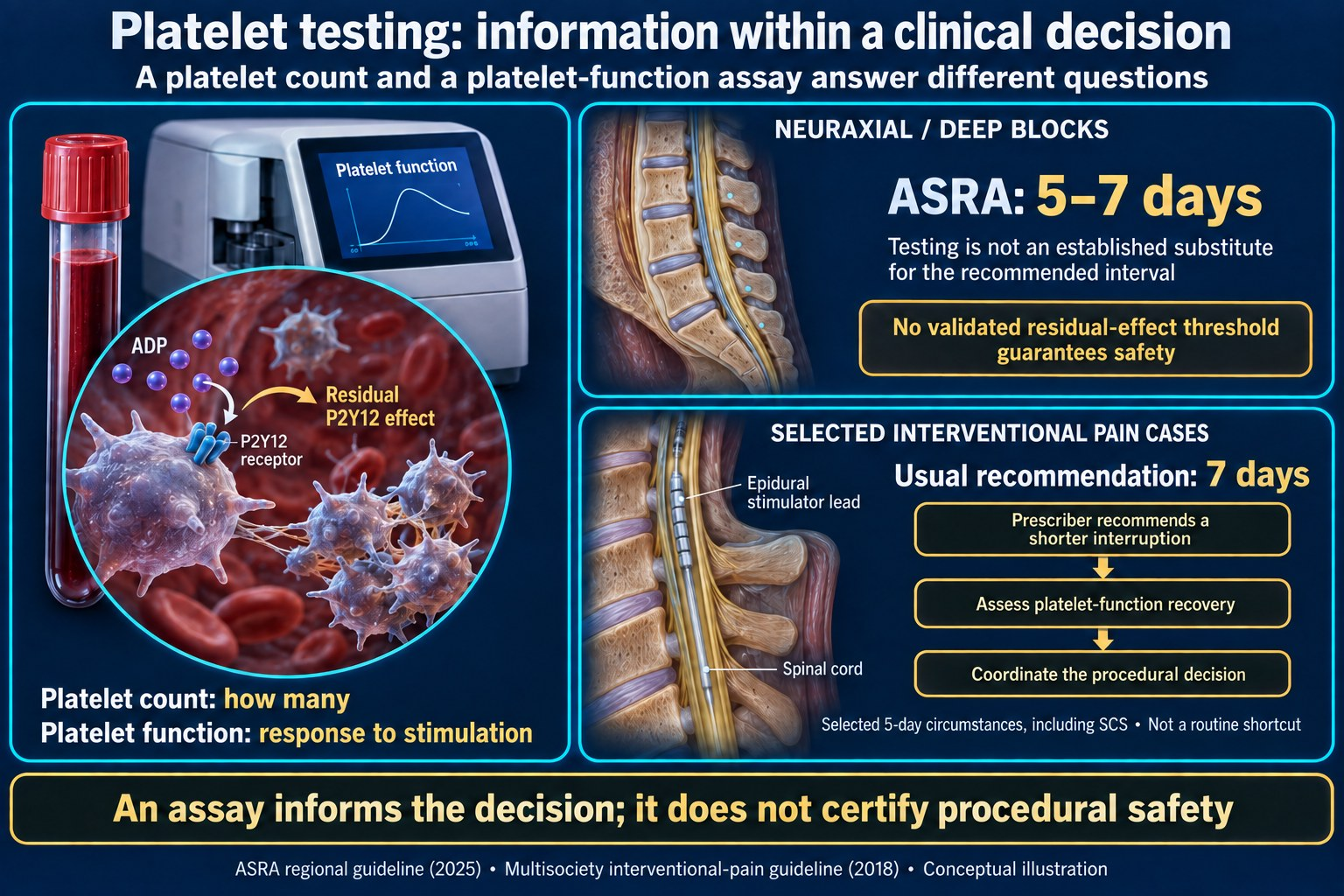
ASRA notes that residual antiplatelet effect can be assessed with platelet function assays (for example, PFA II or a P2Y12 assay), but only a normalized value would be useful, and an acceptable level of residual antiplatelet effect remains undetermined. For a spinal or an epidural, its recommendation is the 5–7 day interval itself, with no testing alternative attached.2
This is not an oversight, and the fifth edition makes that clear. The 2025 update was described by its lead author as differing from the fourth edition chiefly in two respects: revised terminology, and new guidance on when to order drug-specific coagulation assays.4 It introduced specific drug-level thresholds for the direct oral anticoagulants — residual apixaban, rivaroxaban, or edoxaban below 30 ng/mL, or anti-Xa activity at or below 0.1 IU/mL, as acceptable before neuraxial, deep plexus, or peripheral block.5 That is a genuine shift away from purely time-based decisions toward pharmacokinetically informed ones.
The guideline made that move for anticoagulants and did not make it for antiplatelet agents. So the absence of a testing pathway for clopidogrel before a spinal is a considered position in a document that was actively expanding the role of laboratory assessment elsewhere — not a gap left over from an older edition.
Interventional spine and pain procedures: 7 days
A separate multi-society guideline governs interventional spine and pain work — a joint document from ASRA Pain Medicine, ESRA, the American Academy of Pain Medicine, the International Neuromodulation Society, the North American Neuromodulation Society, and the World Institute of Pain.1
It stratifies procedures as low, intermediate, or high bleeding risk, and recommends 7-day cessation of clopidogrel before spine or pain intervention. Spinal cord stimulator trial and implant sit in the high-risk category, on the reasoning that lead placement requires larger-gauge needles with a different bevel and stylet, and that multiple insertion attempts may be needed for adequate coverage — both of which increase potential trauma to vessels in the epidural space.6
The five-day option, stated precisely
This is narrower than it is usually described, and the difference matters. The guideline’s provision is not “five days is acceptable if you check a platelet function test.” It is that if five days is what the managing cardiologist or vascular medicine physician recommends — specifically in the context of an extended spinal cord stimulator trial — then a test of platelet function should be performed.1
In other words, the shortened interval is driven by the patient’s thrombotic risk as judged by the physician managing it, and the platelet function test is the safety check placed on that decision. It is not a route the proceduralist takes unilaterally to save two days.
The guideline also notes the disagreement it is arbitrating: ASRA and European regional anesthesia guidance have recommended a 7-day interval, while Scandinavian guidance held that 5 days is probably adequate, on the reasoning that new platelets form at 10–15% per day, leaving 50–75% of the circulating platelet pool unaffected 5 days after the drug is stopped.1 That is a statement about the size of the unaffected pool, not a finding that clot formation is adequate at 5 days, and the guideline resolves the disagreement at 7 days.
A third number: ASIPP says 6 days
The American Society of Interventional Pain Physicians publishes its own guideline for interventional techniques, and it lands on a different figure again: clopidogrel and prasugrel discontinued for 6 days for high-risk and for intermediate or moderate-risk procedures, continued for low-risk procedures, with ticagrelor held 5 days for high-risk procedures.7 Two 2025 narrative reviews by the guideline’s lead author tabulate a shorter interval, 5 days for intermediate or moderate-risk procedures and 6 for high-risk, but they are secondary summaries and the guideline itself has not been amended.17,18 This page follows the guideline.
ASIPP also builds risk stratification from patient factors rather than procedure alone, listing severe degenerative arthritis, spinal stenosis, ankylosing spondylitis, osteoporosis, older age, frailty, prior stroke or intracranial bleed, hypertension, diabetes, thrombocytopenia, chronic renal failure, chronic NSAID or steroid therapy, multiple needle attempts, epidural fibrosis, and previous surgery as reasons to upgrade a procedure’s risk category.7
A fourth number: cardiology and surgery say 5 days
Outside the regional and interventional-pain world, the mainstream perioperative guidance for non-neuraxial surgery lands shorter still. Both the American College of Chest Physicians 2022 perioperative guideline and the 2026 American College of Cardiology scientific statement recommend stopping clopidogrel 5 days before an operation.12,13
This matters for two reasons. It shows the shorter interval is not a Scandinavian outlier but the position of mainstream cardiology and surgical bodies, and it is the reason a treating cardiologist and a proceduralist often start from different numbers when they discuss the same patient. It does not, however, license a 5-day interval before a spinal or an SCS: those procedures are governed by the neuraxial and interventional guidelines above, whose bleeding-risk calculus is different from that of general surgery.
Where that leaves you
| Doing this | Interval | Testing | Source |
|---|---|---|---|
| Spinal, epidural, deep plexus or peripheral block | 5–7 days | Not established as a substitute | ASRA 5th ed, 2025 |
| Interventional spine or pain procedure, including SCS | 7 days | Named option at 5 days, when the cardiologist sets that interval | Multi-society, 2018 |
| Interventional technique, ASIPP framework | 6 days (high and intermediate risk) | Not specified | ASIPP, 2024 |
| General surgery (non-neuraxial) | 5 days | Not specified | ACCP 2022; ACC 2026 |
Restarting — where the guidelines diverge again
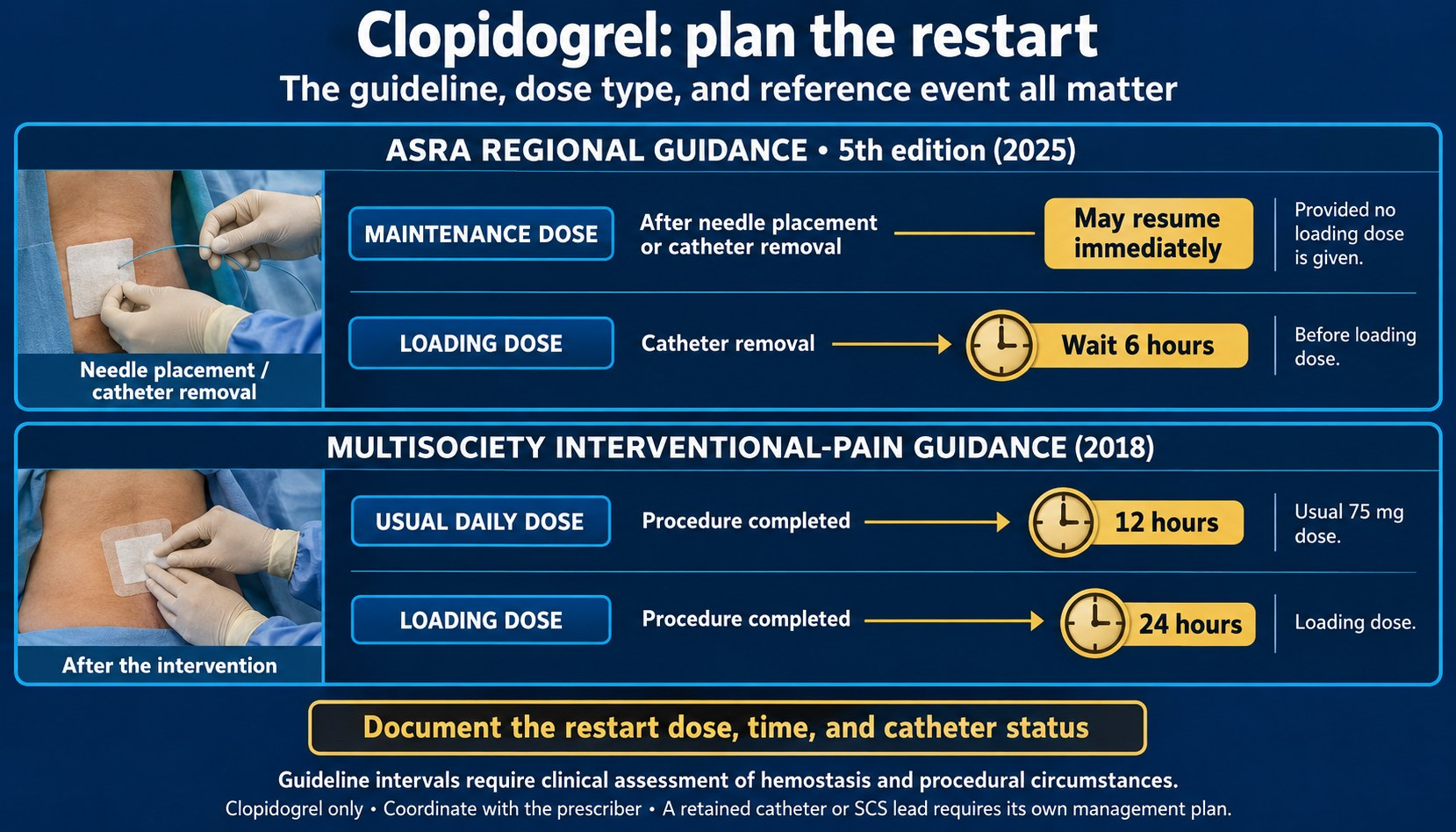
This is the half of the question most often left out, and the two documents do not agree here either.
| ASRA 5th edition (blocks) | Multi-society (pain procedures) | |
|---|---|---|
| Maintenance dose | May be resumed immediately after needle placement or catheter removal2 | Usual 75 mg daily dose may be started 12 hours later8 |
| Loading dose | 6 hours between catheter removal and administration2 | 24 hours8 |
| Prasugrel, ticagrelor | Catheters not maintained; rapid onset2 | 24 hours, whether a usual dose or a loading dose8 |
The dissent worth knowing about
The interventional pain community has not accepted the 7-day recommendation uniformly, and the disagreement is published rather than informal.
The Spine Intervention Society’s Patient Safety Committee, writing in its FactFinders series, notes that the guidelines recommend discontinuing clopidogrel before all intermediate-risk spinal interventions regardless of thrombotic risk, and states plainly that this recommendation may not be consistent with the facts derived from the available published evidence.9 Their position is that the decision to withhold antiplatelet therapy before a lumbar transforaminal epidural steroid injection should be made case by case.
Supporting observational data exist. A prospective series reported 278 cervical epidural injections performed on clopidogrel, warfarin, or aspirin, alone or in combination, without clinical epidural hematoma; a separate retrospective series of 240 cervical or thoracic interlaminar epidural injections in patients on anticoagulant or antiplatelet medication reported no symptomatic epidural hematomas.10
How to hold both of these at once. The observational data are reassuring and they are also underpowered for the outcome that matters — symptomatic epidural hematoma is rare enough that series of a few hundred cannot exclude a meaningful risk. That is the same limitation the guidelines themselves acknowledge: the rarity of spinal hematoma defies a prospective randomized study, and there is no laboratory model, so the recommendations rest on case reports, series, pharmacology, and expert consensus.11 Neither side of this disagreement has the evidence that would settle it.
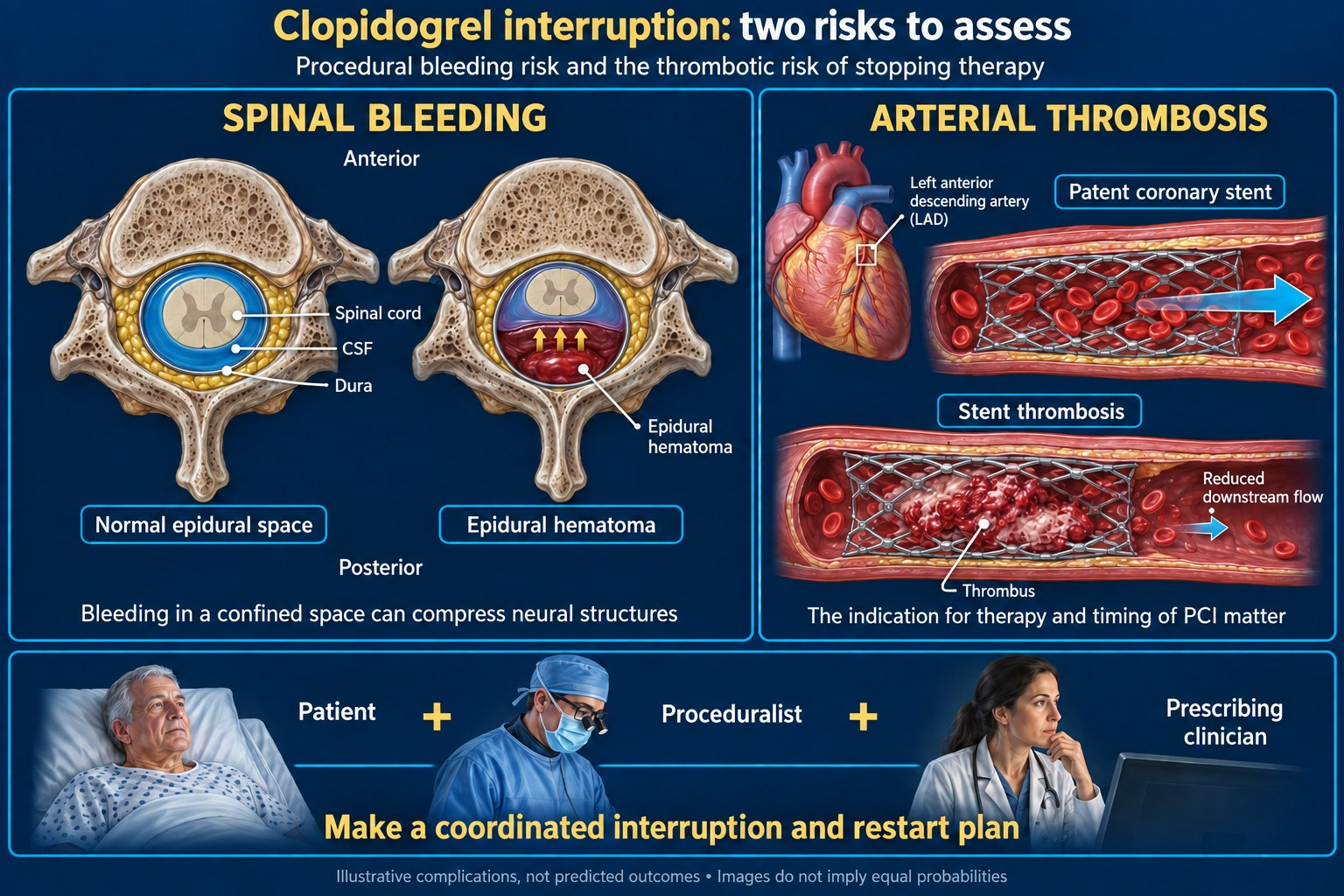
The other half of the decision: the risk of stopping
Every hold interval on this page is a bleeding-risk recommendation. None of them accounts for why the patient is taking the drug.
ASIPP states the trade-off directly: the risk of thromboembolic events and their associated morbidity and mortality is higher than the risk of epidural hematoma formation and its associated morbidity with prompt management — while noting that both risks are significant.7
Practically, that means the following patients deserve a conversation with the prescriber before the drug is held at all:
- Recent coronary stent — particularly within the first months after placement, where interruption of dual antiplatelet therapy carries stent thrombosis risk.
- Recent stroke or TIA on clopidogrel for secondary prevention.
- Peripheral arterial disease with prior revascularization.
- Any patient for whom an elective procedure is being scheduled around the hold — in which case the question is whether the procedure is worth the interruption, not how long the interruption should be.
Shared decision-making between the patient, the proceduralist, and the treating physicians is recommended whenever cessation is being contemplated.7 That recommendation exists because the person who prescribed the clopidogrel usually knows something the proceduralist does not.
The practical reading
- Spinal or epidural? Use the interval — 5–7 days. Testing is not an established substitute.
- Spinal cord stimulator or interventional pain procedure? Seven days is the recommendation. Five days with documented platelet function recovery is a named alternative, but it belongs to the situation where the cardiologist has set that interval, not to convenience.
- Expect cardiology to quote 5 days. That is correct for general surgery under ACCP and ACC guidance; it does not override the 7-day neuraxial/interventional numbers.
- Continue low-dose aspirin unless there is a specific reason not to — it is the P2Y12 agent that drives the hold.
- Lengthen the interval in renal impairment, where platelet inhibition is less predictable and hematomas despite a nominal hold have been reported.
- Check which guideline your institution has adopted. Several societies publish several intervals, and the number in your protocol came from one of them.
- Do not forget the restart. It differs between the two documents, and it is the part most likely to be omitted from a discharge order.
- Ask why the patient is on it before deciding how long to stop it.
- The interval often settles the anesthetic before anything else does. In the older hip fracture patient it decides spinal versus general on its own — which matters less than it sounds, because the randomized trials found neither technique superior, so there is little reason to delay surgery to make a spinal possible.
Frequently asked questions
How long should clopidogrel be held before a spinal or epidural?
Five to seven days. The ASRA Pain Medicine evidence-based guidelines, fifth edition (2025), give a suggested interval of 5–7 days between discontinuing clopidogrel and needle placement, graded IIC.2
Can a platelet function test replace the hold time before a neuraxial block?
No. ASRA notes that residual antiplatelet effect can be assessed with platelet function assays, but only a normalized value would be useful, and an acceptable level of residual antiplatelet effect remains undetermined; its recommendation is the 5–7 day interval, with no testing alternative attached.2 Notably, the fifth edition did introduce drug-level thresholds for direct oral anticoagulants — so the absence of a testing pathway for antiplatelet agents reflects a considered position rather than an outdated one.2,5
Why do some sources say 7 days and others say 5?
Because they govern different procedures — and different specialties weigh bleeding risk differently. The 5–7 day figure comes from the regional anesthesia guideline covering neuraxial and peripheral blocks. The 7-day figure comes from a separate multi-society guideline covering interventional spine and pain procedures.1,2 A third society, ASIPP, recommends 6 days for high and intermediate risk interventional techniques.7 Cardiology and surgical guidance — the 2022 ACCP guideline and the 2026 ACC statement — recommend 5 days before general surgery.12,13 The underlying disagreement is longstanding — Scandinavian guidance has held that 5 days is probably adequate, while ASRA and European regional anesthesia guidance recommended 7.1
When can clopidogrel be given at five days with platelet function testing?
The provision is narrower than it is usually described. The multi-society guideline recommends 7-day cessation, and states that if five days is what the managing cardiologist or vascular medicine physician recommends — specifically before an extended spinal cord stimulator trial — then a test of platelet function should be performed.1 The shortened interval is driven by the patient’s thrombotic risk as judged by the physician managing it; the platelet test is the check placed on that decision.
When should clopidogrel be restarted after a block or injection?
The two guidelines differ. ASRA states that thienopyridine therapy may be resumed immediately after needle placement or catheter removal, provided a loading dose is not administered, and suggests a 6-hour interval between catheter removal and a loading dose.2 The interventional pain guideline states that the usual 75 mg daily dose may be started 12 hours after the procedure, with a 24-hour interval if a loading dose is used.8
Can an epidural catheter be maintained on clopidogrel?
For 1–2 days, provided a loading dose is not administered — because the antiplatelet effect of clopidogrel is not immediate. Catheters should not be maintained on prasugrel or ticagrelor because of their rapid onset.2
Is it ever reasonable to proceed without holding clopidogrel?
For low-risk interventional techniques, ASIPP recommends continuation rather than cessation.7 The Spine Intervention Society has argued that the decision to withhold antiplatelet therapy before lumbar transforaminal epidural steroid injections should be made case by case rather than by universal policy.9 For neuraxial anesthesia, no guideline currently supports proceeding on a therapeutic antiplatelet agent, and the decision to do so in an urgent situation is an institutional and individual risk judgment rather than a guideline-supported one.
References
- Narouze S, Benzon HT, Provenzano D, Buvanendran A, De Andres J, Deer T, Rauck R, Huntoon MA. Interventional spine and pain procedures in patients on antiplatelet and anticoagulant medications (second edition): guidelines from the American Society of Regional Anesthesia and Pain Medicine, the European Society of Regional Anaesthesia and Pain Therapy, the American Academy of Pain Medicine, the International Neuromodulation Society, the North American Neuromodulation Society, and the World Institute of Pain. Reg Anesth Pain Med. 2018;43(3):225–262. doi:10.1097/AAP.0000000000000700. PMID 29278603
- Kopp SL, Vandermeulen E, McBane RD, Perlas A, Leffert L, Horlocker T. Regional anesthesia in the patient receiving antithrombotic or thrombolytic therapy: American Society of Regional Anesthesia and Pain Medicine Evidence-Based Guidelines (fifth edition). Reg Anesth Pain Med. Published online 29 January 2025. doi:10.1136/rapm-2024-105766. PMID 39880411
- ASRA Guidelines for Regional Anesthesia with Antithrombotic or Thrombolytic Therapy, 5th edition — guideline summary. Guideline Central, summarizing the guideline at reference 2. guidelinecentral.com/guideline/4293939. Tabulates the P2Y12 intervals and recommendation grades quoted above.
- Updated guidance on anesthesia with antithrombotic/thrombolytic therapy. Medscape, 7 February 2025. medscape.com/viewarticle/updated-guidance-anesthesia-antithrombotic-thrombolytic-2025a1000339. Media briefing remarks by lead author Sandra Kopp, MD, describing the two principal changes in the fifth edition.
- The drug-level thresholds for apixaban, rivaroxaban and edoxaban, and for low molecular weight heparin, are from the fifth-edition guideline itself at reference 2.
- ASRA Pain Medicine anticoagulation problem-based learning discussion: regional anesthesia and pain procedures in anticoagulated patients. ASRA Pain Medicine, 1 September 2025. asra.com/news-publications/asra-updates/blog-landing/legacy-b-blog-posts/2025/09/01/asra-pain-medicine-anticoagulation-pbld---regional-anesthesia-and-pain-procedures-in-anticoagulated-patients. Describes the rationale for classifying SCS trial and implant as high risk.
- Perioperative management of antiplatelet and anticoagulant therapy in patients undergoing interventional techniques: 2024 updated guidelines from the American Society of Interventional Pain Physicians (ASIPP). Pain Physician. 2024;27(S6):S1–S94. doi:10.36076/ppj.2024.7.s1.
- Updates to the ASRA guidelines for interventional pain procedures. ASRA News, 27 August 2019. asra.com/news-publications/asra-newsletter/newsletter-item/asra-news/2019/08/27/updates-to-the-asra-guidelines-for-interventional-pain-procedures. Summarizing restart intervals from the second-edition interventional guideline.
- FactFinders for patient safety: antithrombotics and interventional pain procedures — lumbar transforaminal epidural steroid injections and lumbar medial branch radiofrequency neurotomy. Spine Intervention Society Patient Safety Committee. Interv Pain Med. 2022. PMC11411602
- Safety profile of cervical transforaminal epidural steroid injections performed while maintaining anticoagulation, aspirin, or NSAIDs. Interv Pain Med. 2025. PMC12486170. Summarizing prior series by Furman and colleagues and a prospective series of cervical epidural injections on clopidogrel, warfarin, or aspirin.
- Kopp SL, et al., fifth edition, as at reference 2. Reg Anesth Pain Med. Published online 29 January 2025. doi:10.1136/rapm-2024-105766. PMID 39880411. On the methodological limits of the evidence base — the rarity of spinal hematoma precludes a prospective randomized study and no laboratory model exists.
- Douketis JD, Spyropoulos AC, Murad MH, et al. Perioperative management of antithrombotic therapy: an American College of Chest Physicians clinical practice guideline. Chest. 2022;162(5):e207–e243. Recommends stopping clopidogrel approximately 5 days before surgery.
- Kumbhani DJ, Gibson CM, Kinlay S, et al. Antiplatelet therapy in the management of atherosclerotic cardiovascular disease: 2026 ACC scientific statement: a report of the American College of Cardiology. J Am Coll Cardiol. 2026. Recommends discontinuing clopidogrel 5 days before surgery.
- Plavix (clopidogrel) prescribing information. Food and Drug Administration, 2025. Steady-state inhibition of platelet aggregation of approximately 40–60% with 75 mg daily; platelet aggregation and bleeding time return toward baseline generally about 5 days after discontinuation; reduced platelet inhibition in renal impairment.
- Schilling U, Dingemanse J, Ufer M. Pharmacokinetics and pharmacodynamics of approved and investigational P2Y12 receptor antagonists. Clin Pharmacokinet. 2020;59(5):545–566. Up to approximately 40% of patients respond poorly to clopidogrel, largely from insufficient active-metabolite generation, drug interactions, and CYP2C19 polymorphism.
- Douketis JD, Spyropoulos AC, Murad MH, et al. Perioperative management of antithrombotic therapy: an American College of Chest Physicians clinical practice guideline. Chest. 2022;162(5):e207–e243; and Keeling D, Tait RC, Watson H. Peri-operative management of anticoagulation and antiplatelet therapy. Br J Haematol. 2016;175(4):602–613. Low-dose aspirin is generally continued through neuraxial and interventional procedures.
- Manchikanti L, Kaye AD, Nampiaparampil DE, et al. Perioperative management of patients receiving interventional techniques and antiplatelet and anticoagulant therapy: a balancing act. Curr Pain Headache Rep. 2025;29(1):107. doi:10.1007/s11916-025-01405-z. Narrative review; tabulates clopidogrel and prasugrel at 5 days for intermediate/moderate risk and 6 days for high risk.
- Manchikanti L, Abd-Elsayed A, Kaye AD, et al. Review of guidelines for implantable peripheral nerve stimulation (PNS) in the management of chronic pain. Curr Pain Headache Rep. 2025;29(1):89. doi:10.1007/s11916-025-01397-w. Carries the same 5-day intermediate-risk table.
Disclaimer. Reference information for licensed clinicians and students. Not a medical device, and not a substitute for clinical judgment. These are guidelines rather than protocols. The bleeding risk of the specific procedure and the thrombotic risk of interrupting the drug both belong in the decision. Verify against your institutional protocol and current package inserts.
The hold and restart intervals in this article are the ones that ship inside Helix Anesthesia — a point-of-care reference built by a practicing CRNA, with an anticoagulation screen carrying hold and restart intervals for antiplatelets, warfarin, heparins and DOACs, all cited. See how we source clinical content.
Built for the anesthesia machine, not the desk. It opens in one tap, works with no signal in an OR that has none, and shows the citation on screen beside the number rather than making you go and find it.
Free tier, no card: every calculator, every crisis checklist, the full drug library and glossary, three complete regional blocks, five complete surgical cases, and 15 AI questions a month.
Get Helix Anesthesia How we source itSign up for our newsletter and special offers. New answer pages, improvements to the ones already here, and the occasional offer. Nothing else, and not often.
Medications before surgery
- GLP-1 agonists — start here
- Steroid stress dosing