
Mast cell activation syndrome and anesthesia
No society guideline exists. The plan is built from the pharmacology of histamine release and the individual patient’s trigger list — and the second one is more specific than the first.
Every clinical claim on this page is cited to its source below. How we source clinical content.
The short answer
No society guideline exists for anesthesia in mast cell activation syndrome (MCAS) itself; the strongest perioperative evidence comes from the mastocytosis literature. The plan is built from avoiding histamine-releasing agents and from the patient’s own trigger list, which is more specific than any published table. Continue antihistamines through the perioperative period. A degranulation event is not anaphylaxis but is treated identically — epinephrine first.
Mast cell activation syndrome is one of the conditions where a patient often knows considerably more about their own triggers than the literature does. There is no society guideline for its perioperative management, and the practical plan is built from the pharmacology of mast cell degranulation plus the individual patient’s history. Much of the transferable perioperative guidance comes from systemic mastocytosis, a related but distinct clonal disorder.
What MCAS is, in one box. The consensus (Consensus-1) criteria require all three of: (1) recurrent systemic symptoms of mast cell activation in two or more organ systems; (2) an event-related rise in serum tryptase of at least 20% above the individual baseline plus 2 ng/mL (i.e., 1.2 × baseline + 2 ng/mL); and (3) response to mast cell mediator–targeted therapy. MCAS is contested and prone to overdiagnosis: broad symptom-based “alternative” criteria capture far larger and less specific populations than the consensus criteria, so the diagnosis a patient carries may have been made against very different thresholds (Weiler et al., J Allergy Clin Immunol, 2019; Castells et al., J Allergy Clin Immunol, 2024).
Key takeaways
- The core principle is avoiding histamine-releasing agents where MCAS is present — the one thing the perioperative literature consistently states.
- Continue the patient’s antihistamine regimen through the perioperative period rather than stopping it for fasting; maintaining regularly scheduled H1/H2 blockade before and after procedures is explicitly recommended in the mastocytosis literature.
- Induction agents producing minimal hemodynamic change — propofol, etomidate or ketamine — are conventionally preferred.
- Fentanyl, sufentanil and ketamine are described as good analgesic choices for maintaining hemodynamic stability without releasing histamine.
- Direct histamine release is not the same as IgE-mediated allergy. An agent can be “low-releasing” for direct degranulation yet still be a leading cause of IgE-mediated perioperative anaphylaxis (rocuronium is the key example).
- MCAS is not anaphylaxis, but a degranulation event can look identical intraoperatively — and is treated the same way when it does.
- The MCAS–hEDS–POTS association is frequently cited but contested. Ask about co-diagnoses, but treat the overlap as unproven rather than established.
The agents that matter
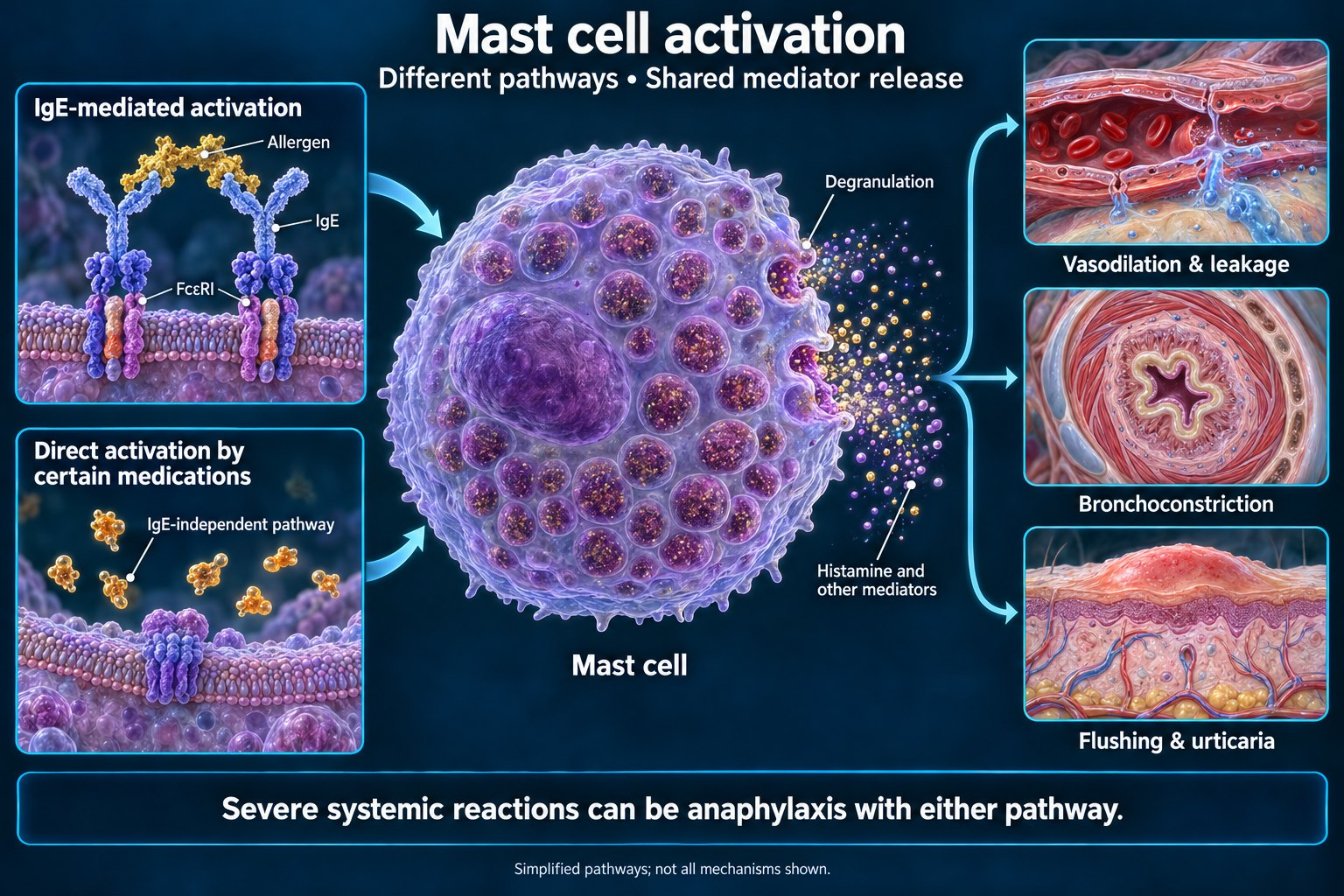
Mast cell degranulation can be triggered by direct pharmacologic histamine release, independent of any IgE-mediated allergy — largely through the MRGPRX2 receptor. That distinction is what makes the drug list matter in two directions: an agent can be entirely safe from an allergy standpoint and still be a poor choice because it degranulates directly, and — conversely — an agent that is a weak direct releaser can still be a common cause of true IgE-mediated anaphylaxis.
| Class | Consideration |
|---|---|
| Neuromuscular blockers | Historically the most-cited direct histamine releasers, with benzylisoquinolinium agents such as atracurium and mivacurium the classic examples. The NCCN Systemic Mastocytosis guideline also lists succinylcholine among relaxants to avoid. Rocuronium, vecuronium and cisatracurium are conventionally regarded as low direct releasers — but note that rocuronium (and succinylcholine) are among the most frequent causes of IgE-mediated perioperative anaphylaxis, so “low-releasing” does not mean “low-risk”3,4,5,6,11 |
| Opioids | Morphine, meperidine and codeine are the classic direct releasers. Fentanyl and sufentanil are described as good choices for maintaining stability without histamine release1,6 |
| Induction agents | Agents producing minimal hemodynamic change — propofol, etomidate or ketamine — may be preferred1,3 |
| Generally regarded as safe | Volatile agents (sevoflurane, isoflurane) and local anesthetics (lidocaine, bupivacaine) are conventionally considered low-risk in mastocytosis3,9 |
| Vancomycin | Rate-dependent direct release via MRGPRX2 (the vancomycin infusion reaction, formerly “red man syndrome”).2 Infuse slowly; the reaction is not an allergy and is dose-rate driven |
| NSAIDs | A recognized trigger in some patients — yet aspirin/NSAIDs are also therapeutic for flushing in a subset. Ask specifically rather than assuming either tolerance or intolerance |
| Contrast media, latex, chlorhexidine | Non-drug exposures worth checking, since they are frequently overlooked in a drug-focused history |
| Physical triggers | Temperature change, mechanical pressure and friction are described triggers, which makes positioning, warming and skin preparation part of the plan rather than incidental. Emotional stress/anxiety is also a recognized trigger |
The most useful list is the patient’s own. MCAS triggers are highly individual, and most patients with an established diagnosis maintain a list of agents they have and have not tolerated. That list is more specific than any general table — including this one — and it should be obtained and read rather than summarized.
This is in the app, with the calculators and the drug library — free tier, no card. Get it →
Building the plan
Preoperatively
- Continue the antihistamine regimen. H1 and H2 blockers taken chronically should be continued through the perioperative period rather than held for fasting. In the mastocytosis literature, maintaining regularly scheduled antihistamine treatment before and after procedures is explicitly recommended,1,14 and H1/H2 antagonists are also what a perioperative flare is treated with. Formal trial evidence in MCAS specifically is lacking, but continuation is more than bare inference.
- Consider structured premedication. Regimens combining H1 and H2 blockade with a corticosteroid — and, in several protocols, a benzodiazepine to blunt anxiety-triggered degranulation — are widely used before general anesthesia and major surgery. Protocols are institutionally variable; there is no consensus dose or timing.1,3,15
- Establish what a reaction looks like in this patient. Flushing, hypotension, bronchospasm, GI symptoms, urticaria — the presenting pattern is individual and knowing it in advance shortens recognition time.
- Risk-stratify. Identified risk factors for perioperative anaphylaxis in mast cell disease include general anesthesia, major/invasive surgery, absence of premedication, prior anaphylaxis, and an elevated baseline tryptase. Higher-risk patients warrant the most aggressive premedication and monitoring.9,12
- Ask about mastocytosis specifically. Systemic mastocytosis is a distinct clonal disorder with a higher risk profile than MCAS and warrants hematology input.
- Ask about co-diagnoses. Hypermobile EDS and POTS are commonly reported together with MCAS, though the association is contested (see below). Each, if truly present, adds separate considerations.
Intraoperatively
- Choose agents deliberately using the table above and the patient’s list.
- Minimize the number of drugs. Every additional agent is another possible trigger and another confounder if a reaction occurs.
- Attend to physical triggers — temperature swings, prep solutions, adhesive and mechanical pressure.
- Have the anaphylaxis drugs immediately available, not merely in the building. Epinephrine is the treatment for a severe degranulation event as it is for anaphylaxis.
If a reaction occurs
Treat it as anaphylaxis. Follow perioperative anaphylaxis algorithms: titrated IV epinephrine (bolus or infusion) with aggressive IV fluid resuscitation, along with removal of the suspected trigger.10,11 The distinction between IgE-mediated anaphylaxis and non-immunologic mast cell degranulation matters for the subsequent workup and for future anesthetics — it does not change the immediate management. Note that sugammadex is not a treatment for rocuronium-triggered anaphylaxis and is itself a potential allergen.
Send tryptase levels with attention to timing. Draw an acute sample ideally 30 minutes to 2 hours after onset (informative up to ~4 hours), and a baseline sample at least 24 hours after full resolution. A clinically meaningful acute elevation is confirmed when the acute tryptase exceeds 1.2 × baseline + 2 ng/mL.3,16,17
One thing that separates MCAS from an allergy history. A patient who reacted to an agent may not have an IgE-mediated allergy to it, which means allergy testing can come back negative while the clinical event was entirely real. A negative test does not license rechallenge with a known direct histamine releaser in a patient who reacted to it.
The EDS / POTS / MCAS overlap — what the evidence actually shows
This triad is widely repeated, but the supporting evidence is weak and contested. A 2025 systematic review found no studies meeting strict diagnostic criteria that confirmed a true relationship among mast cell activation disorders, POTS and EDS.8 The 2025 AGA clinical practice update describes the biological link as theoretical with limited supporting evidence.7 Reported prevalence swings enormously with the definition used — in one POTS cohort, MCAS prevalence ranged from roughly 2% to 87% depending on the criteria applied.13 Much of the apparent co-occurrence derives from referral populations and overlapping, nonspecific symptoms. Ask about co-diagnoses and account for any that are genuinely established, but do not present the overlap as settled.
What the evidence base actually is
Thin, and worth saying plainly. There is no randomized evidence, no society guideline for MCAS-specific perioperative care, and considerable practice variation. The strongest transferable evidence comes from the systemic mastocytosis literature (including the NCCN Systemic Mastocytosis guideline)3 and from mechanistic work on MRGPRX2-mediated direct degranulation by perioperative drugs,5,6 rather than from trials in MCAS patients. The EDS-focused review this page originally leaned on1 is a comparatively weak anchor for the core drug recommendations, which are better grounded in the mastocytosis and MRGPRX2 sources.
The practical consequence is that individual history carries unusual weight — previous anesthetic records, the patient’s own trigger list, and what has been tolerated before are the best available data.
Frequently asked questions
What anesthesia drugs are safe with MCAS?
There is no definitive safe list, but the general principle is to avoid agents that directly release histamine. Fentanyl, sufentanil and ketamine are described as good choices for maintaining hemodynamic stability without histamine release,1,6 and induction agents producing minimal hemodynamic change — propofol, etomidate or ketamine — are commonly preferred.1,3 Volatile agents and local anesthetics are conventionally regarded as low-risk. The patient’s own record of what they have tolerated is more useful than any general list.
Which anesthetic drugs release histamine?
Classically, morphine, meperidine and codeine among opioids, and benzylisoquinolinium neuromuscular blockers such as atracurium and mivacurium. The NCCN guideline also lists succinylcholine among relaxants to avoid.3 Vancomycin causes infusion rate-dependent direct mast cell degranulation via MRGPRX2 — the vancomycin infusion reaction, formerly called red man syndrome — which is not an allergy.2,5 Separately, rocuronium and succinylcholine are leading causes of true IgE-mediated perioperative anaphylaxis even though they are weak direct releasers.6,11 NSAIDs, contrast media, latex and chlorhexidine are recognized triggers in some patients. Physical triggers including temperature change and mechanical pressure also matter.
Should I take my antihistamines before surgery?
Generally yes. Antihistamines are the maintenance treatment for mast cell activation syndrome, and continuing regularly scheduled H1 and H2 blockade before and after procedures is recommended in the mastocytosis literature,1,14 so stopping them on the morning of surgery removes the background control at the point of maximum provocation. Confirm with your anesthesia team in advance, since fasting instructions frequently sweep up medications that should be continued.
Is MCAS the same as anaphylaxis?
No. Anaphylaxis is typically IgE-mediated; MCAS involves inappropriate mast cell degranulation that can be triggered directly by drugs and physical stimuli without an allergic mechanism. But a severe degranulation event can look identical intraoperatively and is treated identically — titrated epinephrine and fluids first. The distinction matters for the subsequent workup, not the immediate response.
Can I have surgery safely with MCAS?
Yes, with planning. The elements are a deliberate agent selection, continuation of the antihistamine regimen, structured premedication where indicated, attention to physical triggers, and immediate availability of anaphylaxis treatment. The main limitation is that the evidence base consists of reviews and pharmacologic reasoning rather than trials, which makes the individual history unusually important.
Is MCAS related to Ehlers-Danlos syndrome and POTS?
They are frequently reported together, but the association is contested and not confirmed by studies using strict diagnostic criteria.7,8 Where all three are genuinely present, each contributes separate perioperative considerations — mast cell triggers and agent selection from MCAS, volume dependence and orthostatic intolerance from POTS, and joint and skin fragility plus local anesthetic resistance from hypermobile EDS.
References
- Chopra P, Bluestein L. Perioperative care in patients with Ehlers Danlos syndromes. Open Journal of Anesthesiology. 2020;10(1):13–29. doi:10.4236/ojanes.2020.101002. Review covering coexisting mast cell activation syndrome, dysautonomia and gastroparesis. Sources the recommendations to avoid histamine-releasing agents, to prefer induction agents with minimal hemodynamic change such as etomidate or ketamine, and to use fentanyl, sufentanil or ketamine for analgesia without histamine release.
- Zhu LJ, Liu AY, Wong PH, Arroyo AC. Road less traveled: drug hypersensitivity to fluoroquinolones, vancomycin, tetracyclines, and macrolides. Clin Rev Allergy Immunol. 2022;62(3):505–518. doi:10.1007/s12016-021-08919-5. PMID 35092578. Source of the vancomycin mechanism: the vancomycin infusion reaction, previously called red man syndrome, is caused by infusion rate-dependent direct mast cell degranulation, with MRGPRX2 implicated and IgE-mediated reactions rare.
- National Comprehensive Cancer Network. NCCN Clinical Practice Guidelines in Oncology: Systemic Mastocytosis. 2026.
- Naguib M, Samarkandi AH, Bakhamees HS, Magboul MA, el-Bakry AK. Histamine-release haemodynamic changes produced by rocuronium, vecuronium, mivacurium, atracurium and tubocurarine. Br J Anaesth. 1995;75(5):588–592.
- McNeil BD, Pundir P, Meeker S, et al. Identification of a mast-cell-specific receptor crucial for pseudo-allergic drug reactions. Nature. 2015;519(7542):237–241.
- Navinés-Ferrer A, Serrano-Candelas E, Lafuente A, et al. MRGPRX2-mediated mast cell response to drugs used in perioperative procedures and anaesthesia. Sci Rep. 2018;8:11628.
- Aziz Q, Harris LA, Goodman BP, Simrén M, Shin A. AGA clinical practice update on GI manifestations and autonomic or immune dysfunction in hypermobile Ehlers-Danlos syndrome: expert review. Clin Gastroenterol Hepatol. 2025.
- Farley M, Estrada-Mendizabal RJ, Gansert EA, et al. Prevalence of mast cell activation disorders and hereditary alpha tryptasemia among patients with postural orthostatic tachycardia syndrome and Ehlers-Danlos syndrome: a systematic review. Ann Allergy Asthma Immunol. 2025.
- Requena López S, Matito A, Alvarez-Twose I, Torrelo A. Perioperative anaphylaxis in a patient with a solitary mastocytoma. Pediatr Dermatol. 2019.
- Dodd A, Turner PJ, Soar J, Savic L. Emergency treatment of peri-operative anaphylaxis: Resuscitation Council UK algorithm for anaesthetists. Anaesthesia. 2024.
- Garvey LH, Dewachter P, Hepner DL, et al. Management of suspected immediate perioperative allergic reactions: an international overview and consensus recommendations. Br J Anaesth. 2019;123(1):e50–e64.
- Kačar M, Rijavec M, Šelb J, Korošec P. Clonal mast cell disorders and hereditary α-tryptasemia as risk factors for anaphylaxis. Clin Exp Allergy. 2023.
- Yao L, Subramaniam K, Raja KM, et al. Association of postural orthostatic tachycardia syndrome, hypermobility spectrum disorders, and mast cell activation syndrome in young patients; prevalence, overlap and response to therapy depends on the definition. Front Neurol. 2024.
- Schaffer JV. Pediatric mastocytosis: recognition and management. Am J Clin Dermatol. 2021.
- van der Weide HY, van Westerloo DJ, van den Bergh WM. Critical care management of systemic mastocytosis: when every wasp is a killer bee. Crit Care. 2015;19:238.
- Castells M, Giannetti MP, Hamilton MJ, et al. Mast cell activation syndrome: current understanding and research needs. J Allergy Clin Immunol. 2024.
- Weiler CR, Austen KF, Akin C, et al. AAAAI Mast Cell Disorders Committee work group report: mast cell activation syndrome (MCAS) diagnosis and management. J Allergy Clin Immunol. 2019;144(4):883–896.
Further reading
- Solomon BD, Khatri P. Clustering of clinical symptoms using large language models reveals low diagnostic specificity of proposed alternatives to consensus mast cell activation syndrome criteria. J Allergy Clin Immunol. 2025.
- Laserna A, Nishtar M, Vidovich C, Borovcanin Z. Perioperative management of Ehlers-Danlos type III syndrome associated with postural orthostatic tachycardia in patients undergoing general anesthesia. Cureus. 2021;13(11):e19311. doi:10.7759/cureus.19311
- Malfait F, Francomano C, Byers P, et al. The 2017 international classification of the Ehlers-Danlos syndromes. Am J Med Genet C Semin Med Genet. 2017;175(1):8–26.
Disclaimer. Reference information for licensed clinicians and students. Not a medical device, and not a substitute for clinical judgment. There is no society guideline for the perioperative management of mast cell activation syndrome; the guidance here derives from the systemic mastocytosis literature, mechanistic studies, and pharmacologic reasoning rather than trials in the MCAS population. Verify against your institutional protocol and current package inserts.
Agent selection and trigger avoidance like this ship inside Helix Anesthesia — a point-of-care reference built by a practicing CRNA, cited and available offline. See how we source clinical content.
Built for the anesthesia machine, not the desk. It opens in one tap, works with no signal in an OR that has none, and shows the citation on screen beside the number rather than making you go and find it.
Free tier, no card: every calculator, every crisis checklist, the full drug library and glossary, three complete regional blocks, five complete surgical cases, and 15 AI questions a month.
Get Helix Anesthesia How we source itSign up for our newsletter and special offers. New answer pages, improvements to the ones already here, and the occasional offer. Nothing else, and not often.
Hypermobility and dysautonomia
- Ehlers-Danlos syndrome — start here
- POTS