
Intrathecal morphine: who follows the patient for 24 hours?
The 24-hour observation requirement is real and it is federal. It is also a requirement on the unit, not an assignment to a service — and it is routinely confused with a different obligation that runs for 48 hours.
Every clinical claim on this page is cited to its source below. How we source clinical content.
The short answer
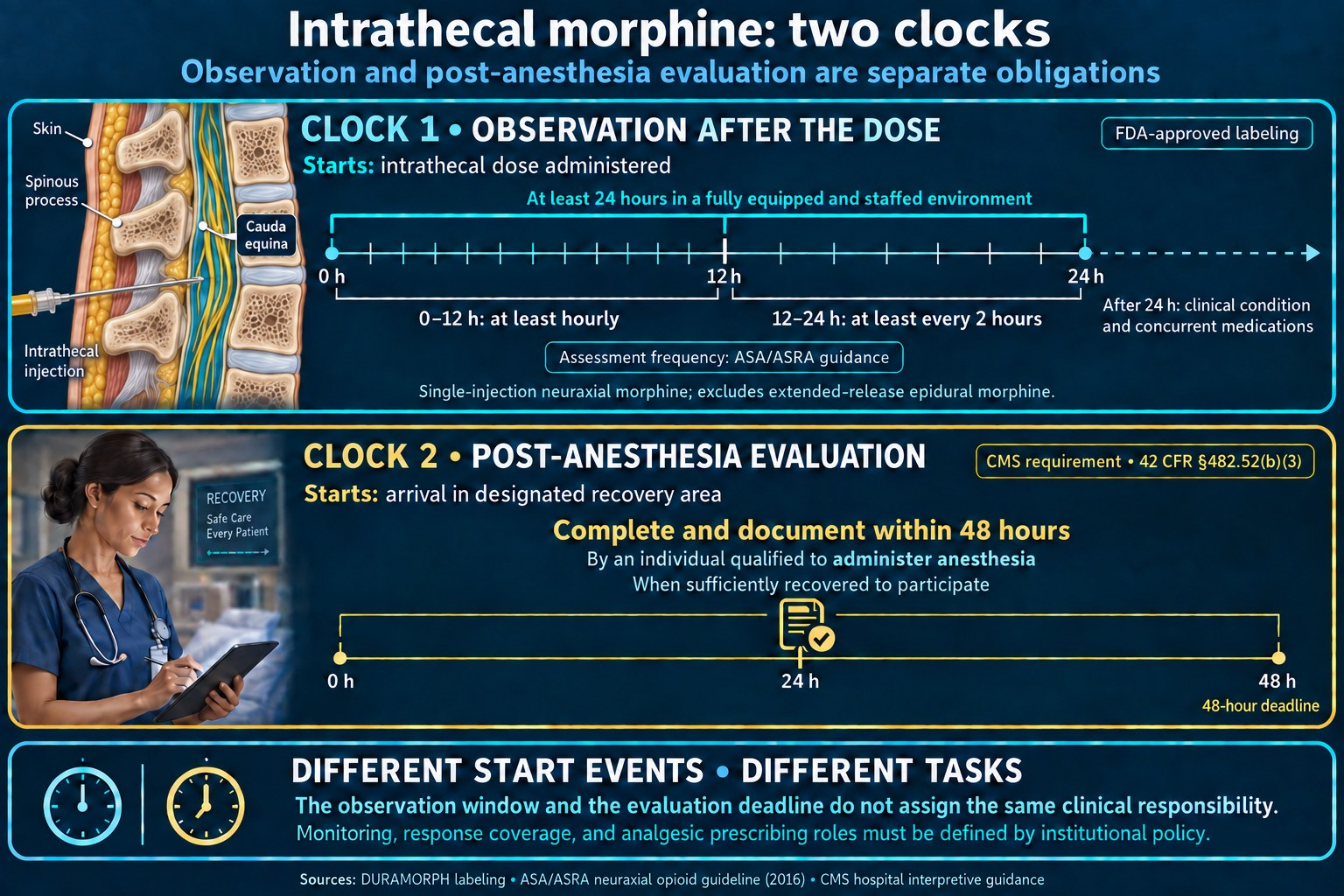
The unit does, not a service. The FDA label requires 24 hours of observation in a fully equipped, staffed environment after the initial neuraxial dose, which is a statement about the capability of the unit. A separate federal rule requires one documented post-anesthesia evaluation within 48 hours. The two are constantly conflated.
Ask around a department about what has to happen after a single intrathecal dose of preservative-free morphine and you will hear six different rules described as though they were one. Some of them are binding. Some are society consensus. At least one is usually local habit that nobody can produce in writing. Separating them is the whole exercise, because the layers do not run for the same length of time and they do not cover the same activity.
Key takeaways
- The US Food and Drug Administration (FDA) label requires 24 hours of observation in a fully equipped and staffed environment after the initial neuraxial dose. That is a statement about the capability of the unit — monitoring, resuscitation equipment, naloxone, trained staff.
- The real federal “anesthesia follows the patient” rule is different. Title 42 of the Code of Federal Regulations (CFR) §482.52(b)(3) requires one documented post-anesthesia evaluation within 48 hours by an individual qualified to administer anesthesia. A certified registered nurse anesthetist (CRNA) qualifies.
- These two are constantly conflated. A 24-hour observation window and a 48-hour documentation requirement are not the same obligation, and neither is 24-hour analgesic order-writing.
- The monitoring schedule from the American Society of Anesthesiologists and the American Society of Regional Anesthesia and Pain Medicine (ASA/ASRA) is consensus, and says so. Hourly for 12 hours, then every 2 hours to 24 hours, then dictated by clinical condition. No fixed schedule beyond 24 hours for single-injection morphine.
- The four-hourly, 48-hour tail is a different drug. It belongs to sustained- or extended-release epidural morphine, not to a single intrathecal injection.
- No source reviewed names a responding service. The label requires that someone capable be available; which service that is remains institutional design.
- The benefit is real and quantified. Rest pain 1.7 points lower at 8–12 hours after joint arthroplasty; 18.4 mg less intravenous morphine equivalent on day one after abdominal surgery.
- The dose the label was written against is not the dose we give. Contemporary low-dose practice is up to about 150 mcg; the alarming early literature used milligrams.
- The largest meta-analysis reports no increase in sedation or hypoxemia across 127 trials and 7,388 patients, no increase in the need for oxygen, naloxone or escalated care, and no deaths.
Six requirements, three levels of authority
| Requirement | Status | Source |
|---|---|---|
| Observation in a fully equipped and staffed environment for at least 24 hours after the initial dose | Required — FDA labeling | Duramorph / preservative-free morphine package insert1 |
| A post-anesthesia evaluation documented within 48 hours by an individual qualified to administer anesthesia | Required — federal regulation | 42 CFR §482.52(b)(3)3 |
| A written hospital policy on analgesia, based on nationally recognized guidelines | Required — federal regulation | Centers for Medicare & Medicaid Services (CMS) interpretive guidance, §482.524 |
| A specified intermittent monitoring schedule across the first 24 hours, with no fixed schedule beyond it | Recommended — society consensus | ASA/ASRA practice guidelines, 20162 |
| Serial assessment of the quality and adequacy of respiration and the depth of sedation, at an interval the organization determines | Recommended — accreditation advisory | Joint Commission Sentinel Event Alert 495 |
| Anesthesia writes floor analgesia orders and remains the on-call service for 24 hours | Not addressed by any source reviewed | Local institutional policy |
Rows one through three are binding and traceable to a document you can put on a table. Rows four and five are recommendations rather than requirements, and they sit closer together than the usual summaries of them suggest: one sets the interval, the other leaves it to the hospital. Row six — the practice that prompts most of these conversations — appears in none of them.
This is in the app, with the opioid conversion tools — free tier, no card. Get it →
What the FDA label actually requires
The requirement most clinicians are half-remembering is boxed-warning language that has been in the preservative-free morphine labeling for decades, which is why it circulates without a citable origin. The label states that single-dose neuraxial administration may result in acute or delayed respiratory depression for up to 24 hours, and that because of the risk of severe adverse reactions by the epidural or intrathecal route, patients must be observed in a “fully equipped and staffed environment” for at least 24 hours after the initial dose.1
The rest of the label is about capability rather than personnel, with a single exception noted below:
- The facility must be able to resuscitate a patient with severe opioid overdose, and staff must be familiar with the use and limitations of naloxone and naltrexone.1
- The drug should be administered by or under the direction of a physician experienced in the techniques of epidural or intrathecal administration and familiar with the associated patient management problems, and administration should take place only in settings where adequate patient monitoring is possible.1
- Respiratory depression, early and late, has occurred more often after intrathecal than after epidural administration.1
- Neuraxial administration is recommended to be limited to the lumbar area; thoracic epidural administration dramatically increases early and late respiratory depression even at 1–2 mg.1
The label says physician, and it is worth being exact about what that settles. That clause governs who administers or directs the injection. It is not about who observes the patient over the following 24 hours, and it is the only place the label names a specific profession rather than a generic category of staff — no service is named anywhere in it, least of all in the 24-hour requirement. What the clause settles is that the technique needs someone experienced in it. What it does not settle is who may be that person: scope of practice is set by state law and by facility privileging, and a package insert is not the instrument that grants or withholds it. The label also states that the task of treating these patients must be undertaken by experienced clinical teams.1
Read the grammar of the requirement. Every clause of the 24-hour requirement itself is about what the environment must have: monitoring, resuscitation equipment, reversal agents, trained personnel. None of it names a service. If your postoperative unit meets that description, the label’s requirement is satisfied by the unit — not by any individual clinician staying tethered to the patient for a day.
The federal requirement people are actually thinking of
Neither the drug label nor a society guideline is the highest authority in play for a Medicare-participating hospital. The Conditions of Participation are, and one of them does create a genuine anesthesia follow-up obligation.
42 CFR §482.52(b)(3) requires a post-anesthesia evaluation, completed and documented by an individual qualified to administer anesthesia, no later than 48 hours after surgery or a procedure requiring anesthesia services. It must be performed in accordance with state law and with medical-staff-approved hospital policy.3
| Point | Detail |
|---|---|
| Who can do it | An individual qualified to administer anesthesia under §482.52(a) — which includes a CRNA. An anesthesiologist is not required.3 It cannot be delegated to someone not so qualified.4 |
| When the clock starts | CMS interpretive guidance ties the 48 hours to the point the patient is moved into the designated recovery area.4 |
| When to do it | Not until the patient has recovered enough to participate in it.4 |
| Where | The post-anesthesia care unit, intensive care unit, or another designated recovery location.4 |
| What it is not | It is a single documented evaluation. It is not analgesic order-writing and it is not 24-hour on-call coverage.3 |
This distinction is probably the origin of the whole muddle. There genuinely is a federal rule that anesthesia has to see the patient again after the case. Its scope is one note within two days. Somewhere between the regulation and the ward, that became a day of ownership.
Separately, CMS guidance requires hospitals to maintain policies specifying the qualifications and supervision requirements for each category of practitioner who administers analgesia, and requires those policies to be anchored to nationally recognized guidelines.4 Two things follow: a written policy should exist, and for neuraxial opioids the guideline it should be anchored to is the ASA/ASRA document.
What the ASA/ASRA guideline says — and what it says about itself
The schedule that applies
For single-injection neuraxial hydrophilic opioids — the category that covers intrathecal morphine:2
- Monitor for a minimum of 24 hours after administration.
- At least once per hour for the first 12 hours.
- At least once every 2 hours from 12 to 24 hours.
- After 24 hours, frequency is dictated by the patient’s overall clinical condition and concurrent medications.
The most common error in local policies. A four-hourly schedule continuing for 48 hours is frequently written into intrathecal morphine protocols. That recommendation belongs to sustained- or extended-release epidural morphine, a different product with different pharmacokinetics.2 For a single intrathecal injection, the guideline sets no fixed schedule beyond 24 hours. Importing the extended-release tail makes the requirement look roughly twice as long as it is, and it is an easy error to make from guideline summaries that collapse the categories.
The general recommendations
- Monitor all patients receiving neuraxial opioids for adequacy of ventilation — including depth of respiration, assessed without disturbing a sleeping patient — oxygenation, and level of consciousness.2
- Increased monitoring may be warranted for unstable medical condition, obesity, obstructive sleep apnea, concomitant opioids or hypnotics by other routes, and extremes of age.2
- Administer the lowest efficacious dose.2
- Match the duration of monitoring to the pharmacokinetics of the specific drug given.2
- Do not give neuraxial morphine or hydromorphone to outpatient surgical patients, based on the duration of action of hydrophilic opioids.2
Three things about the guideline’s own status
First, it disclaims being a requirement. The document states plainly that ASA practice guidelines are not standards or absolute requirements, that they may be adopted, modified or rejected according to clinical needs and constraints, and that they are not intended to replace local institutional policies.2 A local policy cannot be defended on the grounds that this document mandates it.
Second, every monitoring interval is consensus. Each monitoring recommendation is preceded by the same literature finding: the evidence is insufficient to assess whether any time interval is optimal for detecting respiratory depression or reducing the risks associated with it.2 The intervals come from surveyed expert consultants and ASA members, and the guideline is candid about that in every instance. That does not make them wrong. It does mean they are a reasonable starting point for a policy rather than a fixed external constraint.
Third, the guideline’s own meta-analysis found a dose effect. Lower doses of single-injection epidural opioids produced significantly less respiratory depression than higher doses (odds ratio 0.17, 95% confidence interval 0.05–0.62 across five trials). For intrathecal opioids the same comparison was equivocal.2 This is the strongest in-guideline support for stratifying a policy by dose — something the guideline’s own monitoring recommendations do not do.
The Joint Commission position
Sentinel Event Alert 49 reviewed opioid-related adverse events, including deaths, reported to the accreditor’s sentinel event database between 2004 and 2011: 47% were wrong-dose medication errors, 29% were related to improper monitoring of the patient, and 11% were related to other factors, including excessive dosing, medication interactions and adverse drug reactions.5 The alert footnotes those figures itself — reporting is voluntary and represents only a small proportion of actual events — so they are proportions of what was reported, not an incidence.
What the alert recommends is narrower than it is usually reported to be, and on this page the distinction is the whole point. The alert reports that the Anesthesia Patient Safety Foundation, the Institute for Safe Medication Practices and other organizations recommend continuous monitoring of oxygenation and/or ventilation of patients receiving opioids postoperatively. That sentence sits above the heading “Actions suggested by The Joint Commission,” and it carries no date and no citation. The alert’s own first suggested action is serial: policies and procedures for ongoing clinical monitoring by serial assessment of the quality and adequacy of respiration and the depth of sedation, with the frequency and the observation period left to the organization to determine and individualized to the patient’s response. Continuous monitoring enters the alert’s own recommendations only conditionally — when pulse oximetry or capnography is used, it should be used continuously rather than intermittently.5
The accreditation requirement PC.01.02.07, EP 2 appears once in the alert, and not against any of that. The alert closes each group of suggested actions with the requirements relevant to it, and PC.01.02.07, EP 2 closes the group on effective tools — the recommendation that hospitals provide standardized tools for screening patients for the risk factors associated with oversedation and respiratory depression. The monitoring recommendation sits in a different group, under a different set of requirements entirely.5
This is often described as a conflict with the ASA schedule. It is narrower than that. The ASA guideline incorporates by footnote the ASA obstructive sleep apnea guidance, which holds that hospitalized patients at increased risk of respiratory compromise from obstructive sleep apnea should have continuous pulse oximetry after leaving recovery — in a critical care or step-down unit, by telemetry on a ward, or with a dedicated trained observer — and that intermittent oximetry does not provide the same level of safety.2
So the ASA guideline sets explicit intervals — hourly, then two-hourly — and adds continuous oximetry for at-risk patients, while the alert asks for serial assessment at an interval each hospital determines for itself, with any pulse oximetry or capnography it does deploy run continuously rather than sampled. Read from the documents rather than from the way they are usually summarized, the two point the same way and differ mainly over who sets the interval. Neither requires continuous monitoring of every patient, and both escalate for the same risk factors. The practical question for a department is which of its patients fall on the at-risk side, where both documents already agree.
What none of these sources say
This is the part worth stating explicitly, because the absence is doing a lot of work.
The guideline’s management recommendations specify that supplemental oxygen should be available, that reversal agents should be available for any patient with significant respiratory depression, that intravenous access be maintained if respiratory depression recurs, and that appropriate resuscitation be initiated for severe respiratory depression.2 Every one of these is a requirement that something be available. None names a person or a service.
Specifically, no reviewed source states any of the following:
- That the anesthesia service must write analgesia orders after transfer to an inpatient unit.
- That the anesthesia service must be the designated responding service for 24 hours.
- That responsibility for monitoring and responsibility for analgesic prescribing must sit with the same service.
- That the 24-hour observation window and the 48-hour post-anesthesia evaluation are the same obligation.
The strongest point on the other side. The guideline’s Application section says it is intended for use by anesthesiologists and may serve as a resource for other physicians and healthcare providers involved in managing these patients.2 Someone could reasonably read that as situating the whole subject inside anesthesia’s remit. The better reading is that it describes an intended audience rather than assigning clinical responsibility — particularly since the same document declines to name a responder anywhere in its actual recommendations. But the sentence exists and belongs in the discussion rather than omitted from it.
The dose question, which changes everything
The early literature that generated the monitoring requirements used milligram doses. In a 1984 dose-response study in major orthopedic surgery, intrathecal morphine 1.25 or 2.5 mg gave longer analgesia than 0.625 mg, with no dose-response for side effects.18 In a 1988 study, respiratory depression was common after 1 or 2.5 mg, 2.5 mg produced apnea requiring large-dose naloxone, and nausea, vomiting and urinary retention were common in every group, including placebo.19 An early case series described serious delayed respiratory depression in three of six patients given 1 mg.20
Contemporary doses are far smaller. After lower limb arthroplasty the most frequently studied dose is 100 micrograms, which a meta-analysis identified as a ceiling dose for analgesia,13 and a 2023 review puts low-dose intrathecal morphine at up to 150 micrograms — a fraction of the doses used in the early 1980s.9 Neither the FDA label nor the ASA guideline stratifies monitoring by dose. The published evidence does.
Is the drug worth the monitoring it triggers?
Everything above argues about the cost side of a trade. It only matters if the benefit is real, and this is the question policy discussions usually skip. It has good answers, and they point somewhere useful: the dose range that delivers most of the analgesic benefit is the same range where the safety signals largely disappear.
Against local anesthetic alone
This is the comparison most of the randomized literature actually makes, because the control arm in these trials is typically the same spinal without the opioid.
| Setting | Evidence base | Effect |
|---|---|---|
| Hip and knee arthroplasty | 29 trials, 1,814 patients13 | Rest pain at 8–12 hours lower by 1.7 points on a 0–10 scale (95% CI −2.0 to −1.3), high-quality evidence from 19 trials and 1,420 patients |
| Abdominal surgery, opioid sparing | 40 trials, 2,500 patients14 | 18.4 mg less intravenous morphine equivalent on day 1 (95% CI −22.3 to −14.4) and 25.5 mg less on day 2 (−30.2 to −20.8); graded high quality |
| Abdominal surgery, pain | Same14 | Rest pain on day 1 lower by 0.9 points (−1.1 to −0.7); pain on movement lower by 1.2 (−1.6 to −0.8) |
| Abdominal surgery, stay | Same14 | Length of stay shorter by 0.2 days (−0.4 to −0.1) |
| Cesarean delivery | Systematic review versus fascial plane blocks15 | Superior to transversus abdominis plane block for rest pain at 6 and 12 hours; erector spinae plane and quadratus lumborum blocks gave similar analgesia |
A 1.7-point reduction on a 10-point scale at the 8-to-12-hour mark is a clinically meaningful difference rather than a statistical curiosity, and it arrives without a catheter, a pump, an infusion, or a second procedure. The cesarean comparison is worth noting for what it does not show: the newer fascial plane blocks match intrathecal morphine rather than beating it, and only some of them do that.
Against intrathecal fentanyl
This comparison is really a pharmacologic one, and the ASA/ASRA guideline encodes the answer in its own monitoring table. After a single injection of a lipophilic opioid such as fentanyl, it recommends monitoring for a minimum of two hours. After a single injection of a hydrophilic opioid such as morphine, twenty-four.2
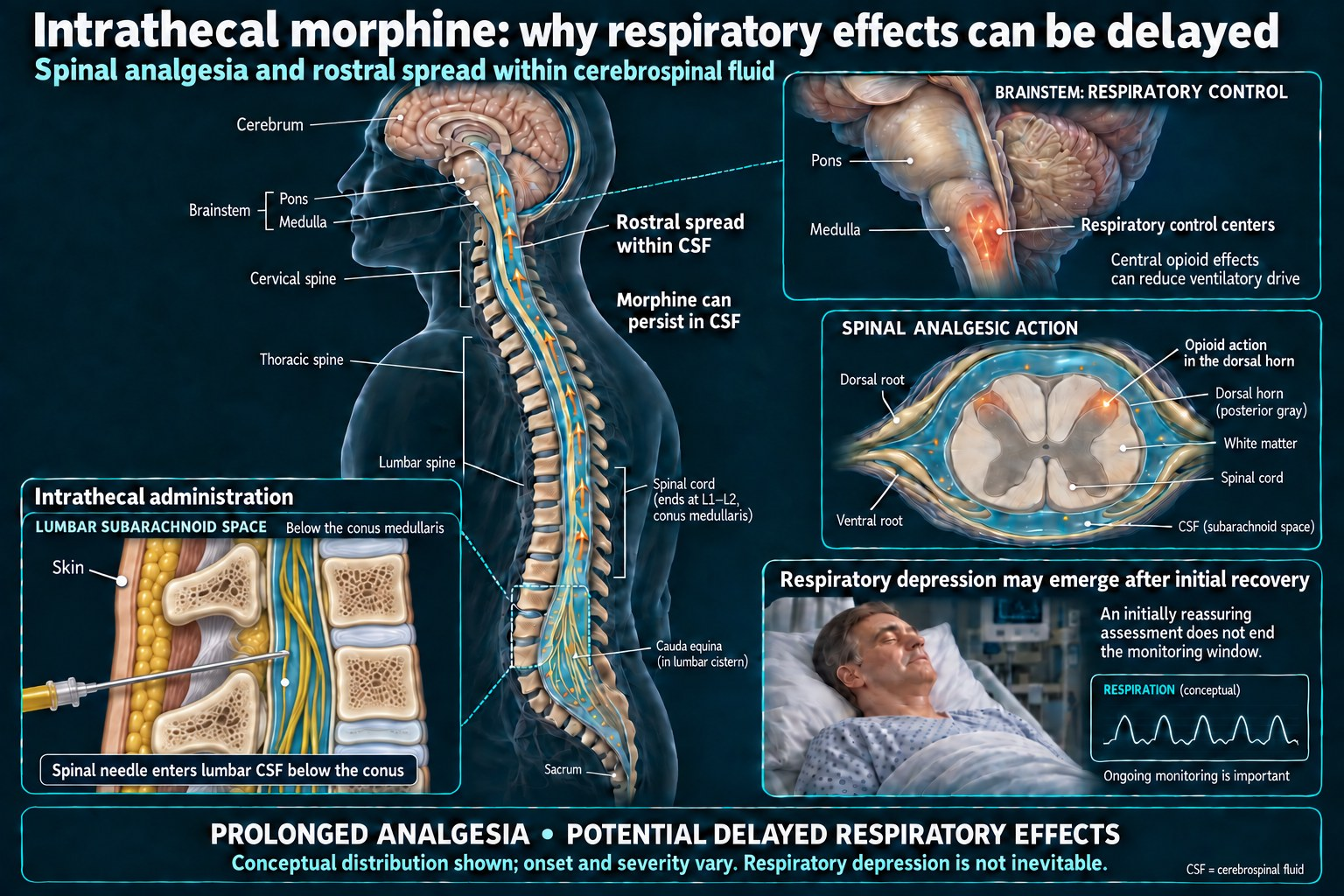
That twelve-fold difference in required monitoring is the difference in duration of action, stated as a safety requirement. Fentanyl leaves the cerebrospinal fluid quickly by redistributing into lipid and vasculature. Morphine’s poor lipid solubility is precisely why it lingers in cerebrospinal fluid and continues to reach the dorsal horn for many hours, and precisely why it can depress respiration late. You cannot separate those two properties: the prolonged analgesia and the prolonged monitoring window are the same fact viewed from two sides. Head-to-head trials in cesarean delivery have found longer analgesia and lower rescue opioid requirement with morphine than with fentanyl, which is what the pharmacology predicts.
The guideline itself declines to endorse substitution. Its surveyed consultants and members neither agreed nor disagreed that single-injection fentanyl or sufentanil are safe alternatives to single-injection morphine.2
The convergence that matters for a policy
The efficacy ceiling and the safety threshold sit at the same dose. The arthroplasty meta-analysis found no additional analgesic benefit above 100 mcg and concluded that 100 mcg is a ceiling dose for analgesia and a threshold dose for increased nausea and vomiting — at 100 mcg, rates of postoperative nausea and vomiting were similar to control.13 The pulmonary meta-analysis found its respiratory depression association vanishing once doses above 500 mcg were excluded.6 The abdominal surgery meta-analysis found its respiratory depression signal, an odds ratio of 5.5 (95% CI 2.1–14.2), collapsing to 1.4 (95% CI 0.4–5.2) once two small outlying studies were removed.14
Three independent analyses, three different surgical populations, one conclusion: giving more does not buy more analgesia, and giving less removes most of what the monitoring policy was written to catch. That is the strongest available argument for stratifying a policy by dose.
The honest limits
Pruritus is the consistent price. It was more common with intrathecal opioid in abdominal surgery at a relative risk of 4.3 (95% CI 2.5–7.5),14 and it appears in every analysis of non-pulmonary side-effects.12 Nausea and sedation were not increased in that same analysis, and the arthroplasty data indicate the nausea penalty is dose-dependent.13,14
Better pain scores also do not automatically become better recovery. A randomized pilot study in orthopedic surgery found that the improved quality of analgesia from intrathecal morphine did not translate into improved recovery or quality of life over the following six months.16 What these meta-analyses demonstrate is analgesia and opioid sparing across the first day or two. That is worth having, and it is not the same thing as a demonstrated effect on longer-term outcome.
What the current safety evidence shows
The largest analysis to date
A 2025 systematic review and meta-analysis pooled 127 randomized trials and 7,388 patients undergoing non-obstetric surgery, comparing intrathecal morphine with control.6
How to read the numbers below. An odds ratio (OR) compares the odds of an event between two groups: 1.0 means no difference, above 1.0 means the event was more common with intrathecal morphine, below 1.0 means less common. The confidence interval (CI) is the range of values compatible with the data — if it crosses 1.0, the result is compatible with no effect at all. That is why the respiratory depression figure changes meaning once high doses are excluded: 1.19–2.67 excludes 1.0, while 0.99–2.23 does not.
| Outcome | Odds ratio (95% CI) | Quality |
|---|---|---|
| Sedation | 1.00 (0.78–1.28), p = 0.98 | Moderate |
| Hypoxemia | 1.22 (0.84–1.79), p = 0.30 | Moderate |
| Respiratory depression | 1.78 (1.19–2.67), p = 0.005 | Very low |
| Respiratory depression, doses ≤ 500 mcg only | 1.49 (0.99–2.23), p = 0.06 | — |
| Need for supplemental oxygen | 1.31 (0.74–2.30) | Low |
| Need for opioid antagonist | 1.94 (0.52–7.32) | Low |
| Need for respiratory support or escalated care | 0.85 (0.20–3.59) | Low |
| Deaths | None reported across 127 trials | |
Meta-regression found associations between dose and sedation, respiratory depression and hypoxemia — but when doses above 500 mcg were excluded, those associations disappeared. The authors’ own summary is that there is moderate evidence intrathecal morphine does not increase sedation or hypoxemia, and very low-quality evidence that it might increase respiratory depression.6
They also make a point worth carrying into any policy discussion: respiratory depression usually warrants naloxone, oxygen, or respiratory support, and none of those were increased. Definitions of respiratory depression varied across trials — cutoffs of 6, 8, 10 and 13 breaths per minute were all used — and some of those thresholds do not describe an event requiring any intervention at all.6
One finding cuts against the tidy dose story. In subgroup analysis, the 101–200 mcg band showed increased sedation (OR 2.59) and increased respiratory depression (OR 2.68), while the 201–500 mcg band did not.6 That is not a monotonic dose relationship and it is difficult to explain mechanistically — most likely small-sample noise across heterogeneous trials, but it is in the paper and it should not be filtered out when the paper is used to argue for relaxed monitoring at low doses.
A second meta-analysis, and where the two disagree
The arthroplasty analysis behind the 100 mcg ceiling asked the same safety questions in a single population, and answered the most important one differently. Across 16 trials and 1,173 patients, respiratory depression was not increased — risk ratio 0.9 (95% CI 0.5–1.7), p = 0.78, on high-quality evidence, from 15 events in 580 exposed patients against 16 in 593 controls. Hypoxemia was not significantly increased either.13
| Outcome | 127 trials, non-obstetric surgery6 | 29 trials, hip and knee arthroplasty13 |
|---|---|---|
| Respiratory depression | OR 1.78 (1.19–2.67), p = 0.005 — very low quality | RR 0.9 (0.5–1.7), p = 0.78 — high quality |
| Hypoxemia | OR 1.22 (0.84–1.79), p = 0.30 — moderate quality | RR 1.4 (1.0–2.0), p = 0.07 |
| Sedation | OR 1.00 (0.78–1.28), p = 0.98 — moderate quality | RR 1.6 (1.1–2.3), p = 0.009 — increased |
They disagree in both directions, and that is worth stating rather than smoothing over. On respiratory depression the larger analysis finds an increase on very low-quality evidence while the arthroplasty analysis finds none on high-quality evidence — and the high-quality answer is the reassuring one, which is unusual enough to notice. On sedation they swap sides. Neither is wrong. The arthroplasty trials sit in the dose range most contemporary practice actually uses and in one operation with one anesthetic technique; the 127-trial analysis spans every non-obstetric surgery and doses up to and beyond 500 mcg.
For a policy written about a spinal for a hip or knee, the narrower analysis is arguably the better evidence, and it says the thing the monitoring requirement exists to prevent was not detected. For a policy written to cover every intrathecal morphine order in the hospital, the broader one is. That is a real argument for writing the policy by population and dose rather than by drug.
The cautious evidence, read properly
The frequently quoted odds ratio of 7.86 (95% CI 1.54–40.3) for respiratory depression comes from a 2009 meta-analysis of intrathecal morphine given without local anesthetic in patients under general anesthesia for major surgery.7 Three things about it matter:
- The estimate rests on six events — 6 of 502 patients (1.2%) versus 0 of 440 controls, despite controls receiving more systemic opioid.
- All six came from three trials, at doses of 300, 560 and 4,000 mcg. In four of the six, the definition met was a respiratory rate under 10; the authors themselves note this may not represent a real threat. Two patients received naloxone; none required reintubation.
- The authors explicitly state their results may not apply to patients given a small dose of opioid as an adjuvant to intrathecal local anesthetic without a general anesthetic — which describes a routine spinal for orthopedic surgery.7
That paper deserves to be read rather than cited from its abstract, and its conclusion is unusually strong — the authors suggest that on their findings the most appropriate course might be to abandon the technique in the population they studied. That view has not prevailed, but it is not a straw position.
Risk stratification is where the evidence is most useful
A retrospective cohort examined low-dose intrathecal morphine (100 mcg) with multimodal analgesia in patients with diagnosed or suspected obstructive sleep apnea undergoing joint arthroplasty. Low-dose intrathecal morphine was not reliably associated with postoperative pulmonary complications in that population.8 Contemporary reviews have argued that with more than 40 years of experience, the risk of respiratory depression at low doses is comparable to systemic opioids and that such patients can be managed on a regular surgical ward without extended or continuous monitoring — and have explicitly called on the European Society of Regional Anaesthesia, ASRA and the ASA to update their guidance.9,10
A scope-of-practice question worth asking before you formalize anything
If a policy assigns responsibility for a patient’s analgesic orders on an inpatient unit for 24 hours after surgery, it is worth checking that the assignment sits inside the prescribing authority of whoever is being assigned it. State nurse practice acts often bound CRNA prescriptive authority by phase of care rather than by drug.
Oklahoma is a useful worked example. The statute authorizes a CRNA to order, select, obtain and administer legend drugs and Schedule II–V controlled substances only when engaged in preanesthetic preparation and evaluation, anesthesia induction, maintenance and emergence, and postanesthesia care — and only during the perioperative or periobstetrical period.11 Neither “perioperative” nor “postanesthesia care” is defined in the statute, and the Attorney General opinion addressing CRNA supervision does not reach the boundary.11
Open-ended floor analgesia management for 24 hours sits at or beyond the edge of that language depending on how those terms are construed. It may well be entirely within scope. The point is that it is a question for counsel or the compliance office to answer before an expectation is formalized, rather than after. It also cuts in a direction worth naming: the federal post-anesthesia evaluation is squarely within a CRNA’s authority; indefinite floor prescribing may not be.
Questions a department can actually resolve
The binding requirements are settled. These are the ones that are genuinely local.
| Question | Why it matters |
|---|---|
| Does a written policy exist, and what does it say? | If the requirement cannot be produced in writing by pharmacy or by anesthesia, that is itself a finding worth acting on. |
| Does the postoperative unit meet the label’s standard? | Monitoring capability, resuscitation equipment, naloxone availability, trained staff, defined escalation pathway. If yes, the label is satisfied by the unit. |
| Which service responds to respiratory depression on the floor, and is that documented? | Anesthesia, rapid response and the hospitalist service are all defensible answers. The label requires that someone be capable and available, not that it be anesthesia. |
| Is order-writing bundled with monitoring by design or by habit? | They are separable, and separating them may improve both. |
| Should the policy stratify by dose? | The label does not, but the evidence does, and most contemporary practice sits far below the doses the label was written against. |
| If anesthesia carries named 24-hour responsibility, is it staffed and paid for? | Call coverage, documentation expectations and — for contracted clinicians — the terms of the agreement. A responsibility that exists in practice but not on paper is a problem for everyone. |
Frequently asked questions
Does the FDA require anesthesia to follow the patient for 24 hours after intrathecal morphine?
No. The label requires that the patient be observed in a fully equipped and staffed environment for at least 24 hours after the initial dose, and that the facility be able to resuscitate a patient with severe opioid overdose with personnel familiar with naloxone and naltrexone.1 Every clause describes what the environment must have. No reviewed source names anesthesia — or any other service — as the responder.
What does the 24-hour observation requirement actually require?
Capability, not personnel. The unit must be able to monitor the patient, must have resuscitation equipment and reversal agents available, and must have staff who know how to use them.1 Which service responds — anesthesia, rapid response, or the hospitalist — is institutional design, and several arrangements satisfy the label.
Is the 48-hour post-anesthesia evaluation the same as the 24-hour observation window?
No, and conflating them is probably where a lot of local practice comes from. The 24-hour window is FDA labeling about where the patient is observed. The 48-hour requirement is 42 CFR §482.52(b)(3), a Medicare Condition of Participation requiring one post-anesthesia evaluation completed and documented by an individual qualified to administer anesthesia.3 Different clocks, different obligations.
Can a CRNA complete the post-anesthesia evaluation?
Yes. §482.52(a) includes a CRNA among individuals qualified to administer anesthesia, and the evaluation does not require an anesthesiologist.3 CMS guidance is that it may not be delegated to practitioners who are not qualified to administer anesthesia, that the 48-hour clock begins when the patient is moved into the designated recovery area, and that the evaluation should wait until the patient has recovered enough to participate in it.4
How often does the patient need to be monitored after a single intrathecal dose of morphine?
The ASA/ASRA guideline recommends a minimum of 24 hours: at least hourly for the first 12 hours, then at least every 2 hours from 12 to 24 hours, after which frequency is dictated by the patient’s clinical condition and concurrent medications.2 A four-hourly schedule running to 48 hours belongs to sustained- or extended-release epidural morphine, not to a single intrathecal injection.
Is intrathecal morphine actually better than fentanyl or plain local anesthetic?
Against local anesthetic alone, yes, and by a clinically meaningful margin. Rest pain at 8–12 hours after joint arthroplasty was 1.7 points lower on a 0–10 scale (19 trials, 1,420 patients, high-quality evidence),13 and in abdominal surgery patients used 18.4 mg less intravenous morphine equivalent on day one and 25.5 mg less on day two.14 Against intrathecal fentanyl, the difference is duration: the same guideline that requires 24 hours of monitoring after a hydrophilic opioid requires only 2 hours after a lipophilic one,2 and that gap is the analgesic difference expressed as a safety requirement. The prolonged analgesia and the prolonged monitoring window are the same pharmacologic property.
Does low-dose intrathecal morphine cause respiratory depression?
Across 127 randomized trials and 7,388 patients, sedation was not increased (OR 1.00) and hypoxemia was not increased (OR 1.22), both with moderate-quality evidence. Respiratory depression was more frequent (OR 1.78) but on very low-quality evidence, and the association did not persist when doses above 500 mcg were excluded (OR 1.49, 95% CI 0.99–2.23). There was no increase in the need for oxygen, naloxone, or escalated care, and no deaths were reported.6
Can a patient who received intrathecal morphine go to a regular ward?
That depends on the unit and on the patient, not on the drug alone. The label’s requirement is satisfied by any environment with adequate monitoring, resuscitation equipment, naloxone and trained staff.1 Both the ASA guideline and the Joint Commission alert agree that patients at increased risk — obstructive sleep apnea, obesity, concurrent systemic opioids or hypnotics, unstable medical condition, extremes of age — warrant more intensive monitoring.2,5 Contemporary reviews argue that low-dose recipients without risk factors can be managed on a regular ward.9,10 This is a policy decision for your institution to make deliberately and write down.
References
- DURAMORPH (morphine sulfate injection), for intravenous, epidural, or intrathecal use. FDA-approved labeling, Hikma Pharmaceuticals USA. DailyMed SPL set ID ebb18761-e5c4-4238-bb84-f9549f500210. Equivalent language appears in generic preservative-free morphine sulfate injection labeling and in the INFUMORPH label.
- Practice Guidelines for the Prevention, Detection, and Management of Respiratory Depression Associated with Neuraxial Opioid Administration: An Updated Report by the American Society of Anesthesiologists Task Force on Neuraxial Opioids and the American Society of Regional Anesthesia and Pain Medicine. Anesthesiology. 2016;124(3):535–552. doi:10.1097/ALN.0000000000000975. PMID 26655725. Updates the 2009 report at Anesthesiology 110:218–30.
- 42 CFR §482.52, Condition of participation: Anesthesia services. Current text via eCFR: ecfr.gov/current/title-42/chapter-IV/subchapter-G/part-482/subpart-D/section-482.52.
- CMS State Operations Manual, Appendix A, anesthesia services interpretive guidelines (Transmittal R59SOMA, cms.gov/Regulations-and-Guidance/Guidance/Transmittals/downloads/R59SOMA.pdf); CMS Survey and Certification letter 11-10, January 2011, revised guidance on anesthesia versus analgesia and on pre- and post-anesthesia evaluations. cms.gov/Medicare/Provider-Enrollment-and-Certification/SurveyCertificationGenInfo/downloads/SCLetter11_10.pdf.
- The Joint Commission. Sentinel Event Alert Issue 49: Safe use of opioids in hospitals. 8 August 2012. The alert cites requirement PC.01.02.07, EP 2 against its recommendation on standardized screening tools, not against its monitoring recommendation.
- El-Boghdadly K, Renard Y, Rossel JB, Moka E, Volk T, Rawal N, Jaques C, Szyszko M, Albrecht E. Pulmonary complications after intrathecal morphine administration: a systematic review and meta-analysis with meta-regression and trial sequential analysis. Anaesthesia. 2025;80(8):959–972. doi:10.1111/anae.16606. PMID 40235368.
- Meylan N, Elia N, Lysakowski C, Tramèr MR. Benefit and risk of intrathecal morphine without local anaesthetic in patients undergoing major surgery: meta-analysis of randomized trials. Br J Anaesth. 2009;102(2):156–167. doi:10.1093/bja/aen368.
- Bai JW, Singh M, Short A, Bozak D, Chung F, Chan VWS, Bhatia A, Perlas A. Intrathecal morphine and pulmonary complications after arthroplasty in patients with obstructive sleep apnea: a retrospective cohort study. Anesthesiology. 2020;132(4):702–712. PMID 31977522.
- Rawal N. Intrathecal opioids for the management of post-operative pain. Best Pract Res Clin Anaesthesiol. 2023;37(2):123–132. doi:10.1016/j.bpa.2023.01.001. PMID 37321761. Source of the low-dose ward-management position and the call for updated society guidance.
- Grape S, El-Boghdadly K, Albrecht E. Management of adverse effects of intrathecal opioids in acute pain. Best Pract Res Clin Anaesthesiol. 2023;37(2):199–207. doi:10.1016/j.bpa.2023.02.002. PMID 37321767.
- Oklahoma Attorney General Opinion 2024-14 (2024 OK AG 14), addressing the CRNA supervision opt-out, oklahoma.gov/oag/opinions/ag-opinions/2024/ag-opinion-24-14.html; 59 O.S. §567.3a(10)(b) and (h); Senate Bill 801, 2020 Okla. Sess. Laws ch. 11, §1, replacing physician supervision of CRNAs with a collaboration standard.
- Renard Y, El-Boghdadly K, Rossel JB, Nguyen A, Jaques C, Albrecht E. Non-pulmonary complications of intrathecal morphine administration: a systematic review and meta-analysis with meta-regression. Br J Anaesth. 2024;133(4):823–838. doi:10.1016/j.bja.2024.05.045. PMID 39098521.
- Gonvers E, El-Boghdadly K, Grape S, Albrecht E. Efficacy and safety of intrathecal morphine for analgesia after lower joint arthroplasty: a systematic review and meta-analysis with meta-regression and trial sequential analysis. Anaesthesia. 2021;76(12):1648–1658. doi:10.1111/anae.15569. PMID 34448492. PMC9292760.
- Koning MV, Klimek M, Rijs K, Stolker RJ, Heesen MA. Intrathecal hydrophilic opioids for abdominal surgery: a meta-analysis, meta-regression, and trial sequential analysis. Br J Anaesth. 2020;125(3):358–372. doi:10.1016/j.bja.2020.05.061. Forty trials, 2,500 patients; excludes caesarean section and continuous neuraxial techniques.
- Hussain N, Brull R, Thaete L, Fuller S, D’Souza RS, Mankinen-Abdallah Y, Essandoh MK, Weaver TE, Abdallah FW. The analgesic effects of novel fascial plane blocks compared with intrathecal morphine after Caesarean delivery: a systematic review and meta-analysis. Br J Anaesth. 2025;134(5):1415–1431. doi:10.1016/j.bja.2025.01.032.
- Foadi N, Karst M, Frese-Gaul A, Rahe-Meyer N, Kromer S, Weilbach C. The improved quality of postoperative analgesia after intrathecal morphine does not result in improved recovery and quality of life in the first 6 months after orthopedic surgery: a randomized controlled pilot study. J Pain Res. 2017;10:1059–1069. doi:10.2147/JPR.S135142. PMID 28533694. PMC5431706.
- Wang JK, Nauss LA, Thomas JE. Pain relief by intrathecally applied morphine in man. Anesthesiology. 1979;50(2):149–151. doi:10.1097/00000542-197902000-00013. PMID 373503. First report of the technique in humans; case reports of respiratory depression followed within months.
- Paterson GM, McQuay HJ, Bullingham RE, Moore RA. Intradural morphine and diamorphine. Dose response studies. Anaesthesia. 1984;39(2):113–117. doi:10.1111/j.1365-2044.1984.tb09497.x. PMID 6703265. Open study of 81 patients having major orthopedic surgery; intradural morphine 1.25 and 2.5 mg gave longer analgesia than 0.625 mg, with no dose-response for side effects.
- Jacobson L, Chabal C, Brody MC. A dose-response study of intrathecal morphine: efficacy, duration, optimal dose, and side effects. Anesth Analg. 1988;67(11):1082–1088. doi:10.1213/00000539-198867110-00011. PMID 3189898. Double-blind study of intrathecal morphine 0, 0.3, 1 and 2.5 mg in 33 patients after total knee or hip replacement.
- Davies GK, Tolhurst-Cleaver CL, James TL. Respiratory depression after intrathecal narcotics. Anaesthesia. 1980;35(11):1080–1083. doi:10.1111/j.1365-2044.1980.tb05047.x. PMID 6893789. Serious, delayed respiratory depression in three of six patients given 1 mg of morphine with plain bupivacaine as a subarachnoid spinal anesthetic.
Disclaimer. Reference information for licensed clinicians and students. Not a medical device, not legal advice, and not a substitute for clinical judgment. Where this page touches on regulatory obligation or scope of practice it summarizes published text for discussion; institutional counsel or the compliance office should be consulted before a policy is adopted. Verify against your institutional protocol and current package inserts.
Policy-adjacent clinical questions like this one ship inside Helix Anesthesia — a point-of-care reference built by a practicing CRNA, cited and available offline. See how we source clinical content.
Built for the anesthesia machine, not the desk. It opens in one tap, works with no signal in an OR that has none, and shows the citation on screen beside the number rather than making you go and find it.
Free tier, no card: every calculator, every crisis checklist, the full drug library and glossary, three complete regional blocks, five complete surgical cases, and 15 AI questions a month.
Get Helix Anesthesia How we source itSign up for our newsletter and special offers. New answer pages, improvements to the ones already here, and the occasional offer. Nothing else, and not often.
Local anesthetic and sedation safety