
Local anesthetic maximum doses
These are ceilings, not targets. Systemic toxicity has occurred well below published maxima, and the number that matters at the bedside is shaped by the injection site’s vascularity, whether epinephrine is present, and the patient in front of you.
Every clinical claim on this page is cited to its source below. How we source clinical content.
The short answer
Published maximum doses are ceilings, not targets, and systemic toxicity has occurred well below them. What matters at the bedside is the injection site vascularity, whether epinephrine is present, and lean body weight rather than total. Mixing agents buys no headroom, because toxicity is additive. Liposomal bupivacaine has its own rules.
Key takeaways
- Use the smallest dose that will do the block. A maximum is a boundary you should rarely approach, not a target to titrate toward.
- Site matters more than the number. The same milligrams produce very different plasma levels depending on where they go.
- Mixing agents does not buy headroom. Toxicity is additive: two agents at half their maxima is a full dose.
- Calculate on lean body weight, not total body weight. Local anesthetic distributes to lean tissue, and total-body-weight arithmetic in obesity produces a ceiling the patient cannot tolerate.
- Liposomal bupivacaine has its own rules and they matter. Non-bupivacaine local anesthetics cause immediate release of bupivacaine from the liposomes — which is a toxicity mechanism, not just a compatibility footnote.
- Most “caine allergy” is not allergy. True IgE-mediated reactions are rare; toxicity, vasovagal episodes, epinephrine effects, and preservative reactions account for the majority.
- Know where the lipid is before you need it. The current ASRA maximum is about 12 mL/kg, and LAST resuscitation is deliberately different from standard ACLS.
Maximum doses by agent
| Agent | Plain (mg/kg) | Plain cap (mg) | With epi (mg/kg) | Epi cap (mg) | Source |
|---|---|---|---|---|---|
| Lidocaine | 4.5 | 300 | 7 | 500 | Xylocaine PI — the mg/kg and the caps are both on the label; IV regional (Bier block) is separately capped at 4 mg/kg |
| Mepivacaine | None established | 400 | None established | No higher ceiling | Polocaine PI — 400 mg is the usual adult single-dose ceiling; up to about 550 mg (≈7 mg/kg) only in exceptional circumstances, ≥1½ h between doses, and no more than 1,000 mg in 24 hours; 5–6 mg/kg is the pediatric limit; epinephrine does not raise it19 |
| Bupivacaine | 2.5 | 175 | 3 | 225 | AAD guideline (the mg/kg); Marcaine PI (the 175/225 caps, which are what bind); ASRA |
| Ropivacaine | 3 | 225 | — | — | AAD guideline (the mg/kg); Naropin PI (no adult mg/kg; up to 770 mg over 24 h well tolerated in adults) |
| Chloroprocaine | 11 | 800 | 14 | 1000 | Nesacaine PI |
| Procaine | 7 | 500 | 9 | 600 | Nicks 2010 wound-care review, Table 2 (the mg/kg);17 Miller’s Anesthesia Table 25.4 (the 500/600 mg infiltration caps); Novocain PI — 350–600 mg as a single safe total dose for infiltration, and the usual total dose during one treatment should not exceed 1,000 mg.18 Miller’s pediatric nerve-block table (Table 74.6) gives 10 mg/kg with epinephrine, and the Helix Anesthesia calculator uses that figure. |
| Prilocaine | 8 | 600 | 8 | 600 | Citanest Plain and Citanest Forte dental PIs — 8 mg/kg under 70 kg, 600 mg at 70 kg or more, within a two-hour period; the same ceiling with epinephrine |
| Liposomal bupivacaine | — | 266 | — | — | Exparel PI — not weight-based in adults; see below |
Where a mg/kg figure and an absolute cap disagree for a given patient, the lower number governs. In children, the mg/kg figure governs and no adult absolute cap is applied.
This is in the app, with the local anesthetic dosing calculator — free tier, no card. Get it →
Five entries that need their footnote
Bupivacaine — 2.5 mg/kg, 175 mg plain
The conservative figure, and the one taken from the FDA label directly: single doses up to 175 mg plain and 225 mg with epinephrine. Higher mg/kg values circulate in teaching; this page follows the package insert.
Ropivacaine — no with-epinephrine ceiling is listed, deliberately
That column is blank because the source is blank. Ropivacaine has intrinsic vasoconstrictor properties, and the FDA Naropin label does not endorse epinephrine co-administration, so there is no labeled with-epi maximum to quote. The label states that up to 770 mg over 24 hours is well tolerated in adults; the single-dose mg/kg figure comes from the anesthesia texts.
Anyone using ropivacaine with epinephrine off-label should be working from a more specialized source than a summary table.
Prilocaine — a dental label, and methemoglobinemia as well as LAST
The figures are the package insert’s. In healthy adults, the most that should be given within a two-hour period is 8 mg/kg under 70 kg and 600 mg at 70 kg or more,15 and the epinephrine-containing form carries the same ceiling.16 The US FDA-approved form is the dental preparation, labeled for nerve block and infiltration in dentistry. Its label warns of methemoglobinemia and contraindicates prilocaine in congenital or idiopathic methemoglobinemia.15,16 Recognition and treatment — including the antidote that fails in G6PD deficiency — are on the methemoglobinemia page.
Tetracaine — not in the table, because no infiltration maximum is labeled
Modern use is spinal, at 5–20 mg total, and topical. The current US tetracaine injection is labeled for spinal anesthesia only and gives no infiltration maximum, so none is listed here.
Liposomal bupivacaine — not weight-based in adults, and site-specific
The adult maximum for local infiltration is 266 mg, which is one 20 mL vial, and it is not calculated per kilogram.1 Nerve block doses are lower and named individually rather than derived: 133 mg for interscalene brachial plexus block, 133 mg for sciatic block in the popliteal fossa, and for adductor canal block 133 mg admixed with 50 mg of 0.5% bupivacaine HCl for a total volume of 20 mL.1
In children aged 6 to under 17, the infiltration dose is weight-based: 4 mg/kg up to a maximum of 266 mg.1 Different bupivacaine formulations are not bioequivalent even at the same milligram strength, so a dose cannot be converted between them.1
Liposomal bupivacaine: the rules that cause toxicity
This is the section most likely to prevent a case of LAST. Liposomal bupivacaine interacts with other local anesthetics by a mechanism that has nothing to do with additive dosing — non-bupivacaine local anesthetics rupture the liposomes and dump their contents.
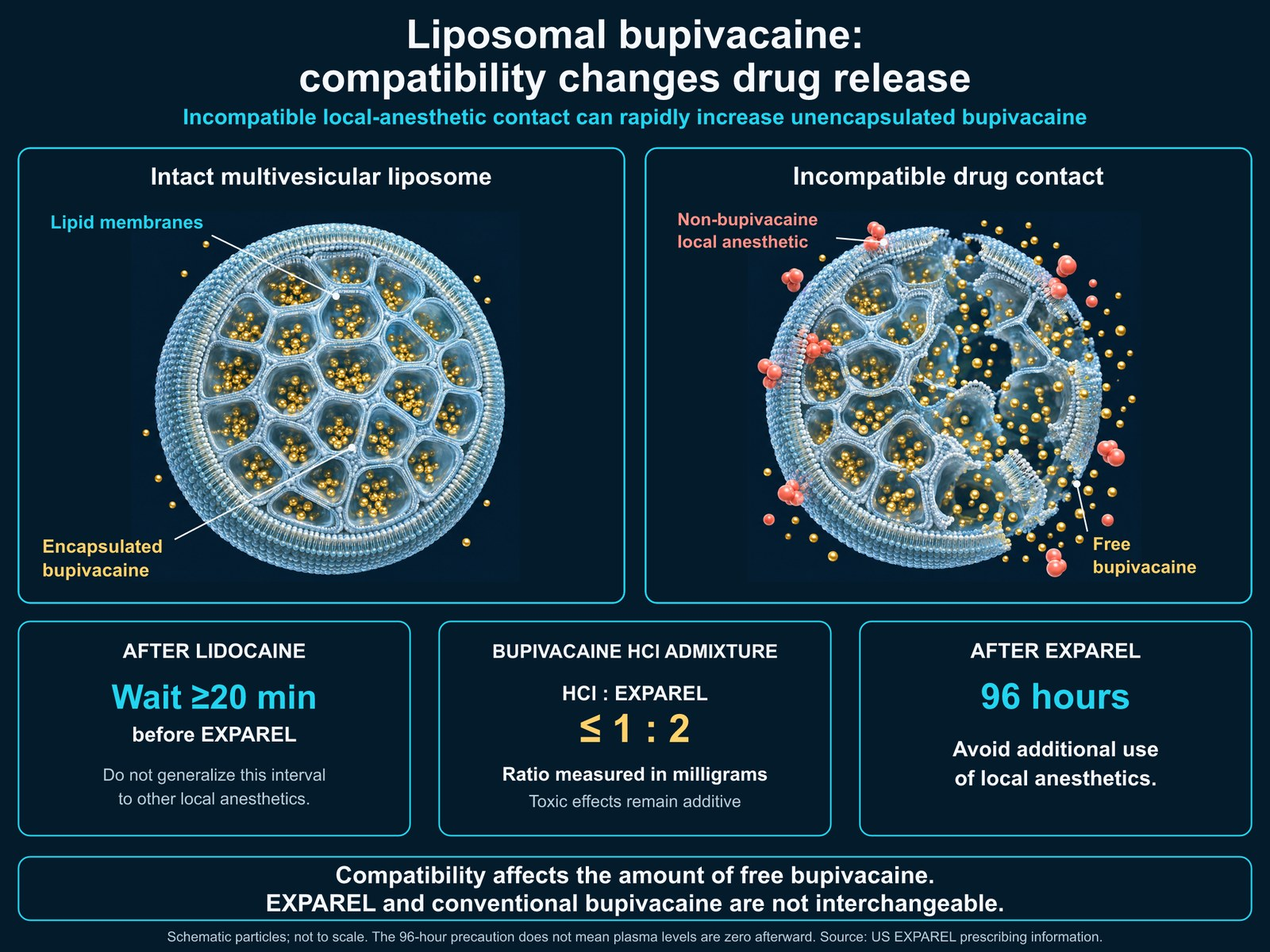
The 20-minute rule
Admixing liposomal bupivacaine with lidocaine, ropivacaine, or mepivacaine causes an immediate release of bupivacaine from the multivesicular liposomes.2 That converts a slow-release preparation into a bolus. Liposomal bupivacaine may follow lidocaine after a delay of 20 minutes or more; there are no data to support giving any other local anesthetic before it.1,3
What may be mixed, and in what ratio
Bupivacaine HCl is the only local anesthetic that may be admixed. It may go in the same syringe, or be injected immediately beforehand, provided the milligram ratio of bupivacaine HCl to liposomal bupivacaine does not exceed 1:2.1,4 The European label adds a total ceiling: the combined amount of liposomal bupivacaine plus bupivacaine HCl should not exceed 400 mg of bupivacaine HCl equivalents in adults.5
The 96-hour tail
The label’s instruction is to avoid additional use of local anesthetics within 96 hours following liposomal bupivacaine — not only other bupivacaine formulations.1,4 Systemic plasma levels of bupivacaine were observed for 96 hours after local infiltration, 120 hours after interscalene brachial plexus block, and 168 hours after sciatic block in the popliteal fossa and after adductor canal block.1 This is the constraint most likely to be missed, because it extends past the operating room and into someone else’s shift: a patient who received Exparel at 0900 on Monday should not receive a bupivacaine block on Tuesday.
Three practical points
- Toxic effects of the two bupivacaine forms are additive when used together, and monitoring for neurologic and cardiovascular toxicity applies.4
- Do not dilute with water or other hypotonic solutions — it disrupts the liposomal particles.1 Preservative-free normal saline or lactated Ringer’s is the correct diluent.
- It falls within a high-alert class. The Institute for Safe Medication Practices list for acute care settings names no local anesthetic individually, but it does list liposomal forms of drugs as a class, and epidural and intrathecal medications as another.6 The resemblance to propofol is a separate concern, raised in a 2012 national alert about wrong-route errors rather than as the reason for any designation.6 Inadvertent intravenous administration of a milky white syringe is a foreseeable error.
Things the table cannot tell you
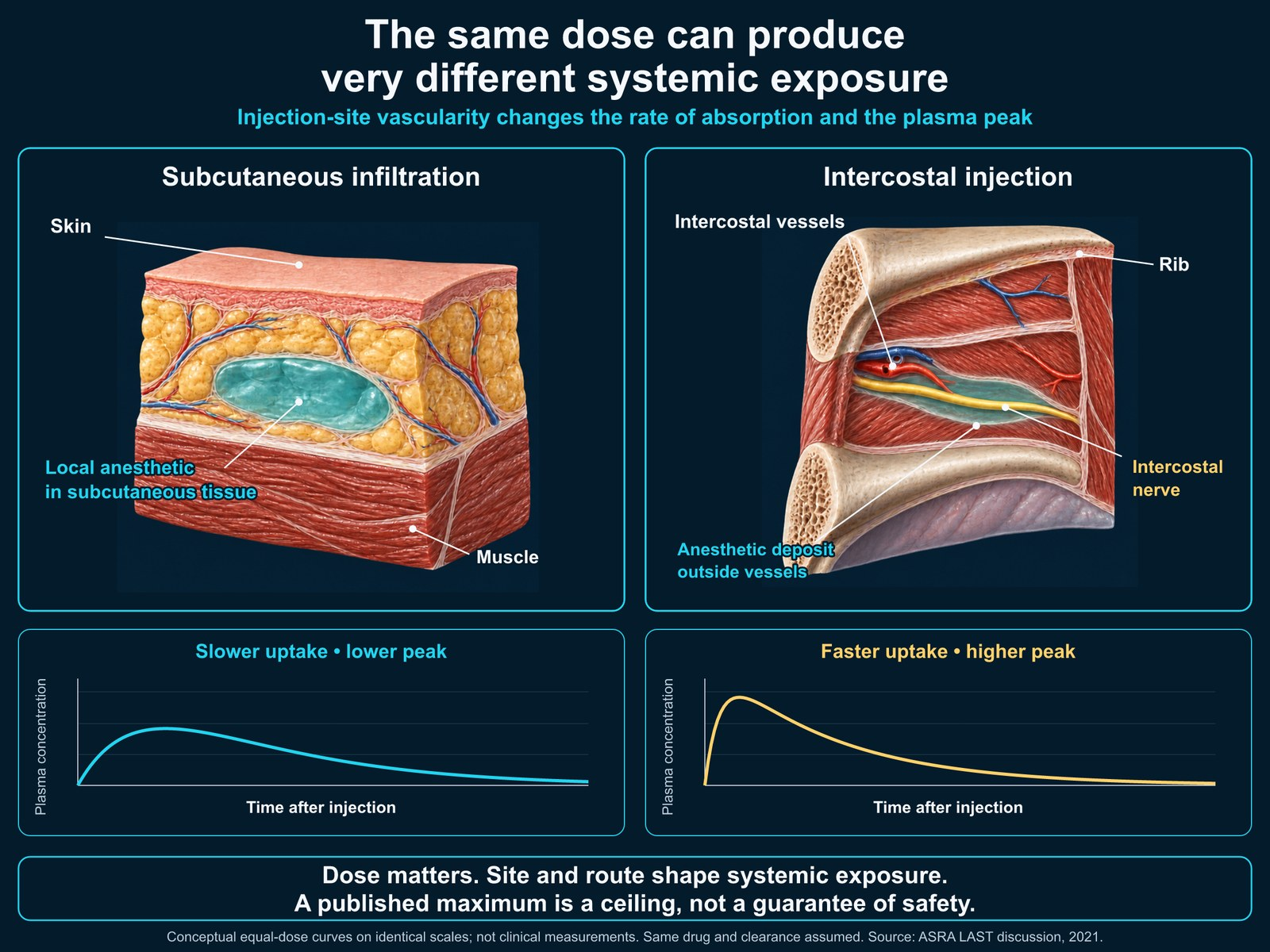
Site matters more than the number
Peak plasma concentration for a given dose varies severalfold by injection site. The conventional ranking, from highest systemic absorption to lowest:
intravenous > tracheal > intercostal > caudal > paracervical > epidural > brachial plexus > sciatic and femoral > subcutaneous11,12
Intercostal and interpleural injection produce the highest plasma levels of any common regional technique for a given dose; subcutaneous infiltration the lowest. The same milligrams are not the same risk. A dose that is unremarkable as a field block may be dangerous distributed across six intercostal spaces.
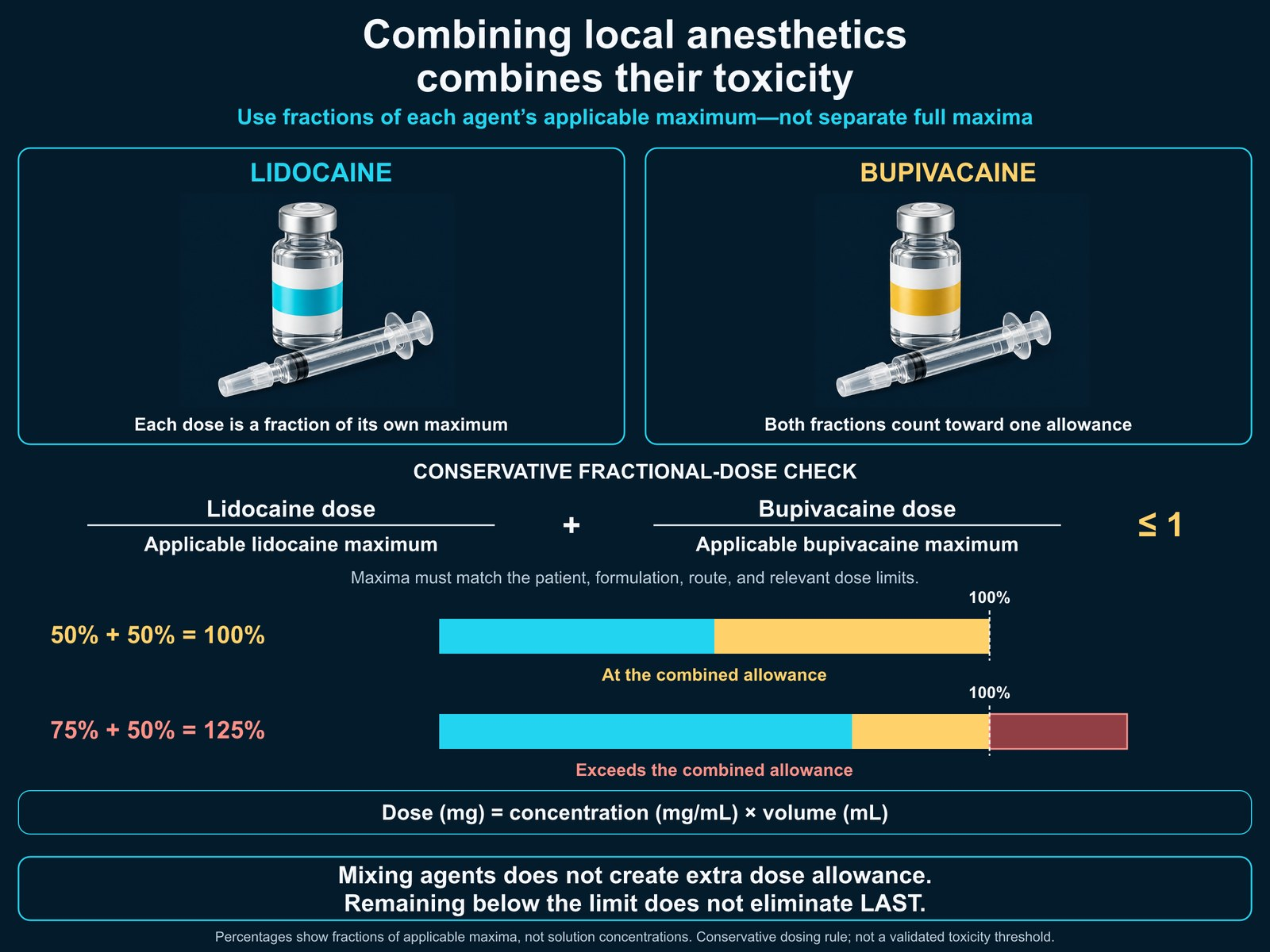
Mixing agents does not buy you headroom
Toxicity is additive. Two agents at half their respective maxima is a full dose, not two half doses. The correct arithmetic is fractional: express each agent as a percentage of its own maximum and require the sum to stay at or below 100%.
Worth knowing about mixtures generally. The usual rationale — fast onset from lidocaine plus long duration from bupivacaine — does not hold up as cleanly as it is taught. Mixtures frequently produce a shorter block than the long-acting agent alone, which removes much of the reason for combining them in the first place. If the goal is speed, consider whether the case actually needs it before accepting a shortened block and a more complicated dose calculation.
Which weight?
Local anesthetic distributes primarily to lean tissue, so maximum doses should be calculated on lean or ideal body weight, not total body weight. A 150 kg patient does not have a 150 kg ceiling. This is one of the more common routes to an inadvertent overdose, because the arithmetic looks correct and produces a number that would be safe in a different body.
Children, and infants especially
Children are dosed by weight with no adult absolute cap applied. Infants under six months warrant further reduction — reduced plasma protein binding from lower alpha-1-acid glycoprotein levels means a higher free fraction of drug at the same total plasma concentration, and immature hepatic metabolism prolongs clearance.13
The pediatric literature supports the emphasis. In a systematic review of pediatric LAST case reports, nearly 43% of affected patients were under one year old, and roughly 67% of cases were caused by bupivacaine.7
Registry data point the same way. In the Pediatric Regional Anesthesia Network (PRAN), infants were about 23% of patients but accounted for roughly 71% of reported LAST events, with penile block responsible for over half of the infant cases.21
When the ceiling is not the problem
A maximum dose assumes the drug works at all. In some patients it does not hold: in Ehlers-Danlos syndrome, a 2026 randomized cross-over trial of subcutaneous lidocaine found no difference from healthy controls at five minutes but a smaller proportion of patients numb at 15 and 30 minutes, which its authors read as a shorter duration of effect.14 That pattern is dangerous here specifically because the instinct is to give more, and resistance is not a reason to escalate past a toxic threshold — it is a reason to change technique.
Patient factors that lower the real ceiling
- Hepatic dysfunction — amides are hepatically metabolized.
- Low cardiac output — reduced hepatic blood flow reduces clearance.
- Pregnancy — increased sensitivity, and epidural venous engorgement raises intravascular injection risk.
- Extremes of age, renal disease, and cardiac disease are all listed among predisposing factors for LAST.8
- Acidosis and hypoxia — both aggravate established toxicity, which is why airway and seizure control come first in treatment.9
Allergy, or what is mistaken for it
True IgE-mediated allergy to local anesthetics is rare — well under 1% of reactions. Most events labeled “caine allergy” are vasovagal episodes, systemic toxicity (LAST), or the tachycardia and palpitations of absorbed epinephrine.22,23 Before crossing an agent off the chart, it is worth identifying which of these actually occurred, because a mislabeled allergy commonly removes the most appropriate drug from the options.
Esters versus amides
The clinically useful split is by chemical class, because cross-reactivity runs within a class and rarely between them.
| Class | Agents | Allergy risk |
|---|---|---|
| Esters | Procaine, chloroprocaine, tetracaine, benzocaine, cocaine | Higher. Metabolized to para-aminobenzoic acid (PABA), a recognized allergen; cross-reactivity within the ester class is expected.22,23 |
| Amides | Lidocaine, bupivacaine, ropivacaine, mepivacaine, prilocaine | Low. True allergy is rare and cross-reactivity between amides is uncommon; switching to an amide is the usual route around a suspected ester allergy.22,23 |
Preservatives and additives — often the real culprit
- Methylparaben. A PABA-like preservative in some multidose vials. It, rather than the anesthetic, is frequently the sensitizer; the FDA has driven its removal from dental cartridges and neuraxial preparations, and single-dose vials do not contain it. A patient “allergic to lidocaine” is often reacting to this.22,24,25
- Metabisulfite. Epinephrine-containing solutions include a bisulfite antioxidant to stabilize the epinephrine — a separate potential allergen. Choosing a plain, epinephrine-free preparation removes both the sulfite and the sympathetic side effects.22
- Epinephrine itself. Tachycardia, palpitations, tremor, and anxiety after an epinephrine-containing injection are pharmacologic, not allergic, and are among the most common reactions misclassified as allergy.22
How LAST happens
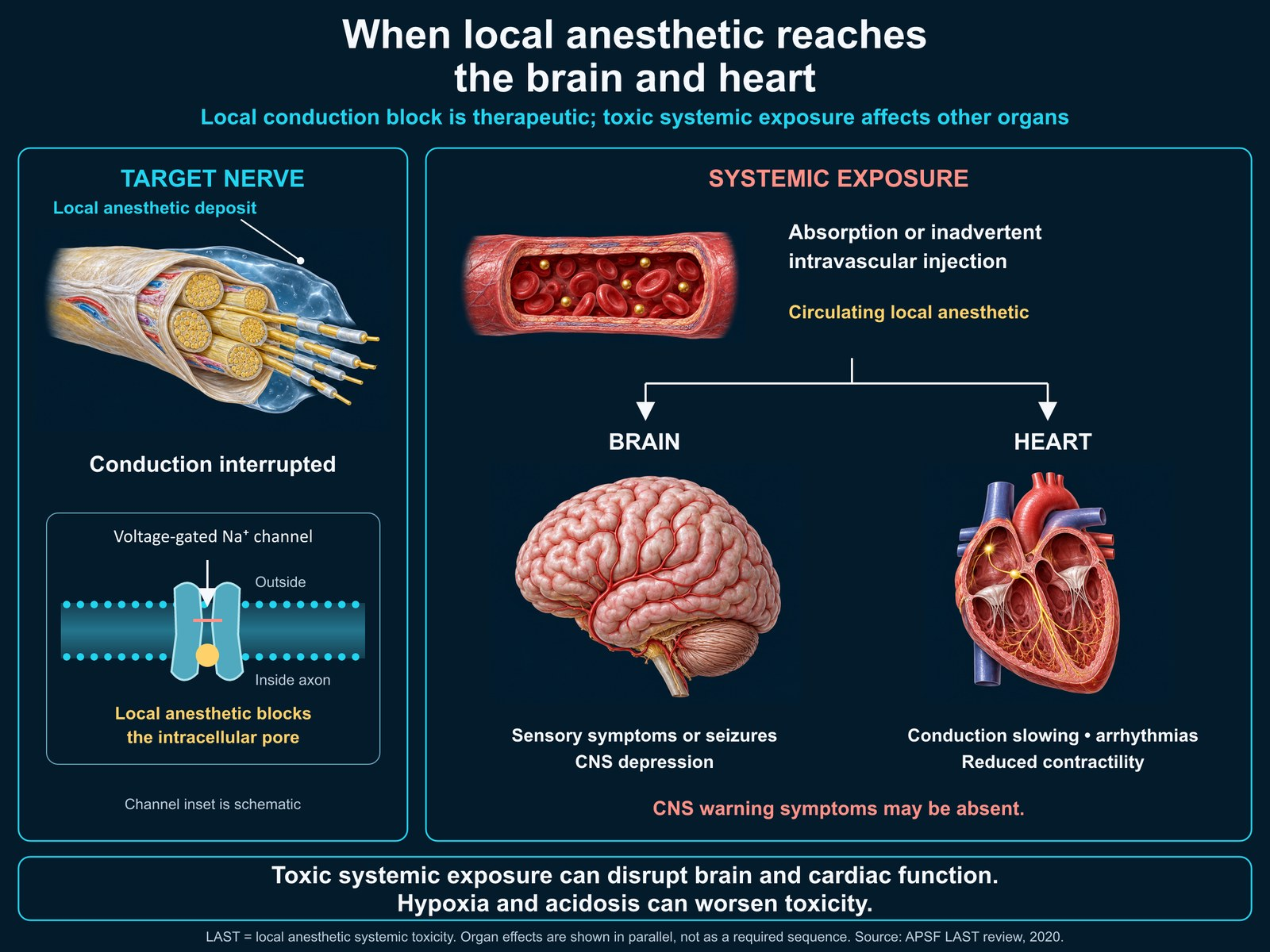
Local anesthetics work by reversibly blocking voltage-gated sodium channels. At therapeutic tissue levels this interrupts conduction in the target nerve; at high plasma levels the same blockade reaches the central nervous system and myocardium, producing the classic biphasic CNS picture — excitation, perioral numbness, and seizures, followed by depression and coma — and cardiovascular toxicity.20,26
Bupivacaine is the most cardiotoxic of the common agents: it binds cardiac sodium channels with high affinity and dissociates from them slowly, so it accumulates across the cardiac cycle and precipitates refractory arrhythmias. It also impairs mitochondrial oxidative phosphorylation and ATP production, which is part of why bupivacaine arrest is so hard to reverse and why lipid emulsion — thought to act partly as a metabolic substrate and partly as a circulating “sink” — is central to treatment.20,26
Hypoxia and acidosis intensify every step of this, which is the mechanistic reason airway and seizure control precede all else in the checklist below.20,26
If you are near a maximum, know where the lipid is
Reported prevalence of LAST varies widely with setting and case definition — from roughly 0.03% to about 1%, with contemporary peripheral-nerve-block series clustering near 1 per 1,000 blocks (an older dental figure often quoted is 0.27 per 1,000).8,20 Rare, and rehearsed rarely — which is why the protocol should be findable in seconds rather than minutes.
ASRA LAST checklist, 2020 version — the numbers
Lipid emulsion 20%
- Patient ≥70 kg: 100 mL bolus over 2–3 minutes, then infuse 200–250 mL over 15–20 minutes.9,10 The checklist itself prints about 250 mL.10
- Patient <70 kg: 1.5 mL/kg bolus over 2–3 minutes, then infuse approximately 0.25 mL/kg/min. Consider a pump if under 40 kg.10
- If the patient remains unstable: repeat the bolus and double the infusion.10
- Continue for at least 15 minutes after hemodynamic stability is achieved.10
- Maximum lipid dose: approximately 12 mL/kg.10 Older versions of the checklist gave 10 mL/kg over the first 30 minutes; the current figure is 12.
Everything else
- Airway first — ensure an adequate airway and establish normal arterial oxygen saturation, because acidosis and hypoxia worsen LAST.9,10
- Seizures: benzodiazepine preferred. If only propofol is available, use low doses — for example 20 mg increments — and avoid it where there is cardiovascular instability.10
- Epinephrine: smaller than usual. Start below 1 mcg/kg. Standard ACLS doses can impair lipid resuscitation.10
- Avoid: further local anesthetics, beta blockers, calcium channel blockers, and vasopressin.10
- Alert a facility with cardiopulmonary bypass capability early in severe cases — extracorporeal support may be needed if CPR fails.9
- Observe afterward: 2 hours after a seizure, 4–6 hours after cardiovascular instability, and as appropriate after cardiac arrest.10
LAST resuscitation is deliberately different from standard ACLS. That difference is the entire reason the checklist exists.10 This is a summary, not the checklist — keep the real one where you can reach it.
Frequently asked questions
What is the maximum dose of lidocaine?
4.5 mg/kg plain, to an absolute cap of 300 mg; 7 mg/kg with epinephrine, to a cap of 500 mg. Whichever number is lower for that patient governs. In children the mg/kg figure applies without an adult absolute cap.
Can you add the maximum doses of two local anesthetics together?
No — the opposite. Toxicity is additive, so each agent should be expressed as a fraction of its own maximum and the fractions must sum to 100% or less. Half a maximum dose of lidocaine plus half a maximum dose of bupivacaine is a full maximum dose, not two half doses.
Is allergy to local anesthetics common?
No. True IgE-mediated allergy is rare, well under 1% of reactions. Most reactions labeled as allergy are toxicity, vasovagal episodes, epinephrine effects, or reactions to a preservative such as methylparaben or a metabisulfite antioxidant. Esters (metabolized to PABA) carry more allergy risk than amides, and cross-reactivity runs within a class rather than between them.
Why is there no maximum listed for ropivacaine with epinephrine?
Because the source is blank. Ropivacaine has intrinsic vasoconstrictor activity and the FDA Naropin label does not endorse epinephrine co-administration, so there is no labeled with-epinephrine maximum to quote. The label states that up to 770 mg over 24 hours is well tolerated in adults.
What weight do you use to calculate maximum dose in an obese patient?
Lean or ideal body weight, not total body weight. Local anesthetic distributes primarily to lean tissue, so a total-body-weight calculation produces a ceiling substantially higher than the patient can safely tolerate.
How long after liposomal bupivacaine can other local anesthetic be given?
The label directs avoiding additional local anesthetics within 96 hours following liposomal bupivacaine.1,4 Systemic plasma levels of bupivacaine were observed for 96 hours after local infiltration, 120 hours after interscalene block, and 168 hours after popliteal sciatic and adductor canal blocks, so the restriction extends well past the operating room.1
Can lidocaine be mixed with liposomal bupivacaine?
No. Lidocaine, ropivacaine, and mepivacaine cause immediate release of bupivacaine from the liposomes, converting a slow-release preparation into a bolus.2 Liposomal bupivacaine may follow lidocaine after a delay of 20 minutes or more; there are no data to support giving any other local anesthetic before it.1,3 Only bupivacaine HCl may be admixed, at a ratio not exceeding 1:2.1
What is the maximum dose of lipid emulsion for LAST?
Approximately 12 mL/kg per the 2020 ASRA checklist. Dosing is a 100 mL bolus followed by 200–250 mL over 15–20 minutes for patients 70 kg and over (the checklist itself prints about 250 mL),9,10 or a 1.5 mL/kg bolus followed by about 0.25 mL/kg/min for patients under 70 kg, repeating the bolus and doubling the infusion if the patient remains unstable.10
Why do maximum doses vary between sources?
Because they come from different kinds of document. Package insert maxima are regulatory figures tied to specific approved indications; textbook figures often reflect clinical convention and may differ. Neither accounts for injection site, and the site can change peak plasma concentration by severalfold for the same milligram dose.
References
- EXPAREL (bupivacaine liposome injectable suspension) prescribing information. Pacira Pharmaceuticals. DailyMed, US National Library of Medicine, SPL set ID bb5a9e59-0f51-11df-8a39-0800200c9a66; label version published 15 December 2025. dailymed.nlm.nih.gov/dailymed/drugInfo.cfm?setid=bb5a9e59-0f51-11df-8a39-0800200c9a66. Adult infiltration maximum 266 mg; pediatric 6 to under 17 years 4 mg/kg to a maximum of 266 mg; interscalene 133 mg; sciatic in the popliteal fossa 133 mg; adductor canal 133 mg admixed with 50 mg of 0.5% bupivacaine HCl; admix ratio not to exceed 1:2; 20-minute delay after lidocaine; avoid additional local anesthetics within 96 hours; do not dilute with water or other hypotonic agents.
- EXPAREL liposomal 266 mg/20 mL prolonged-release dispersion for injection: summary of product characteristics. Pacira Ireland Ltd. Electronic Medicines Compendium, date of revision 02/11/2022. medicines.org.uk/emc/product/14117/smpc. Admixture with lidocaine, ropivacaine, or mepivacaine causes immediate release of bupivacaine from the multivesicular liposomes.
- EXPAREL (bupivacaine liposome injectable suspension) prescribing information, section 7 (drug interactions). Pacira Pharmaceuticals; revised 04/2018. accessdata.fda.gov/drugsatfda_docs/label/2018/022496s9lbl.pdf. The label gives the delay for lidocaine: “The administration of EXPAREL may follow the administration of lidocaine after a delay of 20 minutes or more”, adding that there are no data to support giving other local anesthetics before it. Where a topical antiseptic such as povidone iodine is applied, the site is allowed to dry first, and EXPAREL is kept out of contact with antiseptic solution.
- Exparel (bupivacaine liposome) dosing and interactions. Medscape Reference. reference.medscape.com/drug/exparel-bupivacaine-liposome-999697. Bupivacaine HCl to liposomal ratio not to exceed 1:2; additive toxicity; no other bupivacaine formulation within 96 hours.
- EXPAREL liposomal, European Medicines Agency product information (EPAR, Annex I). ema.europa.eu/en/documents/product-information/exparel-liposomal-epar-product-information_en.pdf. Combined liposomal plus bupivacaine HCl not to exceed 400 mg bupivacaine HCl equivalents in adults.
- ISMP list of high-alert medications in acute care settings, January 2024, read in full 2026-09-09. ismp.org/system/files/resources/2024-01/ISMP_HighAlert_AcuteCare_List_010924_MS5760.pdf. It is a list of classes and named drugs; bupivacaine appears nowhere in it, and it attaches no rationale to any entry. Liposomal bupivacaine falls under the class “liposomal forms of drugs”, and under “epidural and intrathecal medications” where given by those routes. The propofol resemblance is from a separate document: Potential for Wrong Route Errors With Exparel, National Alert Network, 10 June 2012, reprinted in the APSF Newsletter (apsf.org/article/potential-for-wrong-route-errors-with-exparel-bupivacaine-liposome-injectable-suspension), which recommends separate storage and syringe labeling and records that neither ISMP nor the FDA had received reports of a mix-up.
- Lee SH, Kim S, Sohn JT. Lipid emulsion treatment for local anesthetic systemic toxicity in pediatric patients: a systematic review. Medicine (Baltimore). 2024;103(11):e37534. doi:10.1097/MD.0000000000037534
- Lipid emulsion therapy of local anesthetic systemic toxicity due to dental anesthesia. J Dent Anesth Pain Med. 2019;19(4):181–189. PMC6726891. Reports LAST prevalence of 0.27 per 1,000 and predisposing factors.
- Weinberg G, Rupnik B, Aggarwal N, Fettiplace M, Gitman M. Local anesthetic systemic toxicity (LAST) revisited: a paradigm in evolution. APSF Newsletter. February 2020;35(1). Anesthesia Patient Safety Foundation. apsf.org/article/local-anesthetic-systemic-toxicity-last-revisited-a-paradigm-in-evolution.
- Neal JM, Neal EJ, Weinberg GL. American Society of Regional Anesthesia and Pain Medicine local anesthetic systemic toxicity checklist: 2020 version. Reg Anesth Pain Med. 2021;46(1):81–82. doi:10.1136/rapm-2020-101986. PMID 33148630. Checklist v1.1, © 2020 ASRA Pain Medicine.
- Lang RS, Hall-Burton D, Praslick A, Flack S. Regional anesthesia. In: Davis PJ, Cladis FP, eds. Smith’s Anesthesia for Infants and Children. 10th ed. Elsevier; 2022:522. Box 24.3 lists site absorption of local anesthetics from highest to least: intravenous, tracheal, intercostal, caudal/epidural, paracervical, lumbar epidural, brachial plexus, sciatic, subcutaneous.
- Mather LE, Tucker GT. Properties, absorption, and disposition of local anesthetic agents. In: Cousins MJ, Carr DB, Horlocker TT, Bridenbaugh PO, eds. Cousins & Bridenbaugh’s Neural Blockade in Clinical Anesthesia and Pain Medicine. 4th ed. Lippincott Williams & Wilkins; 2009:65. Net absorption rate, independent of the agent, decreases in the order intercostal, caudal, epidural, brachial plexus, then sciatic and femoral nerve block.
- Suresh S, Polaner DM, Coté CJ. Regional anesthesia. In: Coté CJ, Lerman J, Anderson BJ, eds. Coté and Lerman’s A Practice of Anesthesia for Infants and Children. 6th ed. Elsevier; 2019. Chapter 42, Table 42.2 and the sections on local anesthetic toxicity: amide doses reduced for infants younger than 6 months; lower alpha-1-acid glycoprotein raises the free fraction, and neonatal hepatic metabolism is immature.
- Bourne KM, Thai S, Lei LY, et al. Patients with Ehlers-Danlos syndrome experience reduced effectiveness of lidocaine local anesthetic: a randomized cross-over clinical trial. Reg Anesth Pain Med. Published online 3 March 2026. doi:10.1136/rapm-2025-107416. PMID 41775498. 135 participants, 91 with Ehlers-Danlos syndrome and 44 healthy controls; 0.5 mL of 2% lidocaine and of saline injected subcutaneously in the forearm, with sensation tested at 5, 15 and 30 minutes.
- 4% Citanest Plain Dental (prilocaine hydrochloride injection, USP) prescribing information. Dentsply Pharmaceutical. DailyMed, US National Library of Medicine, SPL set ID db23a56f-1e41-4843-9220-1b2e3059db41; label updated 10 November 2021. dailymed.nlm.nih.gov/dailymed/drugInfo.cfm?setid=db23a56f-1e41-4843-9220-1b2e3059db41. Indicated for local anesthesia in dentistry by nerve block or infiltration. Maximum recommended dose within a two-hour period in normal healthy adults: 8 mg/kg under 70 kg, and 600 mg at 70 kg or more. Contraindicated in congenital or idiopathic methemoglobinemia.
- 4% Citanest Forte Dental with epinephrine 1:200,000 (prilocaine HCl and epinephrine injection) prescribing information. Dentsply Pharmaceutical. DailyMed, US National Library of Medicine, SPL set ID 60c8710b-ae55-4fdf-e053-2991aa0adc75; label updated 29 February 2024. dailymed.nlm.nih.gov/dailymed/drugInfo.cfm?setid=60c8710b-ae55-4fdf-e053-2991aa0adc75. The same maximum as the plain form: 8 mg/kg under 70 kg, and 600 mg at 70 kg or more, within a two-hour period in normal healthy adults. Contraindicated in congenital or idiopathic methemoglobinemia.
- Nicks BA, Ayello EA, Woo K, Nitzki-George D, Sibbald RG. Acute wound management: revisiting the approach to assessment, irrigation, and closure considerations. Int J Emerg Med. 2010;3(4):399–407. doi:10.1007/s12245-010-0217-5. PMID 21373312. PMC3047833. Table 2, dose limitation of locally injected anesthetics: procaine 1% (10 mg/mL) 7 mg/kg, and procaine 1% with epinephrine 9 mg/kg.
- Novocain (procaine hydrochloride injection) prescribing information. Hospira, Inc. DailyMed, US National Library of Medicine, SPL set ID c80c810a-60e0-49bd-139c-95aec3a286fc; label updated 16 April 2007. dailymed.nlm.nih.gov/dailymed/drugInfo.cfm?setid=c80c810a-60e0-49bd-139c-95aec3a286fc. Indicated for local infiltration and peripheral nerve block. For infiltration, 350 mg to 600 mg is generally considered a single safe total dose, and the usual total dose during one treatment should not exceed 1,000 mg.
- Polocaine (mepivacaine hydrochloride injection) prescribing information. DailyMed, US National Library of Medicine. Adult single-dose ceiling generally 400 mg; doses up to approximately 550 mg (about 7 mg/kg) only in exceptional circumstances; total dose should not exceed 1,000 mg in 24 hours; pediatric limit 5–6 mg/kg; epinephrine does not raise the ceiling.
- Waldinger R, Weinberg G, Gitman M. Local anesthetic toxicity in the geriatric population. Drugs Aging. 2020;37(1):1–9. Reviews the sodium-channel and mitochondrial mechanisms of LAST, the relative cardiotoxicity of bupivacaine, the aggravating role of hypoxia and acidosis, and the reported range of LAST incidence across settings.
- Boretsky KR. A review of regional anesthesia in infants. Paediatr Drugs. 2019;21(6):439–449. Pediatric Regional Anesthesia Network (PRAN) data: infants a disproportionate share of reported LAST events relative to their share of blocks, with penile block a leading setting in infants.
- Jiang S, Tang M. Allergy to local anesthetics is a rarity: review of diagnostics and strategies for clinical management. Clin Rev Allergy Immunol. 2023. True IgE-mediated allergy is rare; ester agents are metabolized to para-aminobenzoic acid (PABA) with intra-class cross-reactivity, amides rarely cause true allergy; preservatives (methylparaben) and metabisulfite antioxidants, and epinephrine effects, account for many reactions mislabeled as allergy.
- Eggleston ST, Lush LW. Understanding allergic reactions to local anesthetics. Ann Pharmacother. 1996;30(7–8):851–857. Ester versus amide classification, PABA as the relevant ester allergen, and the low cross-reactivity of amides.
- Sequeira A. An approach to heparin and lidocaine hypersensitivity for the interventional nephrologist. Semin Dial. 2014;27(3):308–312. Methylparaben in multidose local anesthetic vials as a frequent sensitizer, and its absence from single-dose preservative-free preparations.
- Henkel ED, Haller CN, Diaz LZ, et al. Optimizing pediatric periprocedural pain management part I—evolving ethics and topical anesthetics. Pediatr Dermatol. 2023. Preservative content of local anesthetic preparations, including methylparaben, and its relevance to reported reactions.
- El-Boghdadly K, Chin KJ. Local anesthetic systemic toxicity: continuing professional development. Can J Anaesth. 2016;63(3):330–349. Voltage-gated sodium channel blockade as the core mechanism, biphasic CNS toxicity, bupivacaine cardiotoxicity from high-affinity slow-dissociating channel binding plus mitochondrial impairment, and the worsening effect of hypoxia and acidosis.
Disclaimer. Reference information for licensed clinicians and students. Not a medical device, and not a substitute for clinical judgment. Maximum doses are ceilings and not recommended doses. Verify every figure against your institutional protocol and the current package insert for the specific preparation in your hand — concentrations, formulations, and labeled maxima differ between products with the same generic name.
Every value above is the one that ships inside Helix Anesthesia, where the citation shows on screen beside the number, the calculator does the weight math for you, and the LAST checklist is available offline. The full source map for every dose in the app is public at clinical sources.
Built for the anesthesia machine, not the desk. It opens in one tap, works with no signal in an OR that has none, and shows the citation on screen beside the number rather than making you go and find it.
Free tier, no card: every calculator, every crisis checklist, the full drug library and glossary, three complete regional blocks, five complete surgical cases, and 15 AI questions a month.
Get Helix Anesthesia How we source itSign up for our newsletter and special offers. New answer pages, improvements to the ones already here, and the occasional offer. Nothing else, and not often.
Local anesthetic and sedation safety