
Methemoglobinemia: recognition and treatment
Cyanosis that does not respond to oxygen, a pulse oximeter stuck near 85%, and brown blood — plus what to do when the antidote fails.
Every clinical claim on this page is cited to its source below. How we source clinical content.
The short answer
Suspect it when cyanosis does not respond to oxygen, the pulse oximeter sticks near 85%, and the blood looks brown. Diagnosis is co-oximetry, not a standard blood gas. Treatment is methylene blue 1–2 mg/kg intravenously over five minutes (the FDA label recommends 1 mg/kg), given with maintenance dextrose, cumulative dose under 7 mg/kg. In G6PD deficiency the label and most major references contraindicate or advise avoiding it, and it may not work; a minority of sources argue it need not be reflexively withheld in severe disease. Ascorbic acid is the alternative.
A patient is cyanotic, the saturation will not come up on 100% oxygen, and the blood in the syringe looks brown. The diagnosis is usually straightforward once it is considered — and the reason it gets missed is that everything about the presentation looks like an airway or lung problem.
Key takeaways
- Cyanosis unresponsive to oxygen with a pulse oximeter stuck near 85% is the core clinical clue. A saturation gap — low SpO₂ with a normal arterial saturation on blood gas — is supportive but not a universal hallmark; a 2022 systematic review found it is not consistently present in acquired cases.17
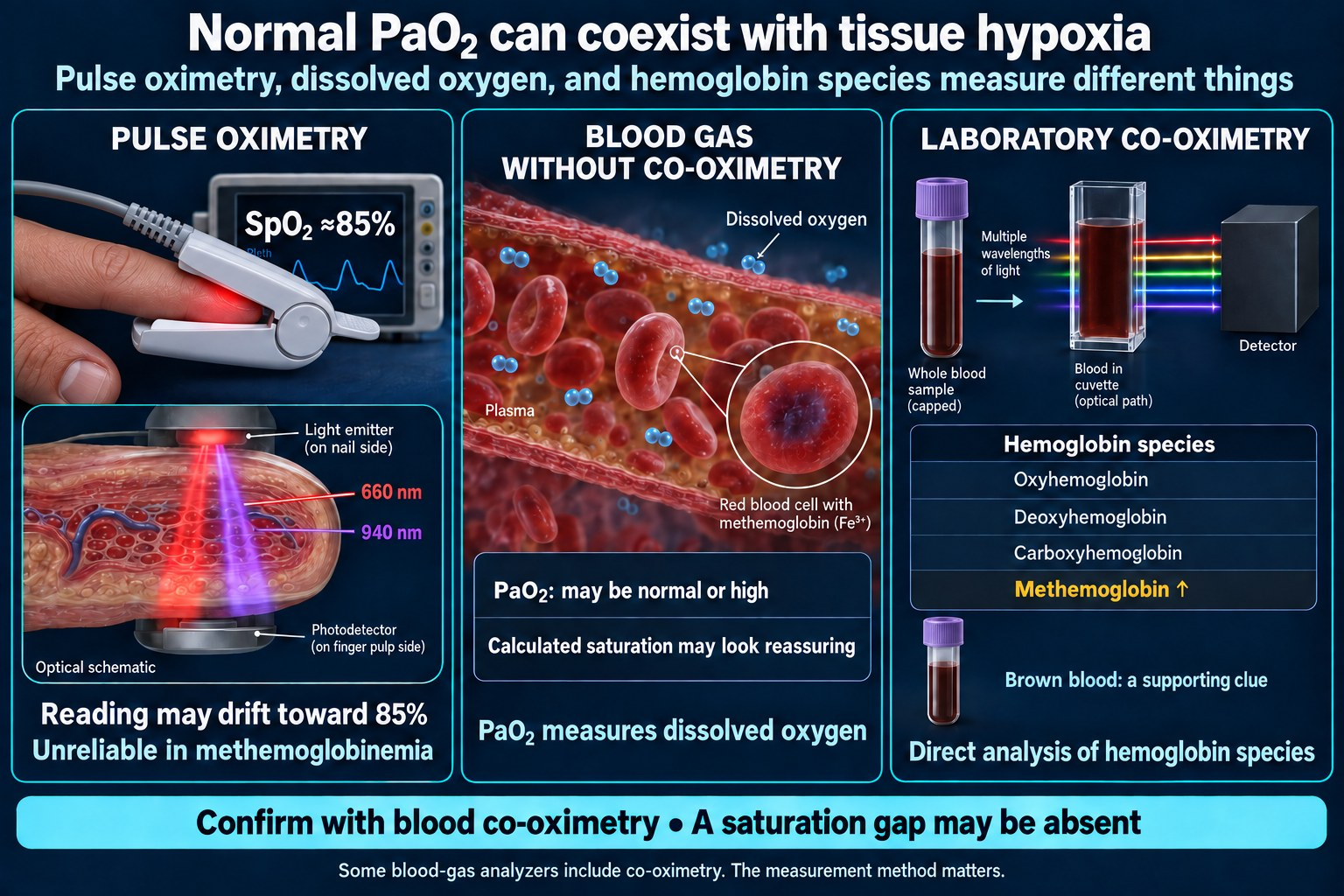
- The pulse oximeter tends to stick near 85% and stays there regardless of oxygen, because methemoglobin absorbs light at both wavelengths. The reading becomes unreliable once methemoglobin exceeds roughly 15–20% and fully plateaus by about 30–35%.3,17
- Diagnosis is co-oximetry, not a standard blood gas and not the pulse oximeter.
- Methylene blue 1–2 mg/kg IV over 5 minutes (the FDA label recommends 1 mg/kg), given with maintenance dextrose to supply NADPH, with a significant fall in methemoglobin usually within an hour. Cumulative dose should not exceed 7 mg/kg — above that it becomes an oxidant itself.
- In G6PD deficiency the methylene blue label and most authoritative references contraindicate or advise avoiding it. Its mechanism depends on NADPH generated by G6PD, so it may not work and may worsen hemolysis. The prescribing information, the 2021 American Journal of Hematology recommendations, and the 2026 British Journal of Haematology review all uphold avoidance; a minority (StatPearls, IBCC) argue it should not be reflexively withheld in severe disease. Ascorbic acid is the usual alternative.
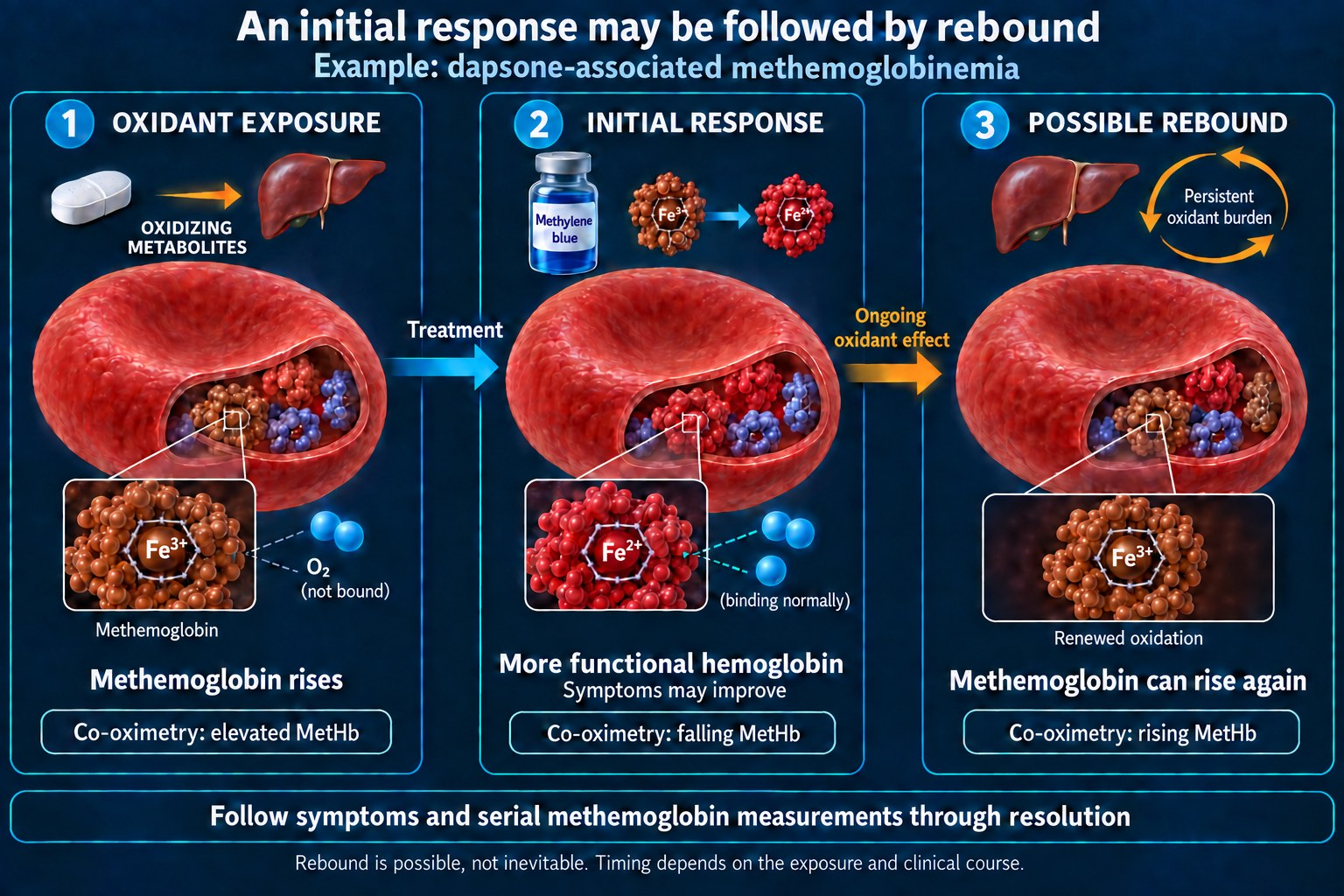
- Rebound can occur up to 18 hours later with lipid-soluble agents such as benzocaine, and with hydroxylamine-recycling agents such as dapsone, so a single good response is not the end of the episode.
The mechanism, in one paragraph
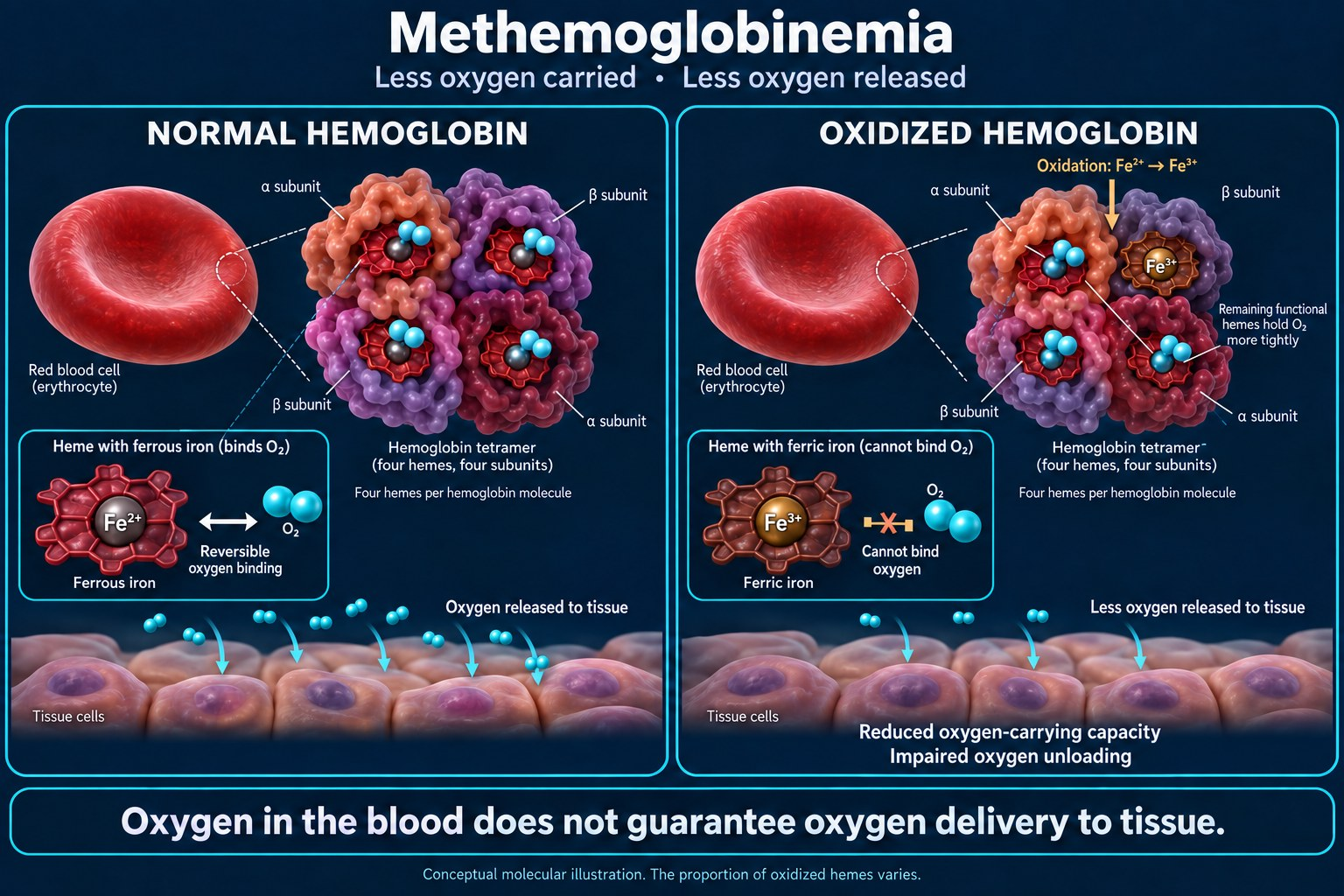
Heme iron normally sits in the ferrous (Fe²⁺) state. When it is oxidized to ferric (Fe³⁺), that heme can no longer bind oxygen — and it also shifts the oxygen-dissociation curve leftward, so the remaining normal hemes release oxygen less readily.1 Erythrocytes normally hold methemoglobin below 1% using the methemoglobin reductase system. An oxidizing exposure that outpaces that system produces acquired methemoglobinemia.
This is in the app, with the methylene blue dosing and crisis checklist — free tier, no card. Get it →
Recognition
| Finding | Detail |
|---|---|
| Cyanosis unresponsive to oxygen | The clinical hallmark, and the one that separates it from most airway causes |
| Saturation gap | Pulse oximetry reads low while the calculated or measured arterial saturation is normal. A discrepancy greater than 5% supports the diagnosis but is not always present, so its absence does not exclude it2,17 |
| Refractory hypoxemia | Saturation remains in the 80% range despite supplementation, and does not improve with a non-rebreather3 |
| Fixed reading near 85% | The displayed saturation is often stuck around 85% and does not track clinical change1 |
| Chocolate-brown blood | Dark brown,1,3 and it does not turn red on exposure to air4 |
Why the oximeter behaves that way. A conventional two-wavelength pulse oximeter compares absorbance at 660 nm and 940 nm. Methemoglobin absorbs strongly at both, which drives the calculated ratio toward 1.0 — the ratio that corresponds to a displayed saturation of 85%. The reading starts to become unreliable once methemoglobin exceeds roughly 15–20%, and by about 30–35% it plateaus and no longer falls proportionally.3,17 So the number is not just wrong, it is uninformative in a specific and misleading way — and the level at which it stops being informative is the level at which the patient is getting sick.
Level and symptoms, roughly
Sources disagree on exact thresholds and none of this is strictly evidence-based, but the general shape, as the Internet Book of Critical Care gives it:4
- Below 2% — normal
- 3–15% — asymptomatic, though cyanosis can occur above 5–10% and the pulse oximeter may already read low
- 20–30% — moderate: fatigue, tachypnea, dyspnea, chest pain, palpitations, anxiety, dizziness, confusion, nausea, vomiting
- Above 40% — severe: seizure, coma, arrhythmia, hyperlactatemia, death
How far apart the sources actually are is worth seeing rather than smoothing over. WikEM puts cyanosis and chocolate-brown blood at 15–30%, breathlessness, headache, dizziness and syncope at 30–50%, and arrhythmia, seizure and coma at 50–70%.2 The 2026 British Journal of Haematology review gives yet another ordering: cyanosis at 15–20%, neurological symptoms at 20–45%, coma, seizure and arrhythmia at 55–70%, and death above 70%.17 Read any of these as an ordering rather than as thresholds, and do not wait for a level to cross one before acting on a patient who is symptomatic.
Symptoms also depend on total hemoglobin and cardiovascular reserve.2,4 An anemic patient tolerates a given methemoglobin fraction considerably worse — symptomatic methemoglobinemia has been reported at fractions as low as ~8% with concurrent anemia.20
Causes worth knowing in anesthesia
| Agent | Note |
|---|---|
| Benzocaine | Topical spray for endoscopy and transesophageal echo. Reported incidence during TEE ranges 0.067% to 0.45%.11 A 2025 JAMA Internal Medicine analysis reported an inpatient incidence of about 1 in 730 exposures and a 3.7-fold higher risk with benzocaine than lidocaine, with inpatient status, active infection and anemia as risk factors.21 Since 2018 the FDA has required a standardized methemoglobinemia warning in the prescribing information of all prescription local anesthetics, and has urged makers of over-the-counter oral benzocaine products to add a warning about methemoglobinemia to their labels.13 See TEE anesthesia, where the reaction is best documented |
| Prilocaine | Its metabolite o-toluidine is the oxidant. In children and susceptible patients, methemoglobinemia — not only LAST — limits prilocaine dosing. Plain prilocaine may cause clinically symptomatic methemoglobinemia in children older than 6 months at doses above 2.5 mg/kg,14 against a labeled maximum of 8 mg/kg in healthy adults, and the label calls methemoglobinemia generally dose related but possible at any dose in susceptible individuals.15,16 See local anesthetic maximum doses |
| Nitrates and nitrites | Nitroglycerin, nitroprusside, amyl nitrite, sodium nitrite |
| Dapsone | Classic cause of recrudescent methemoglobinemia requiring repeated methylene blue doses, driven by recycling of its hydroxylamine metabolite5,17 |
| Other | Metoclopramide, phenazopyridine, rasburicase, sulfonamides, aniline dyes, and — at high doses — methylene blue itself4 |
Lidocaine is a much safer topical choice where the option exists: one institution reported no clinically evident cases across 3,354 transesophageal echocardiograms using lidocaine.12
Treatment
First
Stop the offending agent. This is the single most important step. Give high-flow oxygen by non-rebreather — it will not change the pulse oximeter reading, but it increases dissolved oxygen delivery and supports natural degradation of methemoglobin.6 Give maintenance dextrose alongside any methylene blue: glucose is required to generate the NADPH that methylene blue depends on, so all patients receiving it should have glucose available.7,8
What the major guidelines say. The 2023 American Heart Association poisoning-focused update and the 2025 AHA Special Circumstances of Resuscitation guidelines both position methylene blue as first-line for symptomatic methemoglobinemia, with exchange transfusion, hyperbaric oxygen and ascorbic acid as adjuncts or alternatives, and note that N-acetylcysteine is not effective.18,19
Methylene blue
| Dose | 1–2 mg/kg IV over 5 minutes2,7 (0.1–0.2 mL/kg of a 1% solution).3 The FDA label is more conservative — 1 mg/kg over 5–30 minutes22 |
| Onset | A significant fall in methemoglobin usually within an hour; one dose suffices in most patients5,7 |
| Repeat | May repeat after 30–60 minutes if the level remains elevated; the FDA label allows a single repeat dose of up to 1 mg/kg and a maximum of two doses before switching to alternatives3,5,22 |
| Ceiling | Cumulative dose should not exceed 7 mg/kg. Above that methylene blue is itself an oxidant and can cause methemoglobinemia and hemolysis5,8 |
| Threshold to treat | Commonly cited at methemoglobin above 20–30%, or at lower levels when the patient is symptomatic;3 the Internet Book of Critical Care treats symptomatic patients or a level above 30%, and possibly above 10–20% in patients less likely to tolerate reduced oxygen delivery4 |
Side effects that matter intraoperatively
- Methylene blue makes the pulse oximeter read low. Its presence in blood underestimates saturation by pulse oximetry — so obtain an arterial sample if you need a real number during or shortly after the infusion.9
- It drops the BIS. A fall in Bispectral Index has been reported after methylene blue; if it is given during surgery, use another method to assess anesthetic depth.9
- It inhibits guanylate cyclase and can raise blood pressure. The same vasoconstrictor property exploited to treat vasoplegic syndrome can cause systemic and pulmonary hypertension in the anesthetized patient.7
- It is a monoamine oxidase inhibitor and may precipitate serotonin toxicity in patients on serotonergic agents.3
When methylene blue does not work
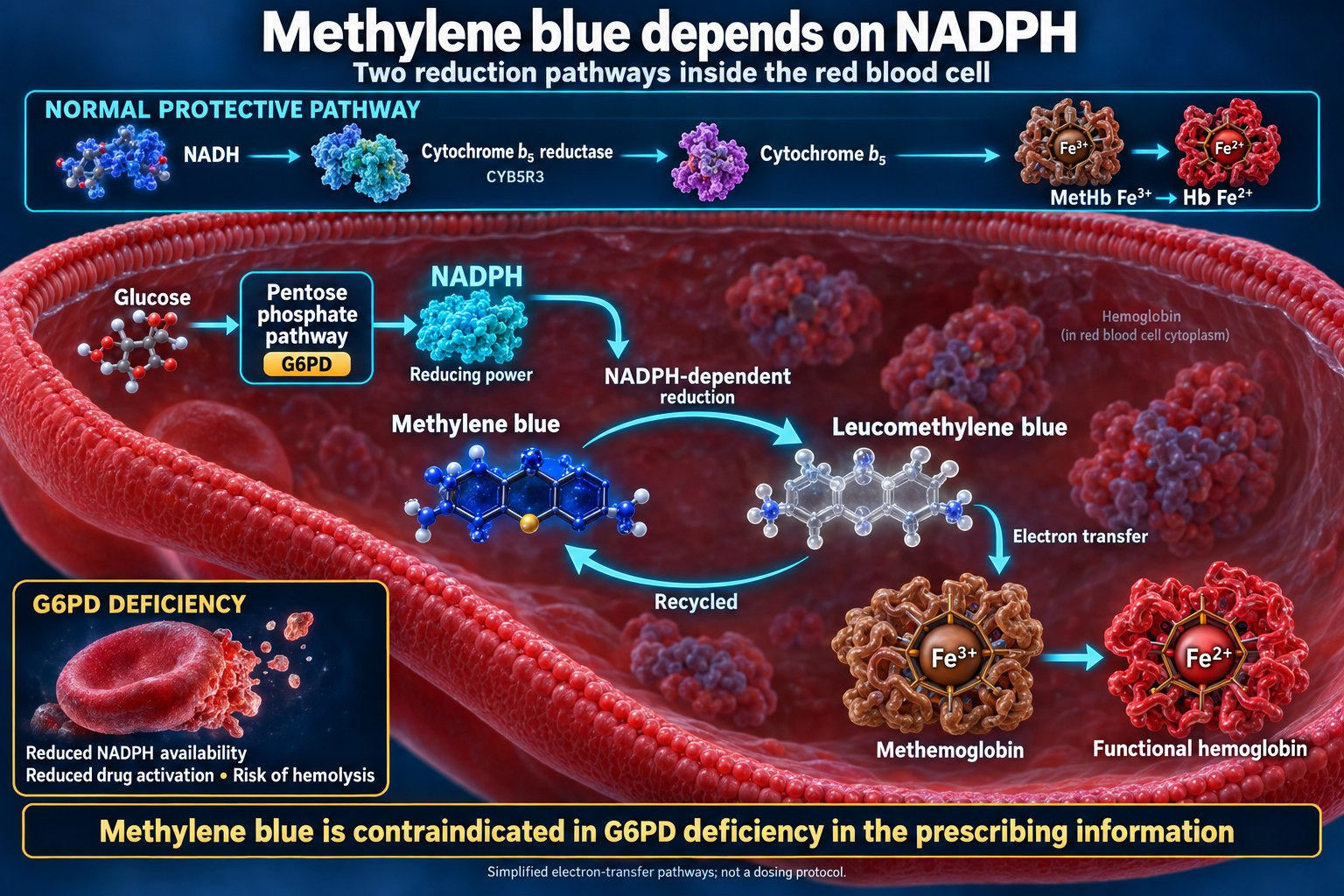
This is the section worth reading before you need it. Methylene blue works by donating electrons through NADPH-dependent methemoglobin reductase — and that NADPH is generated by G6PD in the hexose monophosphate shunt.3 That creates two problems in deficiency: the drug may do nothing, because there is little NADPH for it to shuttle; or it may work and consume NADPH doing so, deepening the shortfall that causes hemolysis in the first place.4
Most authoritative sources uphold avoidance; a minority contest it. The ProvayBlue prescribing information contraindicates methylene blue in G6PD deficiency because of the risk of hemolytic anemia; it says these patients may not reduce the drug to its active form and that it “may not be effective” in them, and warns that treating them “may result in severe hemolysis and severe anemia.”9 The 2021 American Journal of Hematology recommendations and the 2026 British Journal of Haematology review both advise avoidance/contraindication.7,17 Against this dominant position, a minority of references argue it should not be reflexively withheld: the StatPearls chapter, updated December 2025, calls its use controversial rather than contraindicated, notes that many deficient patients retain enough enzyme activity to mount an adequate response, and reports hemolysis at doses above 5 mg/kg;3 the Internet Book of Critical Care calls the question highly controversial with no clear answer, quoting a standard toxicology text recommending judicious use in most G6PD-deficient patients with symptomatic methemoglobinemia.4
What that leaves you doing. The contraindication is the regulatory and majority position, and it is the one to follow wherever there is time and a working alternative: give ascorbic acid, which reduces methemoglobin directly and does not need NADPH. It is slow and needs repeated doses, so start it early rather than holding it in reserve.2,4 Where the methemoglobinemia is severe and ascorbic acid alone will not get there fast enough, this becomes a risk–benefit judgment; discuss with a toxicologist or Poison Control before giving methylene blue to a patient known to be deficient.4 Exchange transfusion is effective regardless, because transfused erythrocytes respond normally.4
In one reported case, methylene blue given before the deficiency was known drove hemoglobin from 81 g/L down to 38 g/L; it was stopped and replaced with vitamin C.10 About 2% of the US population has G6PD deficiency, and there is no recommendation for routine testing before treatment8 — so this is a diagnosis you will usually make from the failure to respond.
The differential when it fails
- G6PD deficiency — the first thing to consider when a second dose has not worked.3 Switch to ascorbic acid; doses used range widely, and reported regimens include roughly 1.5–3 g IV every 6 hours in adults.4 Exchange transfusion and hyperbaric oxygen are second-line.8
- Sulfhemoglobinemia — conventional co-oximetry misidentifies sulfhemoglobin as methemoglobin, so non-response to methylene blue is how the diagnosis is usually suspected. It typically requires no treatment beyond removing the offending agent.2
- Hemoglobin M — a structural variant; methylene blue is ineffective.8
- Ongoing exposure — the agent has not actually been stopped, or is still being absorbed.
- Too much methylene blue — above 7 mg/kg cumulative it becomes the oxidant.5
- N-acetylcysteine is not a rescue — it is ineffective for methemoglobinemia and should not be substituted for methylene blue or ascorbic acid.18,19
One nuance worth carrying, because it is frequently stated backwards. The G6PD connection has led to a common misconception that G6PD deficiency is itself a risk factor for developing methemoglobinemia — a belief the source literature names explicitly as a misconception.3 Under normal conditions the NADPH pathway contributes minimally to methemoglobin reduction; it matters mainly as the route methylene blue exploits. G6PD deficiency is primarily a problem for the treatment, not the susceptibility.
Rebound
Recrudescent methemoglobinemia can occur within 18 hours as lipid-soluble agents such as benzocaine are slowly released from tissue stores,1 and dapsone is the classic cause of a second rise requiring repeated dosing — driven by continued recycling of its hydroxylamine metabolite; P450 inhibition with cimetidine is an emerging adjunct for dapsone-related cases.5,17 A patient who responds well should still have a repeat co-oximetry several hours later rather than being signed off on the initial improvement.
Frequently asked questions
What is a saturation gap?
The difference between the oxygen saturation displayed by the pulse oximeter and the saturation measured or calculated from an arterial blood gas. In methemoglobinemia the pulse oximeter reads low while the blood gas reads normal; a discrepancy greater than 5% supports the diagnosis. It should be treated as supportive rather than a universal hallmark — a 2022 systematic review found it is not consistently present in acquired cases, so its absence does not exclude the diagnosis.2,17
Why does the pulse oximeter read about 85% in methemoglobinemia?
Because methemoglobin absorbs light strongly at both wavelengths a conventional oximeter uses, driving the absorbance ratio toward 1.0 — the value that corresponds to a displayed saturation of 85%. The reading becomes unreliable once methemoglobin exceeds roughly 15–20% and plateaus near 85% by about 30–35%, after which it stops tracking the actual level, so the value is not merely inaccurate but uninformative.1,3,17
What is the dose of methylene blue for methemoglobinemia?
1–2 mg/kg intravenously over 5 minutes, given with maintenance dextrose, with a significant fall in methemoglobin usually within an hour.2,7 The FDA label is more conservative — 1 mg/kg over 5–30 minutes, a single repeat of up to 1 mg/kg at 1 hour if the level remains above 30%, and a maximum of two doses.22 The cumulative dose should not exceed 7 mg/kg, because above that methylene blue acts as an oxidant and can itself cause methemoglobinemia and hemolysis.5,8
Can you give methylene blue in G6PD deficiency?
The prescribing information and most authoritative references say to avoid it. ProvayBlue is contraindicated in G6PD deficiency because of the risk of hemolytic anemia, states that these patients may not reduce it to its active form and that it may not be effective in them, and warns that treating them may result in severe hemolysis and severe anemia;9 the 2021 American Journal of Hematology recommendations and the 2026 British Journal of Haematology review agree.7,17 A minority of sources contest this: StatPearls, updated December 2025, calls use controversial rather than contraindicated, notes that many deficient patients retain enough enzyme activity to respond, and reports hemolysis above 5 mg/kg,3 and the Internet Book of Critical Care calls the question highly controversial with no clear answer.4 In practice: follow the contraindication and give ascorbic acid wherever there is time, starting it early because it works slowly,2,4 and treat severe methemoglobinemia in a known-deficient patient as a risk–benefit decision taken with toxicology.4 Exchange transfusion and hyperbaric oxygen are further options.8
What if methylene blue does not work?
Consider G6PD deficiency first, then sulfhemoglobinemia — which conventional co-oximetry misreads as methemoglobin and which is typically suspected precisely because of non-response.2 Also consider hemoglobin M, continued exposure to the offending agent, and cumulative methylene blue above 7 mg/kg.5,8 N-acetylcysteine is not an effective substitute.18,19
Which anesthetic drugs cause methemoglobinemia?
Benzocaine and prilocaine are the two that matter most in anesthesia. In children and susceptible patients, methemoglobinemia — not only LAST — limits prilocaine dosing: a review of 242 published episodes found that plain prilocaine above 2.5 mg/kg may cause clinically symptomatic methemoglobinemia in children older than 6 months,14 against a labeled maximum of 8 mg/kg in healthy adults.15,16 Nitroglycerin, nitroprusside, nitrites, dapsone, metoclopramide and phenazopyridine are others.4 Lidocaine is a substantially safer topical alternative to benzocaine.21
References
- Methemoglobinemia. OpenAnesthesia. openanesthesia.org/keywords/methemoglobinemia. Covers the ferrous-to-ferric mechanism, the leftward shift of the oxygen-dissociation curve, causative agents including prilocaine and benzocaine, and rebound within 18 hours from lipid-soluble agents.
- Methemoglobinemia. WikEM. wikem.org/wiki/Methemoglobinemia. Methylene blue 1–2 mg/kg over 5 minutes; saturation gap greater than 5%; sulfhemoglobin misidentified by conventional co-oximetry; and a level-symptom table. Contraindicates methylene blue in G6PD deficiency and names ascorbic acid as the substitute.
- Methemoglobinemia. StatPearls, NCBI Bookshelf, updated December 2025. Bookshelf ID NBK537317. Methylene blue 1–2 mg/kg (0.1–0.2 mL/kg of 1% solution) IV over 5 minutes, repeatable after 30–60 minutes; the absorbance ratio and displayed SpO₂ of 85%; the NADPH-MetHb reductase pathway and its dependence on G6PD; the statement that G6PD deficiency being a risk factor for methemoglobinemia is a misconception; the position that methylene blue use in G6PD deficiency is controversial but not contraindicated, with hemolysis observed at doses exceeding 5 mg/kg; and the monoamine oxidase inhibitor property.
- Methemoglobinemia. EMCrit Internet Book of Critical Care. emcrit.org/ibcc/methemoglobinemia.
- Methemoglobinemia. ScienceDirect topic overview. sciencedirect.com/topics/medicine-and-dentistry/methemoglobinemia. Cumulative methylene blue ceiling of 7 mg/kg, response within 30 minutes, and recrudescent methemoglobinemia with dapsone.
- Methemoglobinemia: when to suspect and how to treat. Curr Med Issues. doi:10.4103/cmi.cmi_55_19. Supportive care, repeat dosing after 1 hour if methemoglobin remains above 20%.
- Iolascon A, Bianchi P, Andolfo I, et al. Recommendations for diagnosis and treatment of methemoglobinemia. Am J Hematol. 2021;96(12):1666–1678. doi:10.1002/ajh.26340. PMID 34467556. PMC9291883. Methylene blue 1–2 mg/kg (0.2 mL/kg of a 1% solution) IV over three to five minutes, repeatable at 1 mg/kg if the level has not fallen substantially within 30 to 60 minutes; glucose required to generate NADPH; guanylate cyclase inhibition with systemic and pulmonary hypertension; and the note that methylene blue is contraindicated in G6PD deficiency because its action as an electron carrier depends on NADPH generated by G6PD through the hexose monophosphate shunt.
- Methemoglobinemia treatment and management. Medscape. emedicine.medscape.com/article/204178-treatment. Notes methylene blue ineffectiveness in G6PD deficiency and hemoglobin M, the approximately 2% US prevalence of G6PD deficiency with no routine testing recommendation, maintenance glucose, and second-line options.
- ProvayBlue (methylene blue) injection prescribing information. American Regent, Inc. DailyMed, US National Library of Medicine, SPL set ID 4f6848e5-35ed-4046-b13c-3032b5ba3232; label version published 12 June 2025. dailymed.nlm.nih.gov/dailymed/drugInfo.cfm?setid=4f6848e5-35ed-4046-b13c-3032b5ba3232. Contraindicated in G6PD deficiency; hemolytic anemia with onset possibly delayed a day or more; pulse oximetry underestimation; reported fall in Bispectral Index.
- Chen B, Han Y. Co-occurrence of acute hemolytic anemia and methemoglobinemia in a 74-year-old female with G6PD deficiency: a case report. Medicine (Baltimore). 2025. doi:10.1097/MD.0000000000042826. Hemoglobin fell from 81 to 38 g/L after methylene blue; replaced with vitamin C and methylprednisolone.
- Vallurupalli S. Methemoglobinemia due to topical pharyngeal anesthesia during endoscopic procedures. Local Reg Anesth. 2010;3:137–142. doi:10.2147/LRA.S12227. PMID 22915882. PMC3417961. Reported incidence of benzocaine methemoglobinemia of 0.067% to 0.45% during transesophageal echocardiography, from retrospective series.
- Filipiak-Strzecka D, Kasprzak JD, Wiszniewska M, Walusiak-Skorupa J, Lipiec P. The influence of lidocaine topical anesthesia during transesophageal echocardiography on blood methemoglobin level and risk of methemoglobinemia. Int J Cardiovasc Imaging. 2015;31(4):727–731. doi:10.1007/s10554-015-0608-z. PMID 25663608. PMC4428890. No clinically evident methemoglobinemia in 3,354 transesophageal echocardiograms performed over 13 years with 10% lidocaine spray as the topical anesthetic.
- US Food and Drug Administration. Risk of serious and potentially fatal blood disorder prompts FDA action on oral over-the-counter benzocaine products used for teething and mouth pain and prescription local anesthetics. Drug Safety Communication, 23 May 2018. The fda.gov page is no longer available; archived copy: web.archive.org copy of fda.gov. States that the FDA is requiring a standardized methemoglobinemia warning in the prescribing information of all prescription local anesthetics, and that it urged manufacturers of over-the-counter oral benzocaine products for adults and children 2 years and older to add a warning about methemoglobinemia to their labels.
- Guay J. Methemoglobinemia related to local anesthetics: a summary of 242 episodes. Anesth Analg. 2009;108(3):837–845. doi:10.1213/ane.0b013e318187c4b1. PMID 19224791. Plain prilocaine may induce clinically symptomatic methemoglobinemia in children older than 6 months at doses above 2.5 mg/kg; in adults the dose should be kept below 5.0 mg/kg; prilocaine should not be used in infants younger than 6 months, in pregnancy, or with other oxidizing drugs.
- 4% Citanest Plain Dental (prilocaine hydrochloride injection, USP) prescribing information. Dentsply Pharmaceutical. DailyMed, US National Library of Medicine, SPL set ID db23a56f-1e41-4843-9220-1b2e3059db41; label updated 10 November 2021. dailymed.nlm.nih.gov/dailymed/drugInfo.cfm?setid=db23a56f-1e41-4843-9220-1b2e3059db41. Maximum recommended dose within a two-hour period in normal healthy adults: 8 mg/kg under 70 kg, and 600 mg at 70 kg or more. The development of methemoglobinemia is generally dose related but may occur at any dose in susceptible individuals.
- 4% Citanest Forte Dental with epinephrine 1:200,000 (prilocaine HCl and epinephrine injection) prescribing information. Dentsply Pharmaceutical. DailyMed, US National Library of Medicine, SPL set ID 60c8710b-ae55-4fdf-e053-2991aa0adc75; label updated 29 February 2024. dailymed.nlm.nih.gov/dailymed/drugInfo.cfm?setid=60c8710b-ae55-4fdf-e053-2991aa0adc75. The same maximum and the same statement on methemoglobinemia as the plain form.
- Twine AJ, Rees DC. Methaemoglobinaemia: from pathophysiology to contemporary clinical management. Br J Haematol. 2026. Contemporary review: the saturation gap should be considered supportive rather than a universal hallmark, citing a 2022 systematic review of acquired cases in which an SaO₂:SpO₂ ratio >1 was not consistently present; pulse oximetry fixed around 85% once methemoglobin exceeds ~15–20%, plateauing by >35%; a level-symptom ordering (cyanosis 15–20%, neurological symptoms 20–45%, coma/seizure/arrhythmia 55–70%, death >70%); methylene blue contraindicated in G6PD deficiency; and recrudescence from hydroxylamine-metabolite recycling with dapsone, with cimetidine/P450 inhibition as an adjunct.
- Lavonas EJ, Akpunonu PD, Arens AM, et al. 2023 American Heart Association focused update on the management of patients with cardiac arrest or life-threatening toxicity due to poisoning. Circulation. 2023. Methylene blue as first-line for symptomatic methemoglobinemia, with exchange transfusion, hyperbaric oxygen and ascorbic acid as adjuncts or alternatives, and the note that N-acetylcysteine is not effective.
- Cao D, Arens AM, Chow SL, et al. Part 10: adult and pediatric special circumstances of resuscitation: 2025 American Heart Association guidelines for cardiopulmonary resuscitation and emergency cardiovascular care. Circulation. 2025. Reaffirms methylene blue as first-line for symptomatic methemoglobinemia, with exchange transfusion, hyperbaric oxygen and ascorbic acid as alternatives, and that N-acetylcysteine is ineffective.
- Schmidt EP, Shepard JO, Liu L. Case 11-2023: a 67-year-old man with mantle-cell lymphoma and hypoxemia. N Engl J Med. 2023. Documents the pulse-oximetry plateau, with SpO₂ ranging minimally from about 83 to 87% across a broad span of methemoglobin levels, and symptomatic methemoglobinemia at fractions as low as ~8% with concurrent anemia.
- Williams RT, Fischer BG. Benzocaine-induced methemoglobinemia after nasogastric tube insertion. JAMA Intern Med. 2025. Teachable-moment analysis reporting an inpatient incidence of about 1 in 730 benzocaine exposures and a 3.7-fold higher risk with benzocaine than lidocaine, with inpatient status, active infection and anemia as risk factors.
- Methylene blue injection prescribing information. US Food and Drug Administration / DailyMed. Recommends 1 mg/kg IV over 5–30 minutes, a single repeat dose of up to 1 mg/kg at 1 hour if methemoglobin remains above 30%, and a maximum of two doses before switching to alternative therapy.
Disclaimer. Reference information for licensed clinicians and students. Not a medical device, and not a substitute for clinical judgment. Verify against your institutional protocol and current package inserts.
The LAST checklist, local anesthetic ceilings and this differential ship inside Helix Anesthesia — a point-of-care reference built by a practicing CRNA, cited and available offline. See how we source clinical content.
Built for the anesthesia machine, not the desk. It opens in one tap, works with no signal in an OR that has none, and shows the citation on screen beside the number rather than making you go and find it.
Free tier, no card: every calculator, every crisis checklist, the full drug library and glossary, three complete regional blocks, five complete surgical cases, and 15 AI questions a month.
Get Helix Anesthesia How we source itSign up for our newsletter and special offers. New answer pages, improvements to the ones already here, and the occasional offer. Nothing else, and not often.
Local anesthetic and sedation safety