
Cricoid pressure: does it actually work?
The trial everyone cites is misreported in both directions — and the anatomy the technique depends on is more contested than either camp admits.
Every clinical claim on this page is cited to its source below. How we source clinical content.
The short answer
The evidence supports neither verdict. The IRIS trial failed to demonstrate that sham is non-inferior to cricoid pressure, which is not the same as showing cricoid pressure works. Aspiration rates were 0.6% versus 0.5%, the only secondary endpoints that differed significantly were those suggesting harder intubation with cricoid pressure, and cross-sectional imaging shows the esophagus is frequently lateral to the cricoid — a displacement that becomes more pronounced once pressure is applied. The anatomy argument is real but not decisive: the technique may still occlude the postcricoid hypopharynx.
This is one of the few questions where the evidence gets misreported in both directions. The trial everyone cites did not show that cricoid pressure works, and it did not show that it doesn’t — and understanding why is more useful than either headline.
Key takeaways
- IRIS failed to demonstrate that sham is non-inferior to cricoid pressure. That is not the same as showing cricoid pressure works, and it is the sentence most summaries get wrong.
- The trial was underpowered because the observed aspiration rate was about a fifth of what the power calculation assumed.
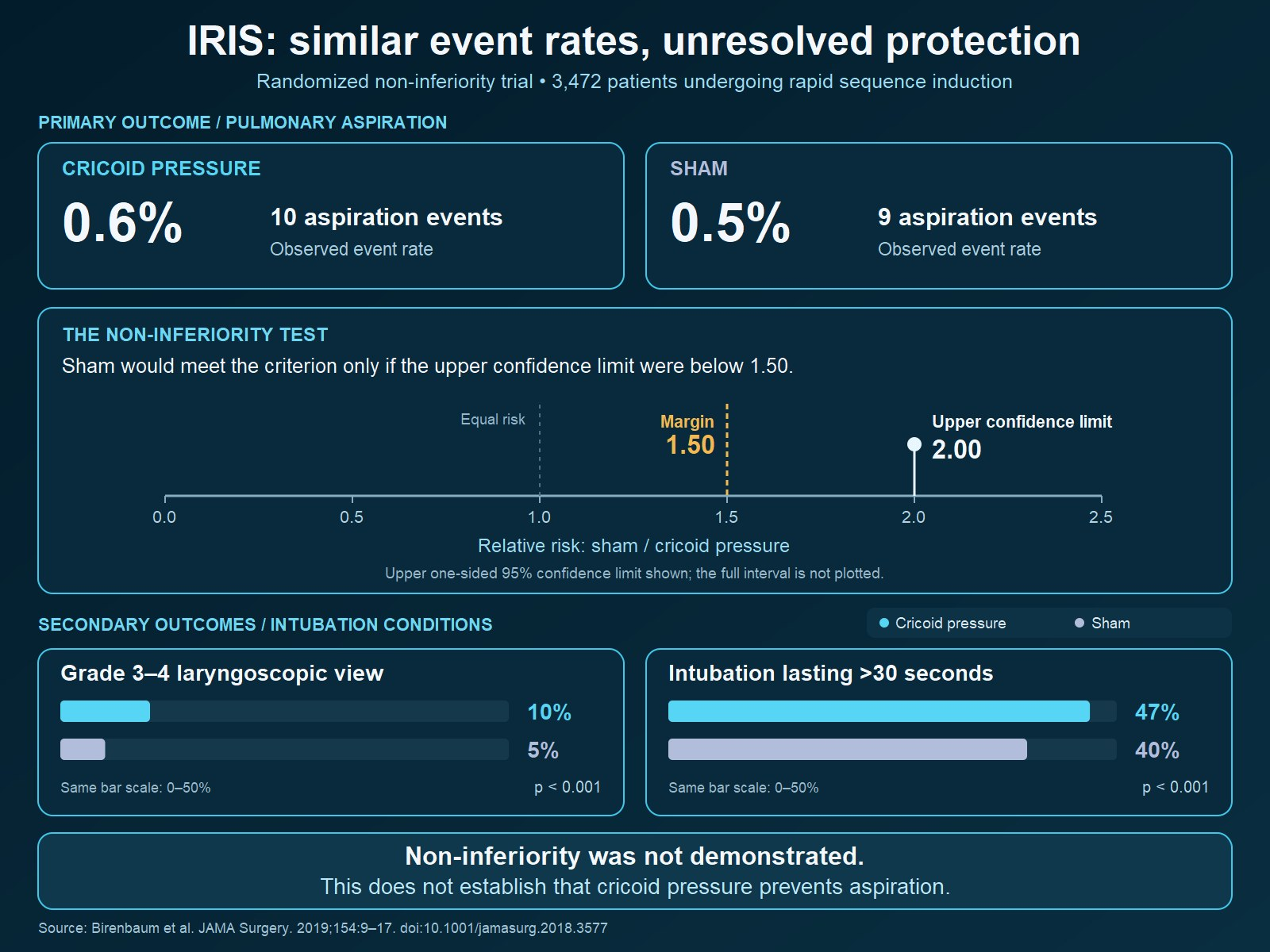
- Aspiration rates were essentially identical — 0.6% with cricoid pressure, 0.5% with sham.
- The endpoints that reached significance all favored sham. Worse laryngoscopic view, longer intubation, more interruptions. Traumatic complications were numerically higher with cricoid pressure but not significantly so.
- The anatomy is contested. The esophagus lies lateral to the cricoid in roughly half of adults at rest, rising to ~90% once cricoid pressure is applied — but the technique may still work by compressing the postcricoid hypopharynx rather than the esophagus itself.
- Practice is regionally divided. An ESAIC-network survey found the Sellick maneuver in use by 42% of respondents, but a UK national survey found 92% and a European survey 38.5%.
What IRIS actually found
A randomized, double-blind, non-inferiority trial across 10 French academic centers, enrolling 3,472 patients undergoing rapid sequence induction between February 2014 and February 2017. Blinding was achieved with an opaque cover over the assistant’s hand: cricoid pressure at 30 N with three fingers, or a sham with no pressure applied.1,2
| Endpoint | Cricoid (Sellick) | Sham | |
|---|---|---|---|
| Pulmonary aspiration (primary) | 10 (0.6%) | 9 (0.5%) | Non-inferiority not demonstrated, p = 0.14 |
| Cormack–Lehane grade 3–4 | 10% | 5% | p < 0.001 |
| Intubation time > 30 seconds | 47% | 40% | p < 0.001 |
| Maneuver interrupted | 14% | 5% | p < 0.001 |
| Traumatic complications | 1% | 0.5% | p = 0.11, not significant |
| Pneumonia, length of stay, mortality | No significant difference | ||
The risk difference for aspiration was −0.06% (95% CI −0.57 to 0.42), and the same result held in the per-protocol population, in patients without a nasogastric tube, and in those requiring emergency surgery.1
This is in the app, with the airway assessment and RSI checklists — free tier, no card. Get it →
Why “failed to demonstrate non-inferiority” is not “cricoid works”
The trial was powered on an assumed aspiration rate of 2.8%. The observed rate was 0.5–0.6%.3
Non-inferiority was assessed on whether the upper limit of the one-sided 95% confidence interval for relative risk fell below 1.5. It came in at 2.00 — so the margin was not met.1 But with an event rate one-fifth of the predicted one, the confidence interval was always going to be wide. The trial could not have demonstrated non-inferiority at that margin regardless of the truth. A published critique estimated that a trial powered for the real-world event rate would need on the order of 25,000 patients per arm.10
So the correct reading is: the study was underpowered for its own primary question, the point estimates were essentially identical, and the statistical failure reflects the rarity of the outcome rather than a difference between the groups.
That cuts both ways. Anyone citing IRIS as proof that cricoid pressure is useless is over-reading it. Anyone citing the failed non-inferiority as evidence that cricoid pressure should be retained is over-reading it in the other direction.
An unaddressed real-world scenario. A published critique of IRIS noted that in failed first attempts, cricoid pressure is typically released for bag-mask ventilation between attempts — exactly the window when regurgitation risk may be highest. A single-attempt trial design cannot capture this, and it is worth keeping in mind when generalizing the result to difficult airways.11
The anatomy problem — and its limits
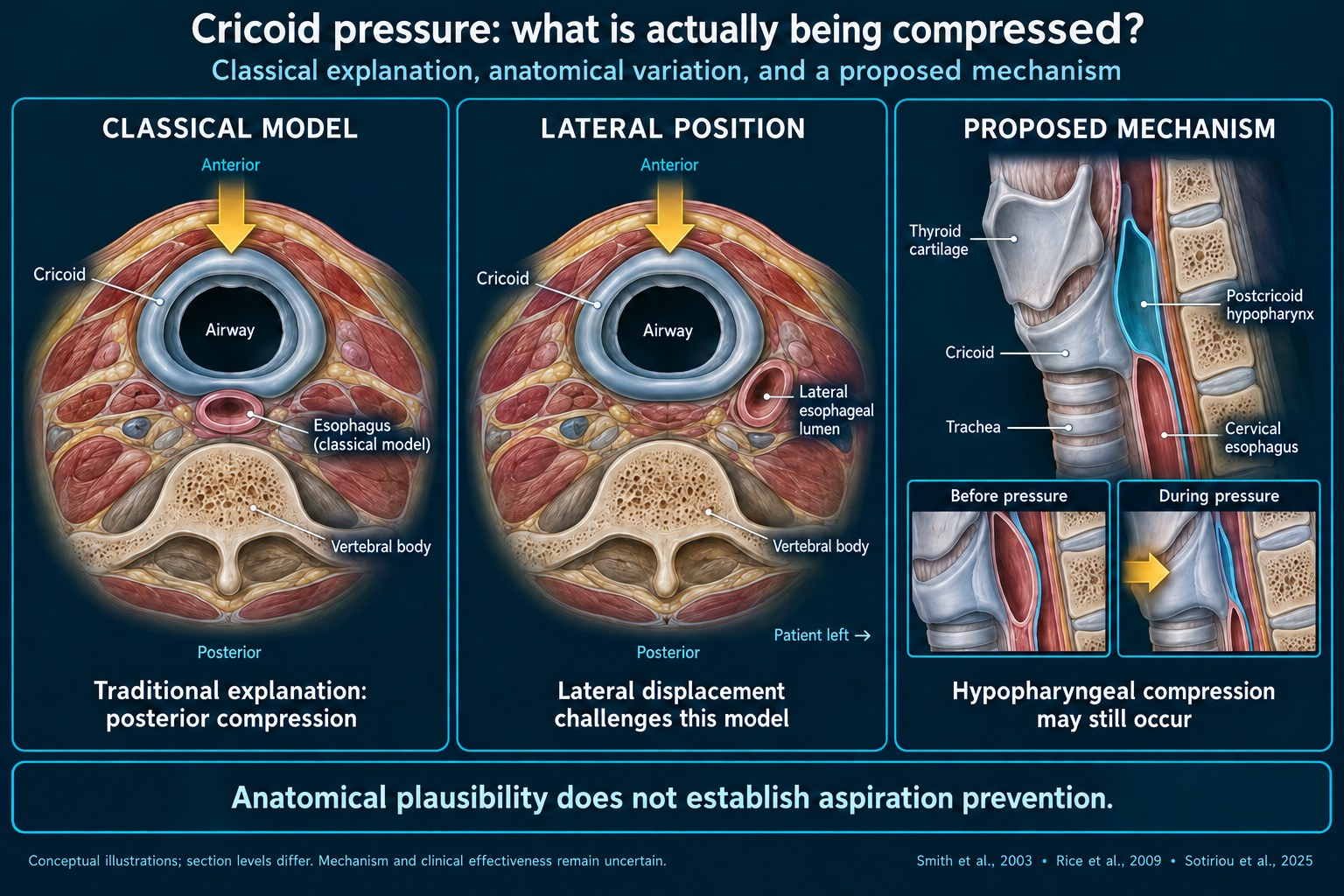
The maneuver assumes the esophagus sits directly behind the cricoid ring, so that posterior pressure compresses it against the vertebral body. Cross-sectional imaging complicates that assumption. Older CT and MRI series found the esophagus unaligned with the cricoid in close to half of adults at rest (roughly 49–53%), and MRI showed that the esophagus is displaced laterally in about 90% of patients once cricoid pressure is actually applied.4,12,13 An ultrasound study of 110 volunteers reported an even higher baseline rate of lateral position:
| Esophageal position relative to the cricoid ring | Proportion |
|---|---|
| Partially to the left | 78.18% |
| Completely to the left | 4.54% |
| To the right | 1.81% |
| Could not be visualized | 15.45% |
The exact proportion varies by imaging modality and by whether pressure is being applied, but the direction is consistent: perfect midline alignment is not the norm.
Why this may not sink the technique. The anatomy argument is real but not decisive. Two counterpoints are frequently omitted: (1) the esophagus behind the cricoid may move with the larynx as a unit when pressure is applied, and (2) cricoid force may occlude the postcricoid hypopharynx — the collapsible segment immediately above the esophagus — regardless of where the esophageal lumen sits. A 2025 review concluded that cricoid force retains a sound anatomic and physiologic basis on these grounds, even granting the lateral-displacement data.14 The lateral-esophagus finding weakens the classical mechanistic story; it does not by itself prove the maneuver fails.
This tension has nonetheless driven interest in alternatives — see below.
What the wider evidence says
A systematic review and meta-analysis of randomized trials concluded that cricoid pressure failed to show any increase in protection from aspiration and may increase the difficulty of intubation, with further studies needed in high-risk populations such as intensive care patients.6
The difficulty signal, however, is not uniform across meta-analyses. A separate systematic review and meta-analysis found no statistically significant difference in the rate of poor laryngoscopic views with cricoid pressure (RR ~1.49, p = 0.21), even though it agreed the maneuver can prolong intubation.15 The honest reading is that cricoid pressure probably makes some intubations harder, but the size and consistency of that effect are debated — and it appears least relevant when videolaryngoscopy is used, where recent reviews find little clinically important effect on intubation success.14
Historical context is worth knowing: the maneuver was described by Sellick in 1961, though similar techniques appear in the literature well before, and the initial studies supporting it had small numbers, no blinding, no randomization and selection bias.2 It became a standard of care largely on physiological reasoning rather than on outcome data.
An alternative: left paratracheal pressure
Left paratracheal pressure has been tested directly against cricoid pressure and found non-inferior for intubation time, with a significantly lower tube-advancement difficulty score.5 It targets the esophagus where lateral-position imaging tends to find it rather than where the classical technique assumes it to be.
The occlusion evidence, though, does not clearly favor it. In a randomized crossover study during induction and videolaryngoscopy, cricoid pressure occluded the upper esophagus in 100% of patients versus 58% for paratracheal pressure.16 So the paratracheal advantage is currently limited to intubation conditions, not to a demonstrated aspiration-protection benefit, and its own mechanistic case is not settled.
The technique argument
One defense of cricoid pressure is that it fails because it is applied badly rather than because it does not work. There is something in this — training does improve how accurately operators apply the intended force.7 But it is important to state what training trials actually measured: they improved the accuracy and reproducibility of force application, not intubation success or aspiration rates, and in a rigorous simulation study no participant reliably achieved and sustained the target force even after training.17 IRIS also anticipated the objection: every center ran a training session before enrollment, only trained operators applied the maneuver, and the investigators describe repeatedly retraining operators over the trial — in a group that already used the technique routinely.1 Force is notoriously inconsistent in practice, which is why devices to measure applied pressure in real time are under development.8
The practical reading
- The evidence does not support cricoid pressure as protective, and it probably carries some cost in laryngoscopic view and intubation time — though meta-analyses disagree on how large and consistent that cost is.6,15
- The evidence also does not exclude a small protective effect, because the outcome is too rare to have been measured properly.
- The anatomy argument is genuine but not decisive — lateral esophageal position weakens the classical mechanism, but postcricoid hypopharyngeal compression remains a plausible route to protection.14
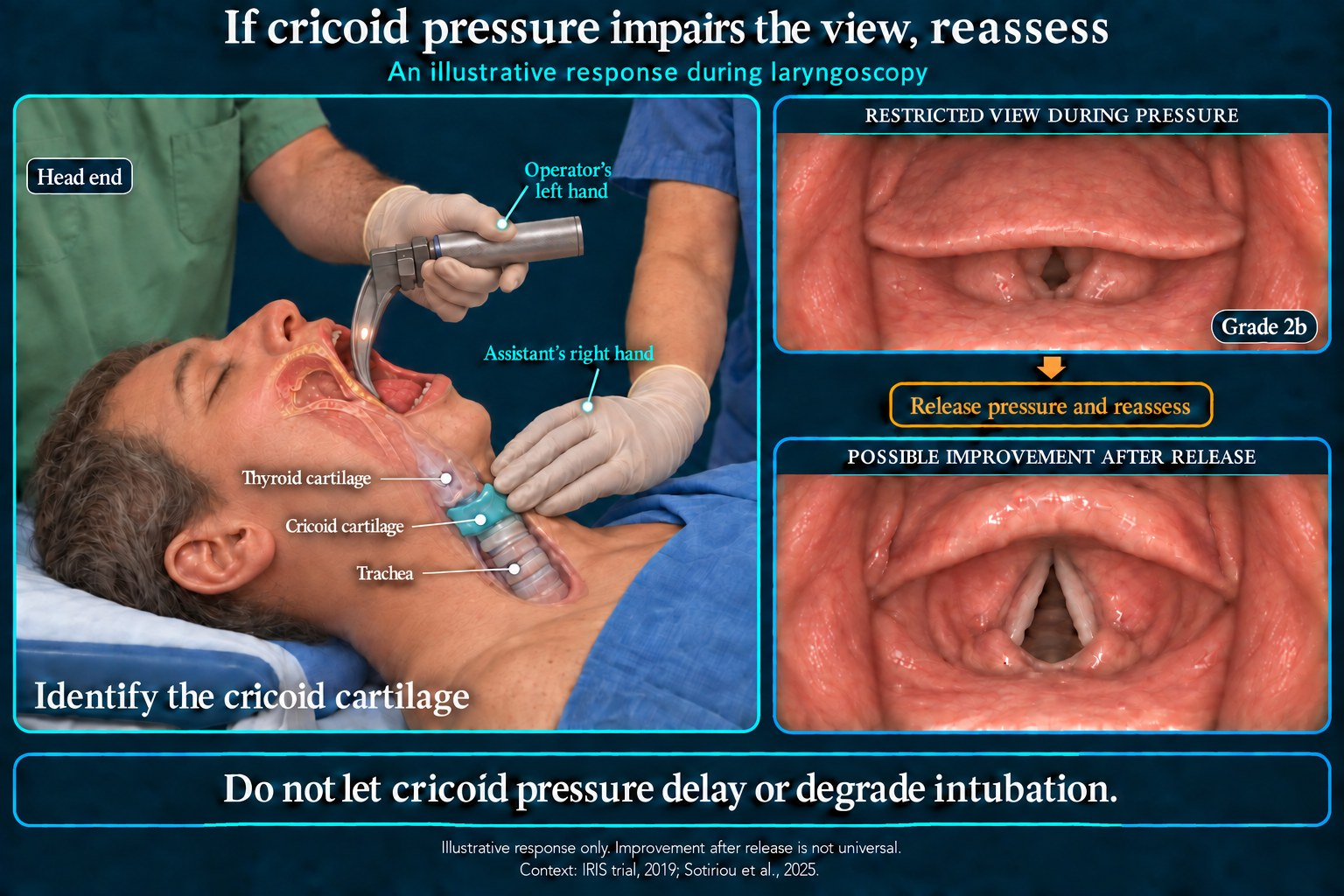
- If it is used, release it early when the view is poor — IRIS found the maneuver was interrupted nearly three times as often in the cricoid group, which suggests operators were already doing this.
- Do not let it delay or degrade intubation. The measured harms are all in that direction, and the case for maintaining it is weakest when videolaryngoscopy is used.14
- Populations remain unstudied — the authors specifically called for further studies in pregnant women and outside the operating room.1
What the guidelines say
There is no international guideline consensus on rapid sequence induction technique, and the direction of travel differs by specialty. The IRIS editorial notes that cricoid pressure has been dropped from most emergency-medicine and critical-care airway guidelines, while remaining in many anesthesia protocols.9 In pediatrics, the 2025 AHA/AAP advanced life support guidelines address cricoid pressure directly and do not endorse its routine use during intubation.18 Institutional protocol varies, and this is a reasonable place to follow yours while knowing what the evidence does and does not show.
Frequently asked questions
Did the IRIS trial disprove cricoid pressure?
No, and it is routinely misreported. IRIS was a non-inferiority trial testing whether a sham was non-inferior to cricoid pressure, and it failed to demonstrate non-inferiority.1 But the aspiration rates were nearly identical (0.6% versus 0.5%), and the trial was powered on an assumed rate of 2.8% — roughly five times what was observed — leaving it underpowered for its own primary question.3,10
Does cricoid pressure make intubation harder?
Probably, but the effect is debated. In IRIS, Cormack–Lehane grade 3–4 views occurred in 10% of the cricoid group versus 5% of the sham group, and intubation took longer than 30 seconds in 47% versus 40% — both p < 0.001. Traumatic complications, all related to tracheal intubation, were 1% versus 0.5% (p = 0.11, not significant).1 One meta-analysis agreed the maneuver adds difficulty,6 but another found no significant difference in poor laryngoscopic views,15 and the effect appears minimal with videolaryngoscopy.14
Where is the esophagus relative to the cricoid cartilage?
Frequently not directly behind it. Cross-sectional imaging finds the esophagus unaligned with the cricoid in roughly half of adults at rest, and displaced laterally in about 90% once cricoid pressure is applied.12,13 An ultrasound study of 110 volunteers reported it partially to the left in 78.18%, completely to the left in 4.54%, to the right in 1.81%, and not visualizable in 15.45%.4 Note this does not settle whether the maneuver works, because cricoid force may still compress the postcricoid hypopharynx.14
Is cricoid pressure still recommended?
Practice is regionally divided and there is no international consensus. An ESAIC-network survey of 491 practitioners across 61 countries found the Sellick maneuver in use by 42% of respondents,9 but a UK national survey found 92% still use it19 and a European survey found 38.5%.20 Emergency and critical-care guidelines have largely dropped it while many anesthesia protocols retain it.9 Follow your institutional protocol while knowing what the evidence does and does not show.
Is there an alternative to cricoid pressure?
Left paratracheal pressure has been tested directly against cricoid pressure and found non-inferior for intubation conditions, with a significantly lower tube-advancement difficulty score.5 However, a crossover study found cricoid pressure occluded the upper esophagus in 100% of patients versus 58% with paratracheal pressure, so paratracheal pressure has not been shown to protect against aspiration better than cricoid pressure.16
References
- Birenbaum A, Hajage D, Roche S, et al; IRIS Investigators Group. Effect of cricoid pressure compared with a sham procedure in the rapid sequence induction of anesthesia: the IRIS randomized clinical trial. JAMA Surg. 2019;154(1):9–17. doi:10.1001/jamasurg.2018.3577. PMID 30347104. ClinicalTrials.gov NCT02080754.
- Cricoid pressure in airway management: the IRIS trial. REBEL EM, 15 November 2018. rebelem.com/cricoid-pressure-in-airway-management-the-iris-trial. Covers the trial design, the sham technique, and the historical origin of the maneuver including the pre-Sellick descriptions and the methodological flaws of the initial studies.
- JC: cricoid pressure and RSI, do we still need it? St Emlyn’s, 20 October 2018. stemlynsblog.org/jc-cricoid-pressure-and-rsi-do-we-still-need-it-st-emlyns. Sets out the power calculation problem — recruitment targets based on an estimated 2.8% aspiration prevalence against a far lower observed rate. The operator training protocol is in the trial report itself, reference 1, not here.
- Bermede O, Meço BC, Baytaş V, et al. What about compressing the oesophagus with an ultrasound probe for a modified Sellick maneuver? Turk J Anaesthesiol Reanim. 2022. doi:10.5152/TJAR.2021.1427. One hundred ten volunteers; esophageal position relative to the cricoid ring.
- Kim HY, Moon JH, Park HY, Min SK, Kim JY. A noninferiority trial comparing left paratracheal pressure versus cricoid pressure on tracheal intubation conditions using the Pentax Airway Scope. Sci Rep. 2022;12:16299. doi:10.1038/s41598-022-20681-y
- White L, Thang C, Hodsdon A, Melhuish T, Vlok R. Cricoid pressure during intubation: a systematic review and meta-analysis of randomised controlled trials. Heart Lung. 2019. doi:10.1016/j.hrtlng.2019.10.001
- Systematic review and meta-analysis of cricoid pressure training and education efficacy. PMID 29851051. Eight eligible studies; training improves accuracy of applied force.
- Validation of a novel handheld device for accurate cricoid pressure in healthy volunteers. ClinicalTrials.gov NCT06540625. University Health Network, Toronto. Describes the force inconsistency problem motivating device development.
- Ben-Naoui I, Compère V, Clavier T, Besnier E. Practices of rapid sequence induction for prevention of aspiration — an international declarative survey. J Clin Med. 2025;14(7):2177. doi:10.3390/jcm14072177. PMID 40217627. PMC11989417. International declarative survey of rapid sequence induction practice across the ESAIC network. 491 respondents in 61 countries; Sellick maneuver used by 42%. See also the accompanying IRIS editorial for guideline direction: Tisherman SA, Anders MG, Galvagno SM. Is 30 Newtons of prevention worth a pound of a cure?—cricoid pressure. JAMA Surg. 2019.
- Khorasani A, Salem MR, Crystal GJ. Utility of cricoid pressure (letter). JAMA Surg. 2019. Critique of IRIS power/event-rate assumptions and the sample size that a real-world event rate would require.
- Sun CK, Chang YJ, Hung KC. Utility of cricoid pressure (letter). JAMA Surg. 2019. Raises the second-attempt regurgitation scenario when cricoid pressure is released for interposed bag-mask ventilation.
- Smith KJ, Dobranowski J, Yip G, Dauphin A, Choi PT. Cricoid pressure displaces the esophagus: an observational study using magnetic resonance imaging. Anesthesiology. 2003. Lateral esophageal displacement in ~90% once cricoid pressure is applied.
- Smith KJ, Ladak S, Choi PT, Dobranowski J. The cricoid cartilage and the esophagus are not aligned in close to half of adult patients. Can J Anaesth. 2002.
- Sotiriou A, Ahmad I, El-Boghdadly K. Cricoid force: anatomic, physiologic, and clinical concepts. Anesthesiology. 2025. Postcricoid hypopharyngeal compression mechanism; limited effect of cricoid force on intubation success with videolaryngoscopy.
- Hung KC, Hung CT, Poon YY, et al. The effect of cricoid pressure on tracheal intubation in adult patients: a systematic review and meta-analysis. Can J Anaesth. 2021. No significant difference in poor laryngoscopic views (RR ~1.49, p = 0.21).
- Kim H, Chang JE, Won D, et al. Effectiveness of cricoid and paratracheal pressures in occluding the upper esophagus through induction of anesthesia and videolaryngoscopy: a randomized, crossover study. Anesth Analg. 2022. Cricoid occluded the esophagus in 100% versus 58% for paratracheal pressure.
- Noll E, Shodhan S, Varshney A, et al. Trainability of cricoid pressure force application: a simulation-based study. Anesth Analg. 2019.
- Lasa JJ, Dhillon GS, Duff JP, et al. Part 8: pediatric advanced life support: 2025 American Heart Association and American Academy of Pediatrics guidelines for cardiopulmonary resuscitation and emergency cardiovascular care. Circulation. 2025.
- Sajayan A, Wicker J, Ungureanu N, Mendonca C, Kimani PK. Current practice of rapid sequence induction of anaesthesia in the UK — a national survey. Br J Anaesth. 2016. Cricoid pressure used by ~92% of respondents.
- Klucka J, Kosinova M, Zacharowski K, et al. Rapid sequence induction: an international survey. Eur J Anaesthesiol. 2020. Cricoid pressure used by ~38.5%.
Disclaimer. Reference information for licensed clinicians and students. Not a medical device, and not a substitute for clinical judgment. There is no international guideline consensus on rapid sequence induction technique; follow your institutional protocol.
Airway management and crisis checklists ship inside Helix Anesthesia — a point-of-care reference built by a practicing CRNA, cited and available offline. See how we source clinical content.
Built for the anesthesia machine, not the desk. It opens in one tap, works with no signal in an OR that has none, and shows the citation on screen beside the number rather than making you go and find it.
Free tier, no card: every calculator, every crisis checklist, the full drug library and glossary, three complete regional blocks, five complete surgical cases, and 15 AI questions a month.
Get Helix Anesthesia How we source itSign up for our newsletter and special offers. New answer pages, improvements to the ones already here, and the occasional offer. Nothing else, and not often.
Airway and neuromuscular blockade