
Why pediatric airway sizing formulas fail
The best landmark method is correct under half the time, the tube formulas name sizes that do not exist, and the depth rule has a trap in it.
Every clinical claim on this page is cited to its source below. How we source clinical content.
The short answer
Because they are first estimates that are wrong more often than they are right. The best oral airway landmark was correct in 47.9% of anesthetized children; the recommended nasal landmark in 13.0%. Tube formulas routinely name sizes that do not exist, and downsizing a tube for a cuff should not shorten the calculated depth. These rules are not informal, though — the uncuffed size and oral depth rules are taught in resuscitation guidelines. Their limitation is imprecision, which is why confirmation after insertion is the actual method.
Every pediatric airway formula in common use is a first estimate, and most of them are wrong more often than they are right. That is not an argument against using them — it is an argument for knowing how they fail, because the failure modes are specific and several of them are counterintuitive.
Key takeaways
- The best oral airway landmark is correct under half the time. Imaging in 94 anesthetized children found incisors-to-mandible produced a correctly sized airway in 47.9% of cases.
- The recommended nasal airway landmark performs worse. Plain nostril-to-tragus was optimal in 13.0% and sat too distal in 71.7%.
- The tube formulas routinely name sizes that do not exist — which forces a rounding decision at the point of care.
- The depth rule has a trap: when a tube is downsized for a cuff, applying the three-times rule to the smaller tube can leave the tip too high. Treat this as a reasoned caution, and confirm depth directly.
- Cuffed tubes are now standard in most pediatric practice, sized about 0.5 mm below the uncuffed age-based size, with cuff-pressure control.
- Every one of these is an estimate requiring confirmation after insertion, not a target.
The oral airway: 47.9%
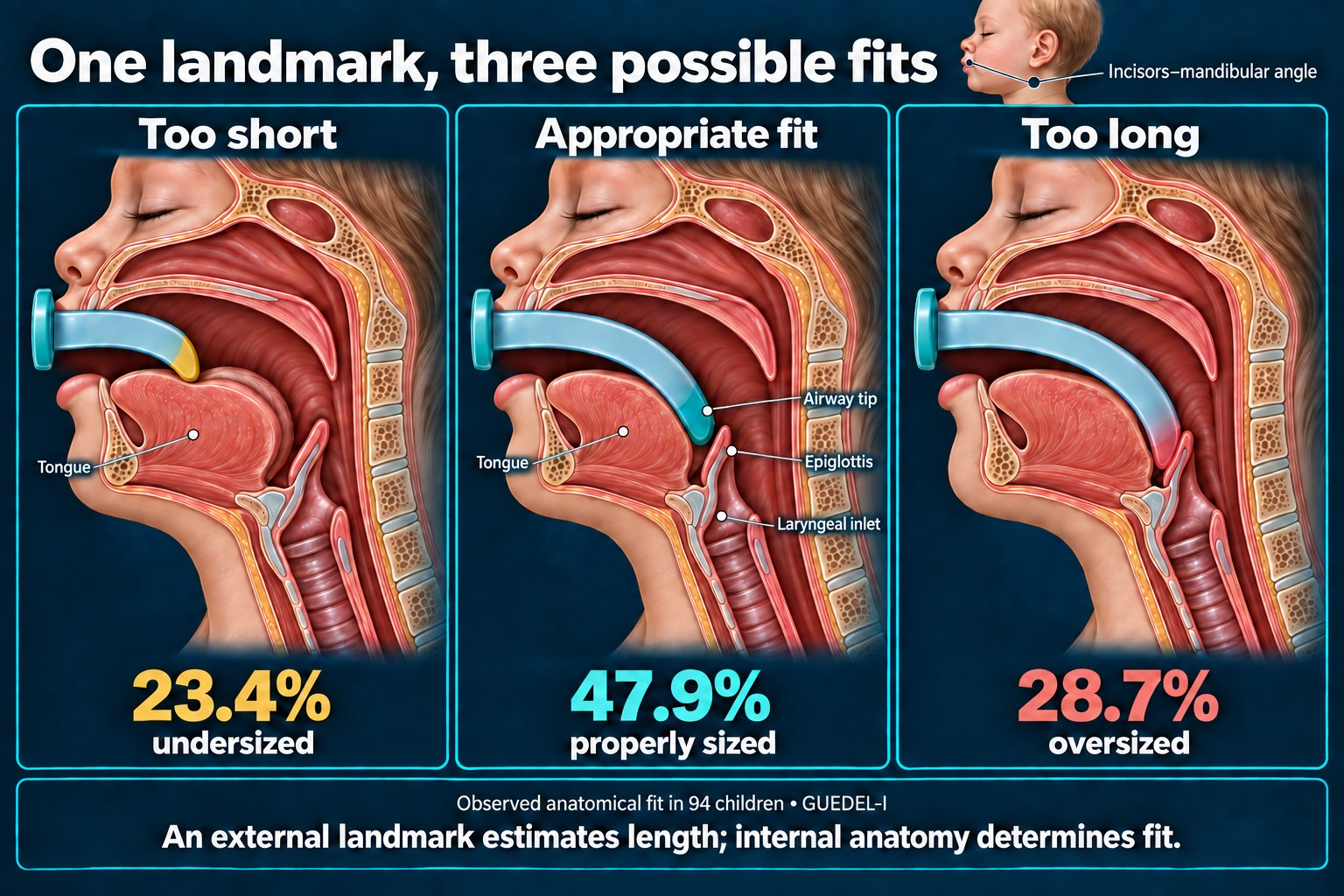
The GUEDEL-I study imaged 94 anesthetized children (mean age 4.7 years) sized by the standard incisors-to-angle-of-mandible landmark. The result:
| Outcome | Proportion |
|---|---|
| Correctly sized | 47.9% |
| Undersized | 23.4% — with tongue protrusion in 59.1% of those |
| Oversized | 28.7% |
Of five facial landmarks compared, incisors-to-mandible was the best performer and still reached only a 41.2% probability of correct sizing. A weight-based formula outperformed every landmark tested, at 61.7%.
Better is not good. The best available method for sizing an oral airway in a child — the weight-based formula — is correct in roughly six cases out of ten. Every landmark is worse than that. That is the honest ceiling, and it is why insertion has to be followed by assessment rather than assumed to have worked.
Two things that make this worse in practice
The age labels on the packaging can be unreliable. In practice, the same physical size may carry different age labels across suppliers, so measurement is safer than the box. This is a bench/practice observation rather than a finding from the imaging studies above.
The sizes appear to compress at the top of the scale. The range between a young child’s airway and an adult’s is narrower than intuition suggests, so a size that looks implausibly large for a four-year-old may still be correct. Treat this as a practical caution rather than a validated measurement.
This is in the app, with the pediatric airway and weight calculators — free tier, no card. Get it →
The nasal airway: 13%
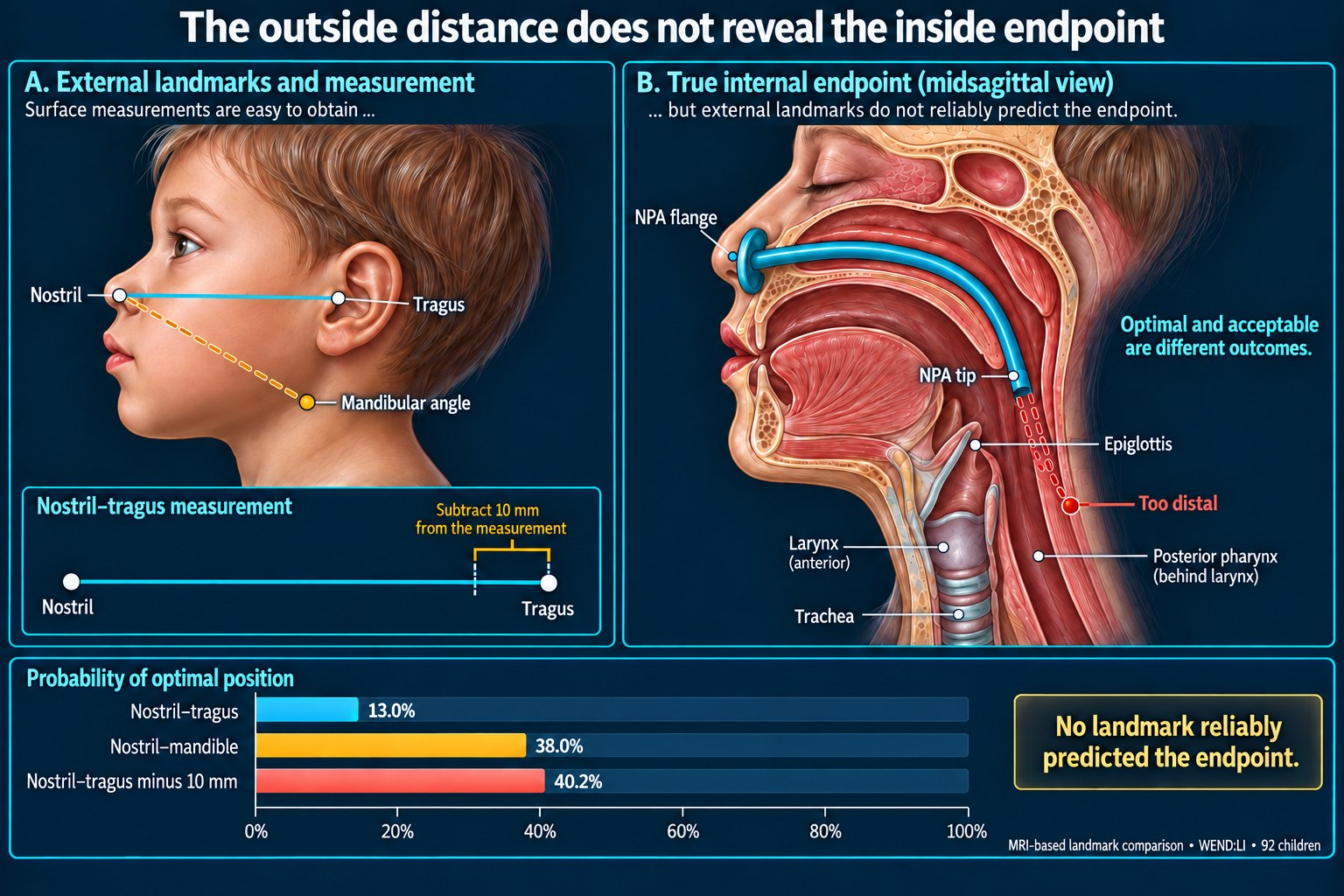
The WEND:LI study imaged 92 sedated children (mean age 4.3 years) comparing three sizing methods for the nasopharyngeal airway.
| Method | Optimal position |
|---|---|
| Nostril-to-tragus — the landmark in current resuscitation guidance | 13.0%, and too distal in 71.7% |
| Nostril-to-mandible | 38.0% |
| Nostril-to-tragus with a fixed reduction (−10 mm) | 40.2% — the best of the three |
The guideline landmark is the worst-performing of the methods tested. Nostril-to-tragus placed the tip too distal in nearly three-quarters of children — meaning the airway was too long, sitting past the intended position. A modest fixed reduction from that measurement tripled the rate of optimal placement.
This is a case where a widely taught landmark has been directly imaged and found wanting, and where the better method is a small modification of it rather than something new.
The tube formulas, and the size that does not exist
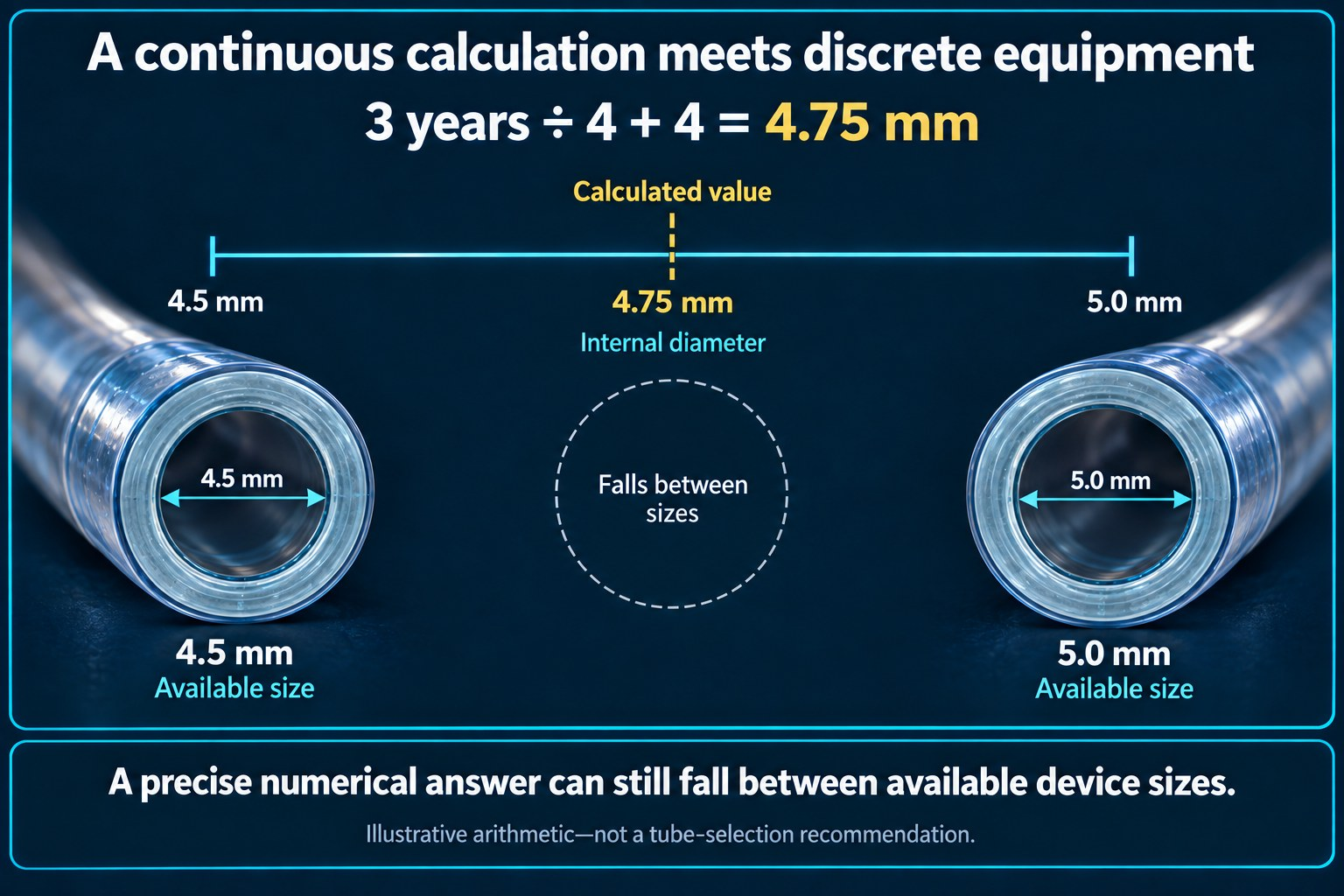
The age-based endotracheal tube formulas are among the most reproduced rules in pediatrics — and, importantly, they are taught in resuscitation courses, not just the anesthesia texts. They also produce impossible answers on a regular basis. Age/4 + 4 for a three-year-old computes to 4.75 mm, and the common cuffed formula (age/4 + 3.5) for a three-year-old computes to 4.25 mm — neither is a manufactured size, so a rounding decision is unavoidable.
Tubes also get deviated from for reasons that have nothing to do with the formula: downsizing about half a size for a cuffed tube, downsizing further for subglottic narrowing, or downsizing because the first tube would not pass.
Both of those matter for depth, and this is where the reasoning gets subtle.
Cuffed is now the default, not the exception. Contemporary pediatric anesthesia and updated resuscitation practice favor appropriately sized cuffed tubes with cuff-pressure control in most children and neonates — fewer tube exchanges, reliable ventilation and capnography, and comparable safety to uncuffed tubes. When a cuffed tube is used, keep cuff pressure below about 20 cmH2O and confirm an audible leak in the 20–30 cmH2O range. This reframes the whole “downsize for a cuff” discussion: a cuff is an expected part of the tube, not a workaround.
The depth trap
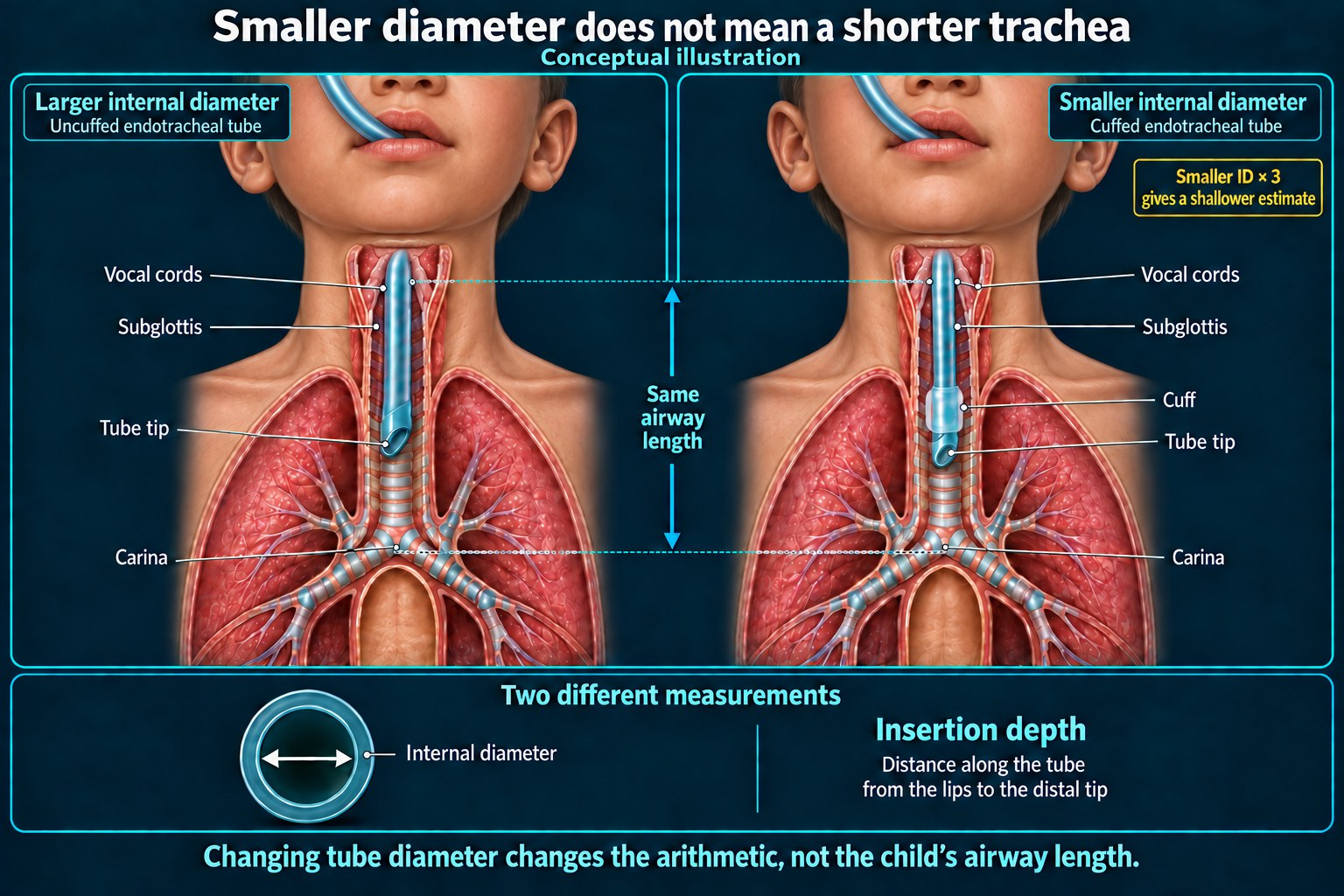
When a tube is downsized for a cuff, applying the three-times rule to the smaller tube can leave the tip too high — treat this as a reasoned caution, not a validated rule.
The three-times rule was derived on the assumption that tube size tracked patient size. If a tube is downsized to accommodate a cuff, mechanically recomputing depth from the smaller tube produces a depth shallower than the child’s tracheal length justifies. The tip can end up above the cords, or at least high enough to risk accidental extubation on head extension.
In modern practice the cleaner solution is not to argue about which tube size to multiply by. Cuffed pediatric tubes carry an intubation depth marking, and the recommended technique is to advance until the cuff sits just below the cords using that marking (or under direct vision), then confirm. If the downsize is for airway pathology rather than for a cuff, an age- or height-based depth estimate is more appropriate than a tube-size rule.
Infants and neonates are separate rules
Below one year, oral depth is commonly estimated from weight rather than from tube size, and fixed age- or weight-band tables are also used. In neonates, weight-based rules and the nasal septum–tragus length perform well and are widely used. Consistent with the rest of this page, the specific centimeter figures live in the app’s calculator rather than here. The boundary between these rules matters, since a rule derived in one population is easily over-extended into another.
The pattern across all of them
Four features recur, and recognizing them is more useful than memorizing any individual formula:
- They were derived in narrow populations. The oral airway weight formula came from a study with a mean age under five, and it is best regarded as unvalidated in much larger children. Extended upward it keys only on weight and cannot see build — the dangerous direction, since an oversized oral airway can displace the epiglottis over the laryngeal inlet and obstruct completely.
- They produce values that must be rounded to real devices. Any formula output is a target for selection, not a specification.
- The core rules are taught in resuscitation guidelines. The uncuffed size rule (age/4 + 4) and the oral depth rule (tube size × 3) appear in PALS and APLS teaching, not only in the anesthesia texts. Their weakness is imprecision, not informal standing — so they should be used, and confirmed, rather than dismissed.
- Nobody has shown clinical harm from the imprecision — but that is because confirmation after insertion catches it, not because the estimates are good.
Confirmation is the actual method
Given accuracy in the 40–60% range for the best available sizing methods, what makes pediatric airway management safe is not the calculation. It is what happens immediately afterward.
- Chest rise and breath sounds, bilaterally.
- Capnography.
- For an oral airway: absence of tongue protrusion, and no worsening of obstruction after insertion.
- For a nasal airway: a look in the mouth to confirm the tip is not visible below the uvula.
- For a tube: auscultation, cuff palpation at the sternal notch where available, direct visualization of the depth marker at the cords, and cuff-pressure measurement for cuffed tubes.
- Chest radiograph is the reference standard for depth when placement is in doubt — tip between T1–T2 in neonates, mid-trachea in older children.
Better depth estimates exist than the age/tube-size rules. Height-based formulas (for example, depth ≈ 4 + 0.1 × height in cm) and height/finger-length models have outperformed age-based estimation in validation studies, while weight-based linear depth formulas perform poorly in children. When a more accurate first estimate is wanted, height is the better single predictor. For its default oral depth the app uses an age-based rule (12 + age/2) rather than tube size × 3, because in children under seven the tube-size rule placed more tubes in a bronchus than the age formula (Shim et al., Scientific Reports, 2023). The evidence is not unanimous — an emergency-department study found tube size × 3 the most accurate depth formula against a radiographic standard (Pek et al., Annals of the Academy of Medicine, Singapore, 2018) — so this is a reasoned default, not a settled question.
A note on the arithmetic itself
Two errors show up repeatedly in pediatric calculation, and neither is about the formula being wrong.
Unit confusion in age-based formulas. A formula that divides age in years by four behaves very differently if months are substituted, and the error produces a plausible-looking answer rather than an obviously wrong one.
Logarithm base. Where a published formula writes “log” without specifying a base, the two interpretations can differ enormously — one may give a sensible size across the weight range while the other compresses everything into a few millimeters and returns a neonatal device for a school-age child. If a formula’s output looks wrong at the extremes of the range, checking the base is worth doing before trusting it.
This page carries no sizes deliberately. A static page is the wrong medium for a value that depends on a weight — the reader either has a patient in front of them, in which case they need a calculator, or they are studying, in which case they need the reasoning. What is on this page is the reasoning. The numbers live in a tool that takes a weight and returns an answer.
Frequently asked questions
How accurate is the age-based ETT size formula?
It is a first estimate that routinely names sizes that are not manufactured, and clinicians deviate from it for cuffs, subglottic narrowing and difficult passes. The uncuffed size rule (age/4 + 4) and the oral depth rule (tube size × 3) are taught in resuscitation courses such as PALS and APLS — so they are recognized rules, not informal conventions — but their imprecision means both should be treated as estimates requiring confirmation rather than as targets.
How do you size an oral airway in a child?
The standard incisors-to-angle-of-mandible landmark produced a correctly sized airway in 47.9% of 94 imaged children — undersized in 23.4% and oversized in 28.7%. Of five facial landmarks compared, it was the best and still reached only 41.2% probability of correct sizing. A weight-based formula outperformed every landmark at 61.7%. Whichever method is used, confirm after insertion.
Is the nostril-to-tragus measurement accurate for nasal airways?
No. In 92 imaged sedated children, plain nostril-to-tragus was optimal in only 13.0% and sat too distal in 71.7%. Nostril-to-mandible reached 38.0%, and a fixed −10 mm reduction from the nostril-to-tragus measurement reached 40.2%, the best of the three methods tested — so the better approach is a modification of the standard landmark rather than a different one.
Why does downsizing a tube for a cuff not change the depth?
Because the three-times rule was derived assuming tube size tracked patient size. If a tube is downsized to accommodate a cuff, recomputing depth from the smaller tube gives a depth shallower than the child’s tracheal length justifies, and the tip can end up above the cords or high enough to risk accidental extubation on head extension. In modern practice, the cleaner approach is to advance a cuffed tube until the cuff sits just below the cords using its depth marking or under direct vision, then confirm — rather than multiplying either tube size by three.
Should cuffed or uncuffed tubes be used in young children?
Cuffed tubes are now standard in most pediatric anesthesia and are increasingly favored in resuscitation, including in neonates, because they reduce tube exchanges and give reliable ventilation and capnography with comparable safety to uncuffed tubes. Size about 0.5 mm below the uncuffed age-based size, keep cuff pressure below roughly 20 cmH2O, and confirm a leak in the 20–30 cmH2O range.
Why do pediatric airway packages have inconsistent age labels?
In practice, manufacturers may label differently, so the same physical device can be cataloged as “child” by one supplier and “infant” by another. Size by measurement rather than by the label on the box. This is a practical caution from device catalogs rather than a finding from the imaging studies cited here.
Do these formulas cause harm when they are wrong?
No study has demonstrated clinical harm from the imprecision — but that is because confirmation after insertion catches the errors, not because the estimates are accurate. Across roughly 190 imaged children, the best landmark method for either airway adjunct was correct in under half of cases; even the best weight-based oral formula reached only 61.7%.
Sources
The accuracy figures on this page come from two MRI validation studies — GUEDEL-I (Resuscitation, oral airway sizing in 94 anesthetized children; Nemeth et al.) and WEND:LI (Resuscitation, nasopharyngeal airway sizing in 92 sedated children; Nemeth et al.) — together with current European Resuscitation Council pediatric life support guidance and PALS/APLS teaching for the landmark, tube-size and depth rules. Cuffed-tube practice draws on Weiss & Engelhardt (Paediatric Anaesthesia) and the Cochrane reviews of cuffed versus uncuffed tubes (De Orange et al.; Dariya et al.). Depth alternatives draw on height-based validation studies (Zhuang et al., Journal of Clinical Anesthesia; Zhang et al., Pediatric Research) and neonatal NTL/weight comparisons (Akkaya et al.; Gray et al.). Full citations and the reasoning behind each departure from the standard landmark are in section 28 of the Helix Anesthesia clinical sources document. The weight-based values themselves are in the app’s calculator rather than on this page.
Disclaimer. Reference information for licensed clinicians and students. Not a medical device, and not a substitute for clinical judgment. This page is about how the sizing methods perform, not a source of sizes. Verify against your institutional protocol.
Weight-based pediatric sizing, with the formulas and their limits, ships inside Helix Anesthesia — a point-of-care calculator built by a practicing CRNA, cited and available offline. See how we source clinical content.
Built for the anesthesia machine, not the desk. It opens in one tap, works with no signal in an OR that has none, and shows the citation on screen beside the number rather than making you go and find it.
Free tier, no card: every calculator, every crisis checklist, the full drug library and glossary, three complete regional blocks, five complete surgical cases, and 15 AI questions a month.
Get Helix Anesthesia How we source itSign up for our newsletter and special offers. New answer pages, improvements to the ones already here, and the occasional offer. Nothing else, and not often.
Airway and neuromuscular blockade