
Sugammadex dosing: 2, 4 and 16 mg/kg
The dose is the easy part. The re-dosing interval, the body weight to use, and the discharge counseling are what get missed.
Every clinical claim on this page is cited to its source below. How we source clinical content.
The short answer
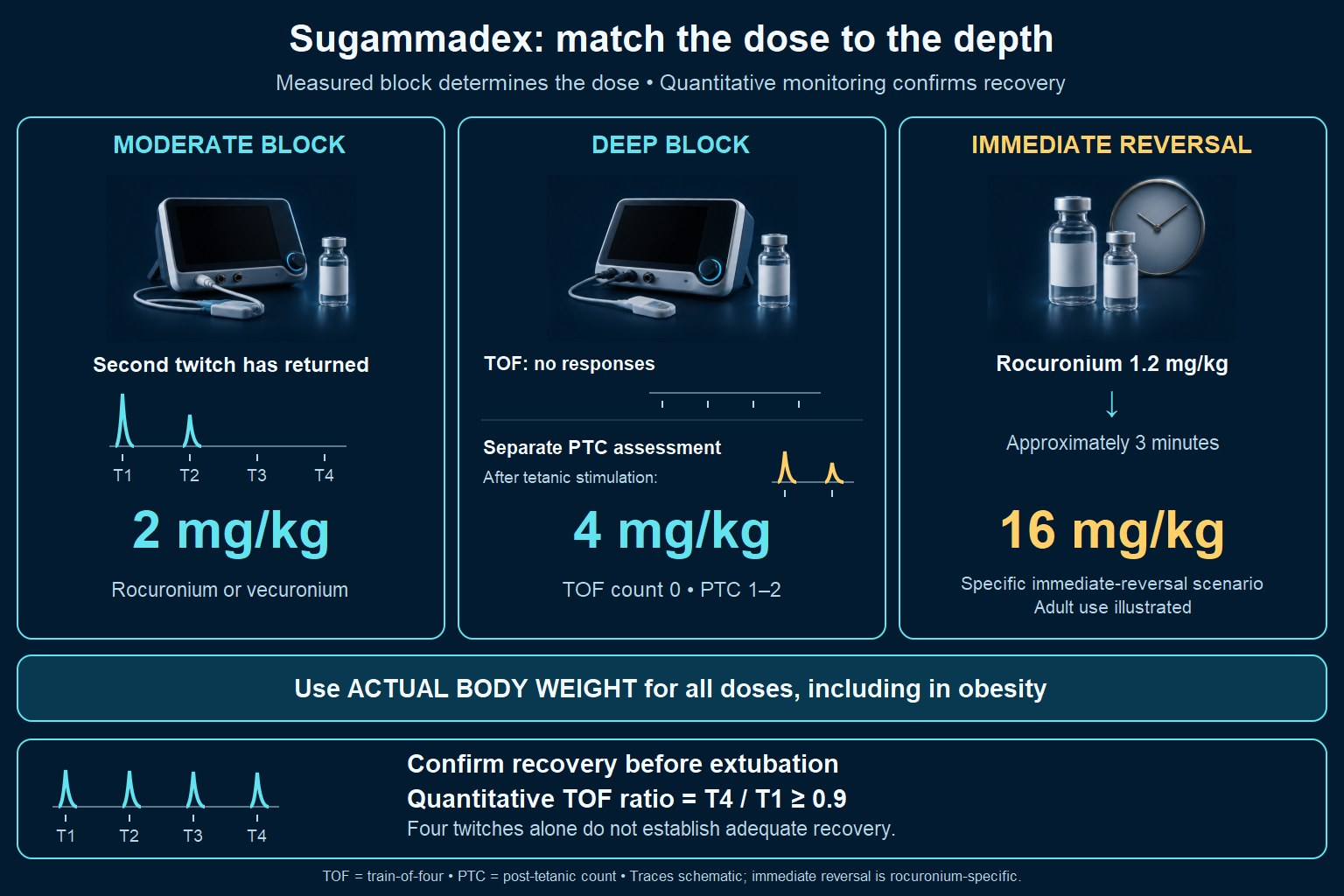
Two mg/kg at reappearance of the second twitch, 4 mg/kg when no train-of-four twitches remain but post-tetanic counts are present, and 16 mg/kg for immediate reversal after rocuronium 1.2 mg/kg. All doses use actual body weight. The re-dosing intervals and the contraceptive counseling are what get missed.
Three doses, chosen by depth of block rather than by weight band. The dose itself is the easy part — the parts that get missed are the re-dosing interval, the body weight to use, and the counseling that has to happen before the patient goes home.
The numbers
| Depth of block | Dose | Assessed by |
|---|---|---|
| Moderate | 2 mg/kg | Reappearance of the second twitch (T2) on train-of-four |
| Deep | 4 mg/kg | No train-of-four twitches, but 1–2 post-tetanic counts present |
| Immediate reversal | 16 mg/kg | Given approximately 3 minutes after rocuronium 1.2 mg/kg |
All doses are actual body weight, including in obesity. The label says so in those words.6 Ideal body weight risks underdosing.
Confirm recovery objectively. The 2023 ASA Practice Guidelines recommend quantitative neuromuscular monitoring and confirming a train-of-four ratio ≥ 0.9 before extubation, and support sugammadex over neostigmine for deep or moderate rocuronium/vecuronium block.17
Six things that are not the dose
Actual body weight, not ideal
A randomized trial in adults with BMI ≥ 40 compared 2 mg/kg and 4 mg/kg dosed by actual versus ideal body weight, and actual body weight gave faster reversal.1 The manufacturer specifies actual body weight for all patients including those with obesity; ideal body weight dosing risks underdosing, and underdosing is the specific route to recurrence.2,6
Lower-than-recommended doses cause recurrence
This is the label’s own warning, and it is the reason not to eyeball the dose down. Use of lower than recommended doses may lead to an increased risk of recurrence of neuromuscular blockade after initial reversal, and is not recommended.3,6 At the recommended depth-appropriate doses, recurrence of blockade occurred in under 1% of patients across the development program.6 A small number of patients also experience a delayed or minimal response to sugammadex, so ventilation should be monitored until recovery is confirmed rather than assumed.6
Whether much smaller titrated doses are adequate is an active research question. A randomized controlled trial found that titrating sugammadex to a train-of-four ratio ≥ 0.9 consistently required significantly less total drug than fixed weight-based dosing across all depths of block — but with wide interpatient variability.16 A registered trial protocol titrates in 50 mg increments to the same target.4 This remains non-standard practice.
Re-dosing rocuronium afterward
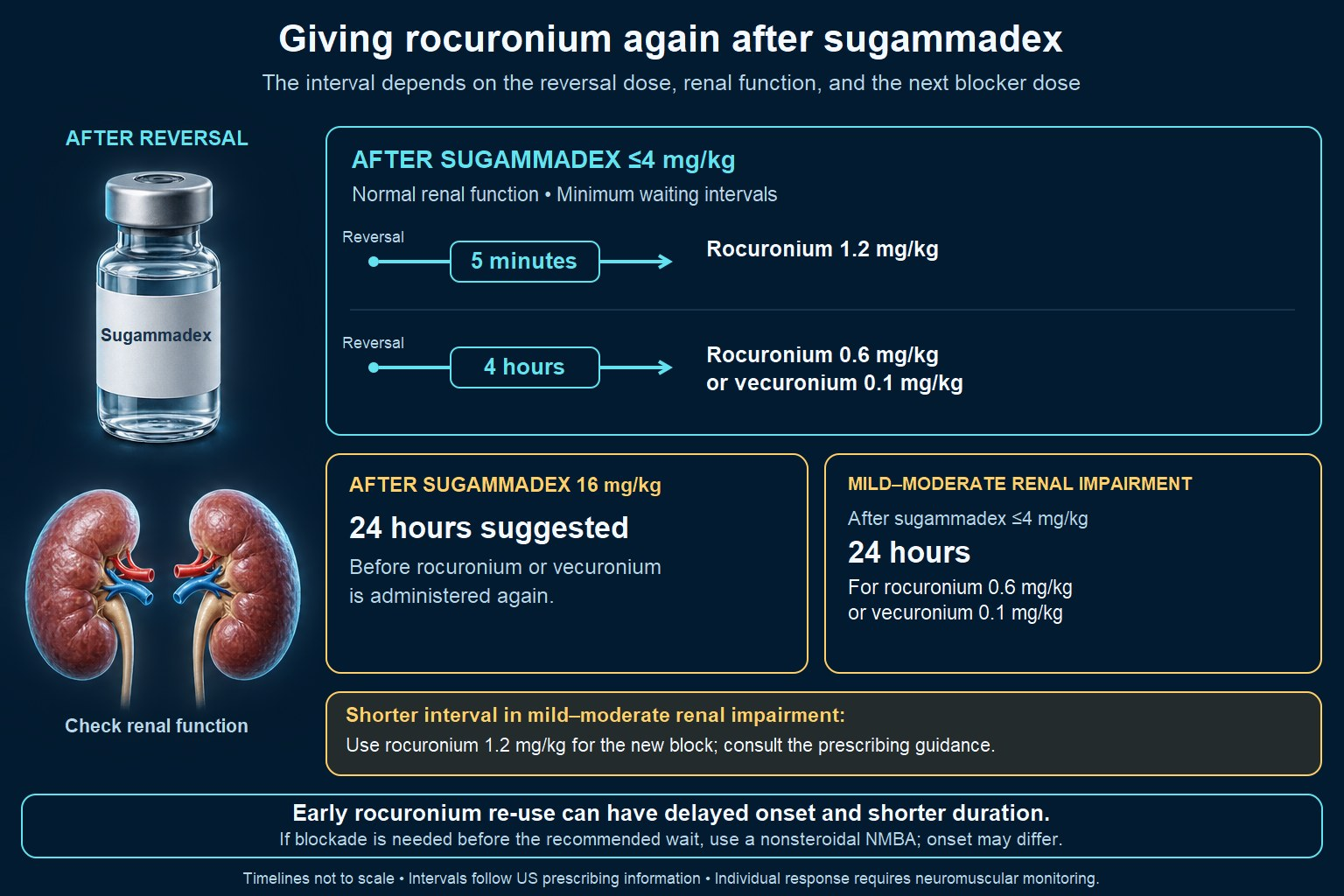
The intervals depend on renal function and on which rocuronium dose you intend to give. The first two rows are the routine case.
| Situation | Wait before the next neuromuscular blocker |
|---|---|
| Normal renal function, giving rocuronium 1.2 mg/kg | 5 minutes6 |
| Normal renal function, giving rocuronium 0.6 mg/kg or vecuronium 0.1 mg/kg | 4 hours6 |
| After sugammadex 16 mg/kg | 24 hours suggested2,5,6 |
| After up to 4 mg/kg, mild–moderate renal impairment | 24 hours for rocuronium 0.6 mg/kg or vecuronium 0.1 mg/kg2,6 |
| If a shorter interval is required in mild–moderate renal impairment | Rocuronium 1.2 mg/kg for the new block2,6 |
| If blockade is needed before the wait has elapsed | Use a non-steroidal agent — but expect a slower onset from a depolarizing agent, because a substantial fraction of postjunctional receptors may still be occupied5 |
If you take the five-minute option, expect the block to behave differently. Rocuronium 1.2 mg/kg given within 30 minutes of reversal may have its onset delayed by up to about 4 minutes and its duration shortened by up to about 15 minutes.6 That is a usable block, but not the one you are used to — and the shortened duration is the half more likely to catch you out.
Hormonal contraception — the counseling that gets missed
Sugammadex binds progestogen. Per the label, a bolus dose is considered equivalent to missing a dose of an oral contraceptive containing estrogen or progestogen, and the counseling below reflects that guidance.6
- Oral contraceptive taken the same day: the patient must use an additional non-hormonal method — condoms and spermicide — for the next 7 days.6
- Non-oral hormonal contraception (implant, patch, ring, injection, hormonal IUD): the same 7-day additional non-hormonal method applies.6,7
- The frequently cited ~34% decrease in progesterone exposure comes from pharmacokinetic modelling of endogenous progesterone, not a measured reduction in contraceptive steroid levels.7 A 2026 in-vitro study found this apparent fall is largely an immunoassay interference artifact — no significant biochemical change was seen on LC–MS/MS at the same sugammadex concentration.15
The counseling advice above still stands, but the direct evidence of real-world contraceptive failure is weak. A prospective study of 60 women on hormonal contraception found no hormone changes that would threaten contraceptive efficacy — progesterone rose transiently and estrogen fell across groups, changes that would tend to suppress rather than permit ovulation.13 A 2024 review reached the same conclusion, noting only two reported postoperative pregnancies across two large database studies and no clinical trial demonstrating an interaction with exogenous contraceptive steroids.14 Until higher-quality data exist, the pragmatic approach is to give the 7-day advice while recognizing the risk is likely small.
This is a discharge conversation and a discharge document, not a chart note. A patient who is asleep when the drug is given and drowsy when they leave has no way to know it happened.
Bradycardia, and how it is given
Marked bradycardia has been reported within minutes of administration, some cases resulting in cardiac arrest.3,6 The manufacturer specifies rapid IV push over 10 seconds; some authors suggest a slower push to reduce the incidence of bradycardia or asystole.8 Have an antimuscarinic available.
Against that, the pooled comparison with neostigmine favors sugammadex substantially: composite adverse events RR 0.60 (0.49–0.74) across 28 studies, with bradycardia RR 0.16 (0.07–0.34) and residual paralysis RR 0.40 (0.28–0.57).12
Renal impairment
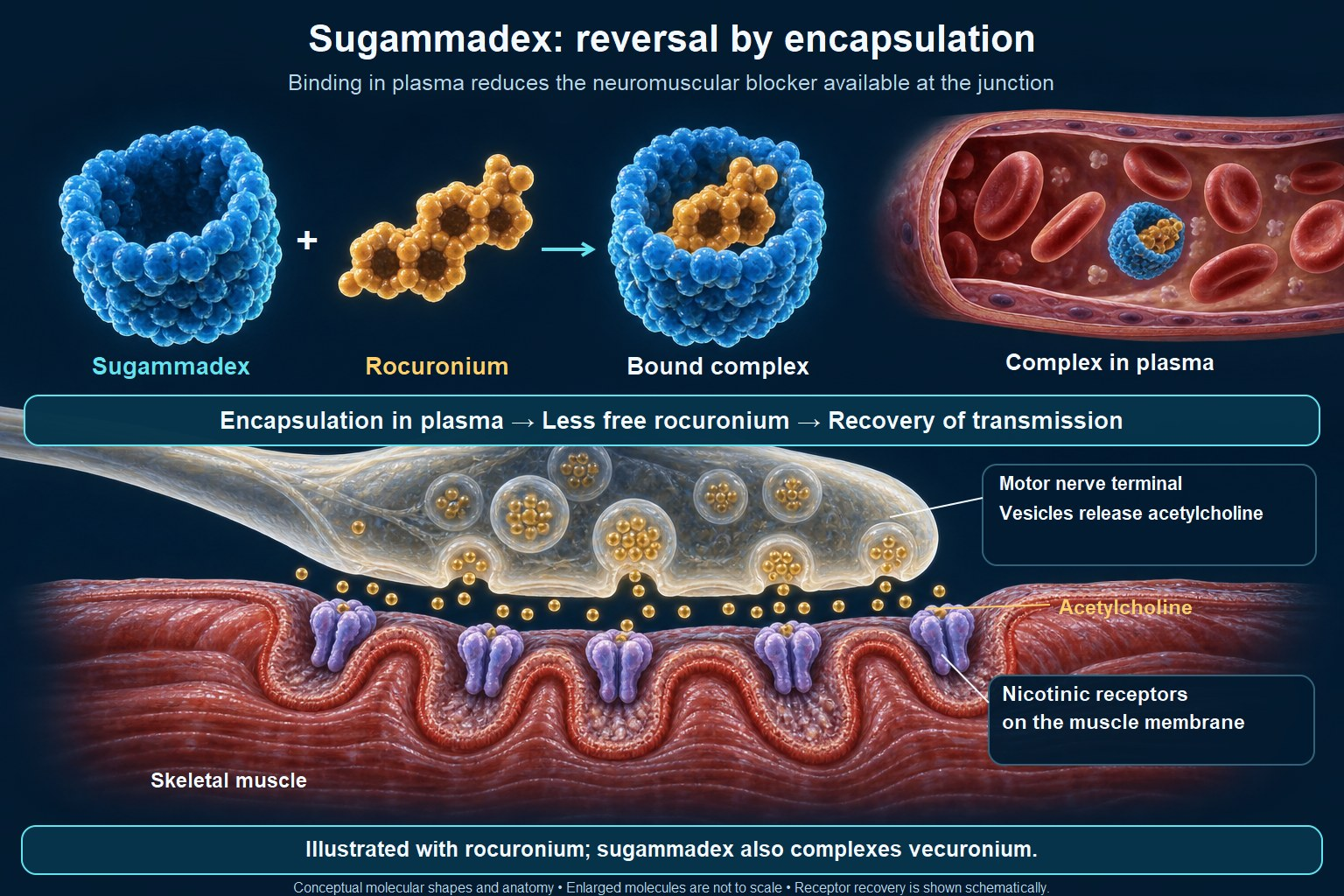
Sugammadex is eliminated unchanged by the kidney and the sugammadex–rocuronium complex depends on renal clearance. It is not recommended below a creatinine clearance of 30 mL/min, including in patients requiring dialysis.3,6,9 Real-world use in severe impairment is nonetheless increasingly common; a 2026 review of the pharmacokinetic/pharmacodynamic data found no compromise of reversal quality or clear increase in recurarization, though the label caution and the case for extended monitoring stand.18
This is in the app, with the sugammadex dosing calculator — free tier, no card. Get it →
Smaller points worth knowing
- Coagulation. Doses up to 16 mg/kg were associated with increases in aPTT and INR of up to 25% for up to one hour in healthy volunteers.3 In the actual orthopedic trial with heparin/LMWH thromboprophylaxis, increases at 4 mg/kg were only about 5.5% (aPTT) and 3.0% (INR), with no increased bleeding.6 Bleeding risk at 16 mg/kg has not been evaluated in patients on therapeutic anticoagulation or with known coagulopathy — monitor coagulation in those patients.3
- Anaphylaxis. In a placebo-controlled study that randomized 375 subjects, the frequency of anaphylaxis among the 299 healthy volunteers who received sugammadex was 0.3% — one case, in the 16 mg/kg group on the first dose.6
- Toremifene binds sugammadex with relatively high affinity and can displace rocuronium or vecuronium from the complex, causing recurrence.3,5
- Progesterone assay interference. Interference has been observed for up to 30 minutes after a 16 mg/kg dose.6,8 The effect is dose-dependent and appears immunoassay-specific (not seen on LC–MS/MS), so perioperative progesterone immunoassay results should be interpreted with caution.15
- Light anesthesia. Movement, coughing, grimacing or suckling on the tube may appear if blockade is reversed while the patient is still anesthetized.2
- Myasthenia gravis. Sugammadex is the recommended reversal agent there, because it works by encapsulation and is unaffected by the patient’s anticholinesterase therapy — the reasoning, and the outcome data that are less impressive than the mechanism suggests, are on the myasthenia page.
- Pediatric: 2 mg/kg is the recommended dose for moderate block in children aged 2 to 17.11
Frequently asked questions
What is the dose of sugammadex?
2 mg/kg for moderate block (second twitch present on train-of-four), 4 mg/kg for deep block (no train-of-four twitches but 1–2 post-tetanic counts), and 16 mg/kg for immediate reversal roughly 3 minutes after rocuronium 1.2 mg/kg. All by actual body weight.6
Do you use actual or ideal body weight for sugammadex in an obese patient?
Actual body weight — the label states it directly.6 A randomized trial in adults with BMI ≥ 40 found actual body weight dosing gave faster reversal than ideal body weight at both 2 and 4 mg/kg,1 and ideal body weight dosing risks underdosing, which is the specific route to recurrence of blockade.2,6
How long after sugammadex can you give rocuronium again?
With normal renal function, 5 minutes if you are giving rocuronium 1.2 mg/kg, or 4 hours for rocuronium 0.6 mg/kg or vecuronium 0.1 mg/kg.6 After a 16 mg/kg dose, a 24-hour wait is suggested, and 24 hours also applies after up to 4 mg/kg in mild to moderate renal impairment — where, if a shorter interval is needed, rocuronium 1.2 mg/kg should be used.2,6 If blockade is required before the wait elapses, use a non-steroidal agent, but expect slower onset because postjunctional receptors may still be occupied.5
Does sugammadex affect birth control?
Guidance says treat it as one missed pill. It binds progestogen, and the label considers a bolus dose equivalent to missing a dose of an oral contraceptive containing estrogen or progestogen, so patients using any hormonal contraception — oral or non-oral — are advised to use an additional non-hormonal method for 7 days afterward.6,7 That said, the direct evidence of real-world contraceptive failure is weak: a prospective study found no hormone changes that would threaten efficacy, a 2024 review found only two reported postoperative pregnancies across two large database studies, and the often-quoted ~34% progesterone reduction appears to be largely an immunoassay artifact rather than a true pharmacodynamic effect.13,14,15 Counsel for 7 days, but recognize the risk is likely small. This should be a discharge conversation, since the patient was asleep when it was given.
Can sugammadex be used in renal failure?
It is not recommended below a creatinine clearance of 30 mL/min, including in patients requiring dialysis, because it is eliminated unchanged by the kidney and the sugammadex–rocuronium complex depends on renal clearance.3,6,9 Emerging real-world data suggest reversal quality is preserved in severe impairment, but the label caution and extended monitoring remain appropriate.18
Why not just give a smaller dose of sugammadex?
Because the label warns specifically that lower than recommended doses increase the risk of recurrence of blockade after initial reversal.3,6 Titrated low-dose strategies have been tested in a randomized trial and use less total drug, but with wide interpatient variability and are not yet standard practice,4,16 and a small number of patients show a delayed or minimal response even at full dose — so ventilation should be monitored until recovery is confirmed.6
Does sugammadex cause bradycardia?
It can. Marked bradycardia has been reported within minutes of administration, some cases resulting in cardiac arrest.3,6 Overall, though, pooled comparison with neostigmine favors sugammadex — bradycardia RR 0.16 (0.07–0.34) across the pooled trials.12
References
- Horrow JC, Li W, Blobner M, et al. Actual versus ideal body weight dosing of sugammadex in morbidly obese patients offers faster reversal of rocuronium- or vecuronium-induced deep or moderate neuromuscular block: a randomized clinical trial. BMC Anesthesiol. 2021;21:62. doi:10.1186/s12871-021-01278-w
- Sugammadex monograph for professionals. Drugs.com. drugs.com/monograph/sugammadex.html. Re-administration wait times, renal impairment guidance, and light-anesthesia signs.
- Bridion (sugammadex sodium) dosing, indications, interactions and adverse effects. Medscape Reference. reference.medscape.com/drug/bridion-sugammadex-sodium-999851. Coagulation parameter changes at 16 mg/kg, toremifene displacement, renal threshold.
- Sugammadex titration in cardiac surgery patients. ClinicalTrials.gov NCT05246397. Protocol describing titration in 50 mg increments to a train-of-four ratio of 0.9 or greater.
- BRIDION (sugammadex) injection: prescribing information. Merck Sharp & Dohme LLC, via DailyMed — the same label as reference 6. dailymed.nlm.nih.gov/dailymed/lookup.cfm?setid=5171d883-fe8f-482c-97ab-40b00975b64a. Use of a non-steroidal agent if blockade is needed sooner, with the caveat about delayed depolarizing onset.
- BRIDION (sugammadex) injection. Merck Sharp & Dohme LLC. US FDA prescribing information, via DailyMed, SPL set ID 5171d883-fe8f-482c-97ab-40b00975b64a; label version published 2 April 2026. dailymed.nlm.nih.gov/dailymed/drugInfo.cfm?setid=5171d883-fe8f-482c-97ab-40b00975b64a. Source for the 2, 4 and 16 mg/kg indications and depth-of-block criteria; actual body weight dosing; re-administration waiting times; delayed onset/shortened duration of rocuronium 1.2 mg/kg within 30 minutes of reversal; recurrence rate; 7-day non-hormonal contraception advice; progesterone assay interference; coagulation data in the orthopedic thromboprophylaxis trial; severe renal impairment exclusion; and the 0.3% anaphylaxis frequency.
- Williams R, Bryant H. Sugammadex advice for women of childbearing age. Anaesthesia. 2018;73(1):133–134. doi:10.1111/anae.14176. PMID 29210038. Origin of the modelled 34% reduction in progesterone exposure at 4 mg/kg and the 7-day non-hormonal advice for non-oral contraceptive users.
- Sugammadex: dosage, mechanism/onset of action, half-life. Medicine.com, reviewed 10 February 2020; drug content from Wolters Kluwer Health, last updated 3 January 2020. medicine.com/drug/sugammadex/hcp. Administration-rate discussion (10-second push per manufacturer; slower push suggested by some authors) and progesterone assay interference.
- Guidelines for the use of sugammadex and neostigmine/glycopyrrolate. Beth Israel Deaconess Medical Center Department of Anesthesia and Critical Care, guideline ANES CLN 200-007. anesthesia.bidmc.harvard.edu/Policies/Clinical/Clinical/Guidelines/Sugam_Use.pdf. Accessed September 2026. Renal threshold and the case for reversal irrespective of twitch count in patients at risk of respiratory compromise.
- Safety of sugammadex for the reversal of neuromuscular blockade in ASA class 3 or 4 participants (MK-8616-145). ClinicalTrials.gov NCT03346057. Phase 4 randomized, active-comparator trial in 344 surgical patients; primary endpoints were treatment-emergent sinus bradycardia, sinus tachycardia and other cardiac arrhythmias. Reported no adjudicated anaphylaxis or hypersensitivity reactions.
- Ji SH, Huh KY, Oh J, et al. Conventional reversal of rocuronium-induced neuromuscular blockade by sugammadex in Korean children: pharmacokinetics, efficacy, and safety analyses. Front Pharmacol. 2023;14:1127932. doi:10.3389/fphar.2023.1127932
- Hristovska AM, Duch P, Allingstrup M, Afshari A. Efficacy and safety of sugammadex versus neostigmine in reversing neuromuscular blockade in adults. Cochrane Database Syst Rev. 2017;8:CD012763 (also published in Anaesthesia. 2018). Source for the pooled composite adverse-event, bradycardia, and residual-paralysis risk ratios across 28 studies (n = 2,298).
- Devoy T, Hunter M, Smith NA. A prospective observational study of the effects of sugammadex on peri-operative oestrogen and progesterone levels in women who take hormonal contraception. Anaesthesia. 2023. No hormone changes that would threaten contraceptive efficacy.
- Devoy T, Smith N. Sugammadex and oral contraceptives. Curr Opin Anaesthesiol. 2024. Review; two reported postoperative pregnancies across two large database studies and no trial demonstrating interaction with exogenous contraceptive steroids.
- Devoy T, Larkin T, Allan M, et al. Sugammadex interference with serum progesterone measurement: an in-vitro study. Anaesthesia. 2026. Apparent progesterone fall is largely an immunoassay interference artifact; no significant change on LC–MS/MS.
- Gao L, Li B, Shen J, et al. Effect of sugammadex titration versus manufacturer’s recommendation for reversal of rocuronium-induced neuromuscular block: a prospective, randomized, controlled trial. BMC Anesthesiol. 2025. Titration used significantly less drug across all depths of block, with wide interpatient variability.
- Thilen SR, Weigel WA, Todd MM, et al. 2023 American Society of Anesthesiologists Practice Guidelines for Monitoring and Antagonism of Neuromuscular Blockade. Anesthesiology. 2023. Quantitative monitoring; TOF ratio ≥ 0.9 before extubation; sugammadex favored over neostigmine for deep/moderate rocuronium or vecuronium block.
- Lee HW, Chen PS, Li MJ, Wong CS. Clinical application of sugammadex in renal impairment: pharmacokinetics and pharmacodynamics. Front Pharmacol. 2026. Reversal quality preserved in severe impairment; extended monitoring advised.
Disclaimer. Reference information for licensed clinicians and students. Not a medical device, and not a substitute for clinical judgment. Verify against your institutional protocol and the current package insert for the preparation in your hand.
Drug entries with dosing, interactions and reversal intervals ship inside Helix Anesthesia — a point-of-care reference built by a practicing CRNA, cited and available offline. See how we source clinical content.
Built for the anesthesia machine, not the desk. It opens in one tap, works with no signal in an OR that has none, and shows the citation on screen beside the number rather than making you go and find it.
Free tier, no card: every calculator, every crisis checklist, the full drug library and glossary, three complete regional blocks, five complete surgical cases, and 15 AI questions a month.
Get Helix Anesthesia How we source itSign up for our newsletter and special offers. New answer pages, improvements to the ones already here, and the occasional offer. Nothing else, and not often.
Airway and neuromuscular blockade