
Does ondansetron prevent spinal hypotension?
Partly, and by a mechanism worth understanding — one that predicts which part of the effect is solid and which is contested.
Every clinical claim on this page is cited to its source below. How we source clinical content.
The short answer
Partly. Ondansetron blunts the Bezold–Jarisch reflex, which is one contributor to post-spinal hypotension but not the main one. The sympathectomy is, and a 5-HT3 antagonist does nothing to it. The effect is real but modest and most consistent in cesarean delivery; the bradycardia and vasopressor-sparing signals are larger and steadier than the blood pressure signal. It supplements a vasopressor rather than replacing one — and the most methodologically rigorous analyses are more skeptical than the raw pooled risk ratios suggest.
Key takeaways
- Ondansetron blunts the Bezold–Jarisch reflex, which is one contributor to post-spinal hypotension and bradycardia — not the main one. The sympathectomy is the main one, and nothing about a 5-HT3 antagonist touches it.
- The bradycardia and vasopressor-sparing effects are larger and more consistent than the blood pressure effect, which is broadly what the mechanism predicts.
- The meta-analyses disagree on blood pressure. One of the largest cesarean-specific analyses, 21 randomized trials, found no significant reduction in hypotension while confirming the bradycardia effect.2
- The most rigorous analysis is skeptical of all of it. A trial-sequential-analysis meta-analysis concluded the evidence fails to confirm a reduction in either hypotension or bradycardia, rating the body of evidence low to very-low quality; under sparse-data adjustment even the bradycardia signal loses significance.10
- Publication/small-study bias is documented. A meta-regression found the benefit significant only in the obstetric subgroup and confirmed funnel-plot asymmetry.13
- It is not a substitute for a vasopressor. A risk ratio around 0.65 is a reduction in incidence, not prevention.
- Timing is the practical lever. The same dose most patients already receive works for this if it is given before the block rather than at the end of the case.
The mechanism
A spinal block produces sympathectomy, and the venodilation that follows drops preload. In a ventricle that is suddenly underfilled but still contracting vigorously, 5-HT3 receptors on intracardiac vagal afferents are stimulated, and the reflex response is the wrong one for the situation: bradycardia and further vasodilation rather than the tachycardia you would expect from hypovolemia.
That is the Bezold–Jarisch reflex,7 and it is why a patient can become bradycardic while becoming hypotensive after a spinal — a combination that looks paradoxical until you know the reflex is running. Recent work has localized the afferent limb of the reflex to a defined population of vagal sensory neurons innervating the ventricular wall.20
Ondansetron is a 5-HT3 antagonist. Given before the block, it occupies the receptor the reflex runs through. This is a mechanistic rationale that predicts a partial effect, weighted toward heart rate rather than blood pressure — and that is broadly what the trials show.
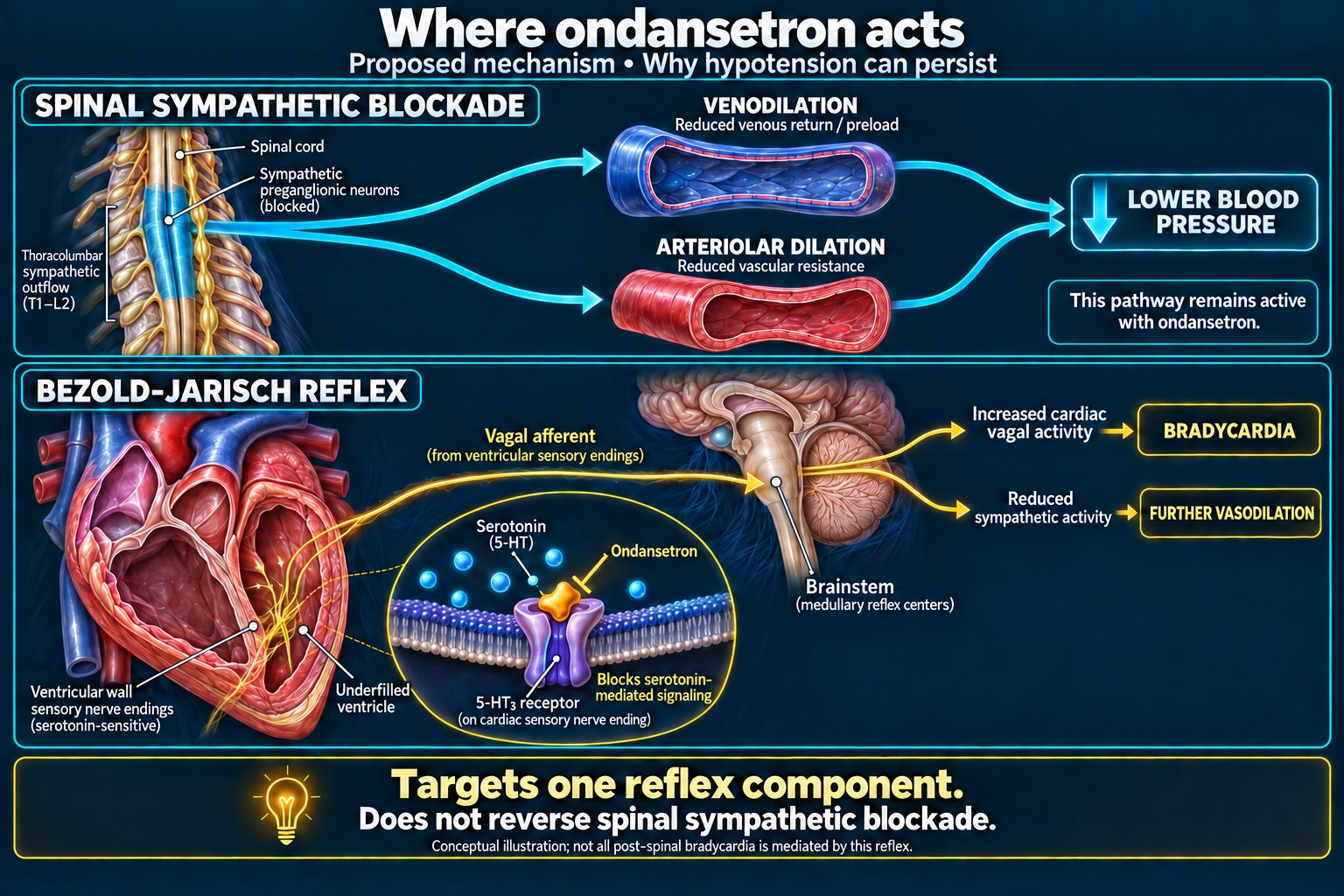
Hold onto that prediction, because it is the most useful thing on this page. The reflex arc ondansetron blocks is more responsible for the heart rate than for the pressure. Where the evidence is strongest, it is strongest on bradycardia and vasopressor requirement. Where the evidence is contested, it is contested on blood pressure. A mechanism that predicts its own pattern of results in advance is worth more than a single risk ratio — but, as the section on trial-sequential analysis below shows, even the heart-rate signal is not beyond challenge.
This is in the app, with the spinal and infusion calculators — free tier, no card. Get it →
What the trials show — and where they disagree
| Analysis | Population | Hypotension | Bradycardia |
|---|---|---|---|
| Tubog 2017 13 RCTs, 1,225 subjects | Obstetric and non-obstetric | RR 0.64 (0.45–0.90) Cesarean subgroup 0.63 (0.45–0.88) | RR 0.31 (0.19–0.50) |
| Zhou 2018 21 RCTs | Cesarean only | RR 0.72 (0.50–1.06) not significant | RR 0.45 (0.26–0.80) |
| Hou 2022 25 RCTs | Mixed | RR 0.65 (0.53–0.80) I² = 64% | RR 0.56 (0.38–0.83) I² = 8% |
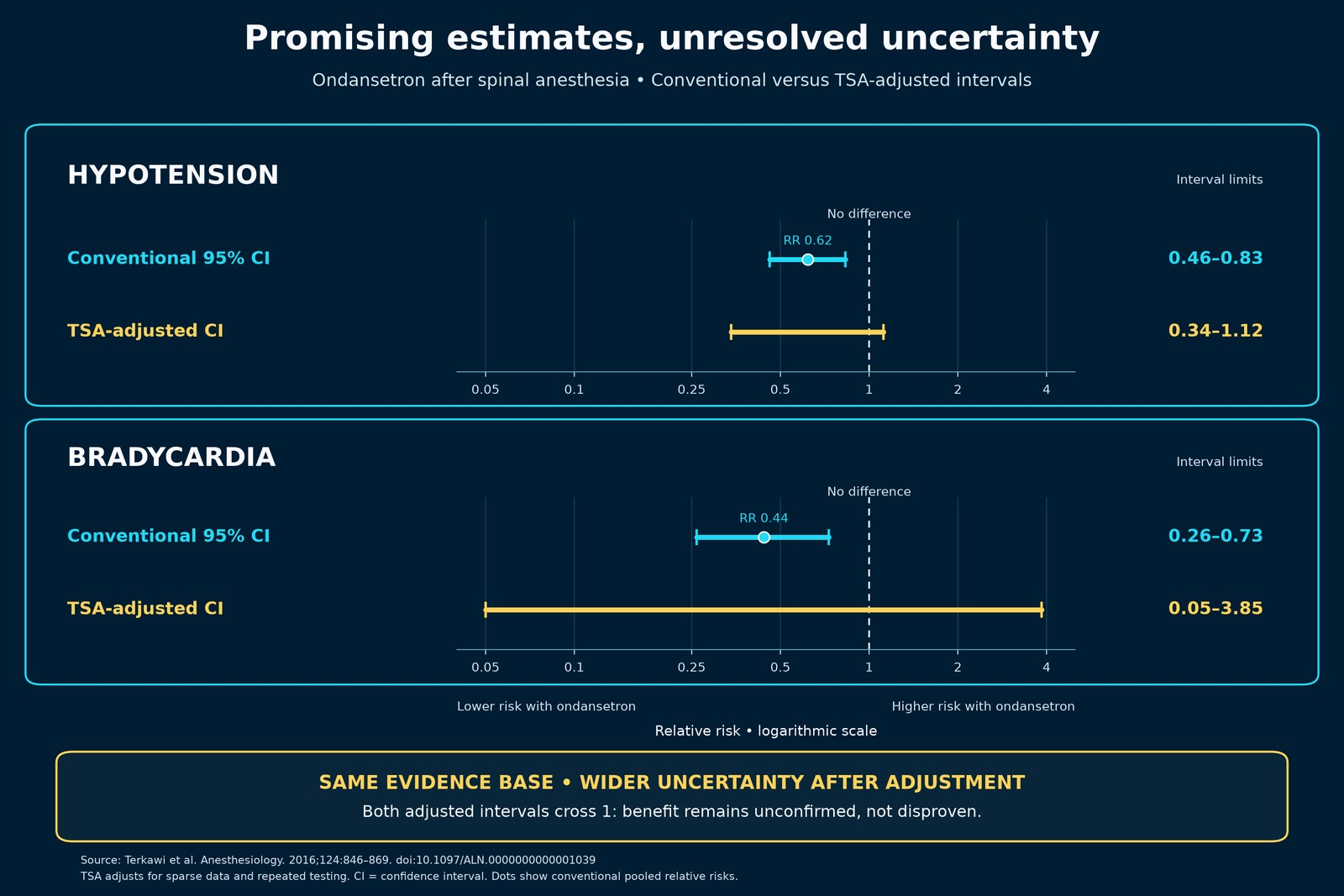
| Terkawi 2016 14 RCTs, 1,045 subjects trial sequential analysis | Obstetric and non-obstetric | Conventional RR 0.62 (0.46–0.83) TSA-adjusted 0.34–1.12 (not confirmed) | Conventional RR 0.44 (0.26–0.73) TSA-adjusted 0.05–3.85 (not confirmed) |
| Heesen 2016 17 trials, 1,604 patients meta-regression | Cesarean + subgroups | Overall significant; non-obstetric RR 0.50 (0.22–1.16), NS; publication bias present | Reduced (dose-response by meta-regression) |
| Chooi 2020 (Cochrane) | Cesarean only | RR 0.67 (0.54–0.83) 4 mg subgroup strongest (RR 0.46) low quality | — |
| Tubog & Bramble 2022 13 trials, 1,166 patients | Non-cesarean only | RR 0.62 (0.44–0.87) low quality evidence | RR 0.54 (0.32–0.90) low quality evidence |
| Gao 2015 | Obstetric / non-obstetric split | Obstetric RR 0.53 (0.32–0.86) Non-obstetric RR 0.16 (0.05–0.51) | RR 0.27 (0.16–0.47) |
The disagreement is real and worth naming
Zhou and colleagues analyzed 21 randomized trials of ondansetron in cesarean delivery under spinal anesthesia and found no significant difference in hypotension — relative risk 0.72, confidence interval 0.50 to 1.06.2 That interval is wide enough to contain a 50% reduction, so it is a null result that does not exclude a real effect rather than one that rules a large effect out.2 The same analysis did find significant reductions in nausea and vomiting (RR 0.43) and in bradycardia (RR 0.45), and no difference in pruritus or shivering.2
That result is close in time to Tubog’s, drawn from overlapping literature, and it points the other way on the primary outcome. Any page that quotes only the favorable figure is presenting a settled question that is not settled.
The most methodologically demanding analysis goes further and is skeptical of the whole effect. Terkawi and colleagues applied trial sequential analysis to 14 RCTs (1,045 subjects) and concluded that the available evidence fails to confirm that ondansetron reduces either hypotension or bradycardia, rating the body of evidence low to very-low quality because of risk of bias and insufficient information size.10 Conventional pooling gave hypotension RR 0.62 (0.46–0.83) and bradycardia RR 0.44 (0.26–0.73), but the TSA-adjusted confidence intervals widened to 0.34–1.12 for hypotension and 0.05–3.85 for bradycardia.10 That last figure matters: under sparse-data adjustment even the bradycardia signal — the one this page leans on hardest — loses significance. The same group’s own RCT (86 cesarean patients, 8 mg) found no attenuation of hemodynamics or vasopressor use.11
Note what nonetheless survives most conventional analyses: bradycardia is reduced in every fixed/random-effects pooling above. Blood pressure is the outcome the analyses split on. But the honest framing is that the mechanistic prediction holds up in conventional pooling while remaining unconfirmed under trial-sequential adjustment.
The clearest single demonstration of consistency is inside one analysis. Hou and colleagues pooled 25 trials and reported hypotension at I² = 64% — substantial disagreement between studies — while bradycardia in the same analysis came in at I² = 8%, which is near-complete agreement.3 Same trials, same authors, same methods. The outcome the reflex actually governs is the outcome the studies agree about — even if the absolute number of events remains small enough that Terkawi’s adjustment can dissolve it.
Why they disagree: the definition of hypotension is not standardized
The heterogeneity has a concrete source. Across the trials pooled in the 2022 analysis, the threshold used to define hypotension varied enormously between studies — systolic below 90, below 91, below 80, mean arterial pressure below 80, below 70, below 60, diastolic below 60, and blood pressure below 100 all appear as definitions in different trials, and at least one trial did not define it clearly at all.3
A pooled risk ratio for “hypotension” is therefore a pooled risk ratio for a dozen different events. That is the usual reason a plausible intervention produces a confidence interval this wide, and it is why the 2022 analysis rated its overall certainty as moderate with high heterogeneity.3
And why the apparent benefit may be inflated: publication bias
Heesen and colleagues (17 trials, 1,604 patients) found the reduction in hypotension was significant only in the obstetric/cesarean subgroup; in non-obstetric patients the effect did not reach significance (RR 0.50, 95% CI 0.22–1.16).13 They also demonstrated funnel-plot asymmetry consistent with publication or small-study bias, and identified a significant dose-response in non-obstetric patients by meta-regression.13 This is a direct qualifier on the confident non-obstetric framing elsewhere in this literature.
The outcome that holds up best is not hypotension
The Hou 2022 GRADE table graded four outcomes separately, and rated bradycardia and vasopressor requirement high-certainty, with hypotension and ephedrine dose downgraded to moderate for serious inconsistency.3 That within-analysis grading should be read alongside the analysis’s own overall conclusion of moderate certainty with high heterogeneity,3 and against the more skeptical high-rigor syntheses: Terkawi’s trial-sequential analysis (low to very-low)10 and the Cochrane review (low)12 do not endorse a “high-certainty” bottom line. The most defensible reading is that vasopressor-sparing and bradycardia are the most consistent outcomes, not that they are settled.
| Outcome in Hou 2022 | Effect | I² | GRADE (within analysis) |
|---|---|---|---|
| Bradycardia | RR 0.56 (0.38–0.83) | 8% | High |
| Vasopressor requirement | RR 0.50 (0.38–0.67) | 38% | High |
| Hypotension | RR 0.65 (0.53–0.80) | 64% | Moderate |
| Ephedrine dose | MD −2.81 mg (−4.72 to −0.89) | High | Moderate |
The two moderate ratings were downgraded for serious inconsistency. Note that this within-analysis grading is not shared by the trial-sequential analysis or the Cochrane review, both of which rate the evidence low or lower overall.10,12
- Number of patients requiring a vasopressor: RR 0.50 (95% CI 0.38–0.67), I² = 38% across fifteen trials.3
- Ephedrine dose administered: mean difference −2.81 mg (95% CI −4.72 to −0.89), though with high heterogeneity.3 An earlier analysis found −2.35 mg for ephedrine and −31.16 mcg for phenylephrine.4
- Rescue ephedrine in non-cesarean surgery: RR 0.61 (0.43–0.87), rated moderate quality while the hypotension and bradycardia outcomes in the same analysis were rated low.5
- Vasopressor dose-sparing in dedicated RCTs: 4 mg ondansetron reduced the ED50 of a prophylactic phenylephrine infusion by roughly 26% in cesarean delivery,15 and lowered the ED50 and ED90 of a prophylactic norepinephrine infusion in a separate dose-response RCT.16
That vasopressor-sparing signal is the sharpest version of the finding: the effect on the amount of pressor needed is generally better supported than the effect on the blood pressure reading it is supposed to produce.
It also does the thing it was already being given for
Nausea and vomiting fell in the cesarean analysis, RR 0.43 (0.36–0.51).2 An earlier pooled analysis found RR 0.24 (0.14–0.42) for nausea, but its result for vomiting, 0.48 (0.08–3.08), was not significant.4 In cesarean delivery the same dose is commonly given for antiemetic prophylaxis anyway, which makes the hemodynamic effect a reason to reconsider timing rather than a new drug to add.
Dose and timing
Dose. Studied doses cluster at 4 mg and 8 mg intravenously, with a range of 2–8 mg across the pooled trials.1 No dose has been definitively established as superior, but the evidence does not point uniformly toward higher dosing. The Cochrane review found a significant dose-subgroup difference in which 4 mg carried the strongest effect (RR 0.46), and removing the 4 mg subgroup abolished the overall benefit.12 Heesen’s meta-regression, by contrast, found a dose-response favoring higher doses in non-obstetric patients.13 The practical implication is that 4 mg is a reasonable and possibly optimal choice in cesarean delivery, rather than an assumption that 8 mg is better.
Timing. The consistent element across trials is administration before the block, typically about five minutes beforehand;6,9 a trial in cesarean delivery that moved the dose to 20 minutes before the block found no reduction in hypotension.9 The receptor has to be occupied before the reflex is triggered; a dose given at the end of the case for postoperative nausea does nothing for the hemodynamics of the block.
The practical consequence for non-obstetric practice. Ondansetron is commonly given toward the end of the procedure for postoperative nausea prophylaxis. Moving the same dose to before the spinal preserves the antiemetic benefit and adds the hemodynamic one. That is a scheduling change rather than a new intervention, which is a much lower bar than adding a drug.
Who benefits most
A randomized double-blind placebo-controlled trial of 144 non-obstetric patients receiving 8 mg before spinal anesthesia found hypotension in 27.8% of the ondansetron group versus 50% of the placebo group (OR 0.38, 95% CI 0.19–0.77, p = 0.007), with fewer patients requiring ephedrine (13.9% versus 27.8%, OR 0.42, p = 0.04).6
Two details from that trial are worth carrying:
- An exploratory analysis suggested greater effect in patients aged 60 and over — OR 0.12 (95% CI 0.03–0.48).6 Exploratory and hypothesis-generating, but consistent with the population in whom post-spinal hypotension is most consequential.
- No difference in heart rate variation was observed in that trial,6 which cuts against the tidy mechanistic story. The mechanism is a good predictor of the pooled pattern; it is not a guarantee in any individual study.
A purpose-built geriatric RCT supports the elderly signal with the same caveat. Owczuk and colleagues randomized 53 elderly patients to 8 mg or placebo and found ondansetron attenuated the fall in diastolic and mean arterial pressure but not systolic pressure or heart rate.14 The blood-pressure benefit in the elderly is therefore plausible, but the heart-rate effect that anchors the mechanism did not appear here either.
On the elderly point specifically, see spinal anesthesia in elderly patients — where a prophylactic vasopressor infusion, not an adjunct, is what carries the best evidence.
Newer and special-population data
Non-obstetric neuraxial anesthesia (2025). A recent systematic review of hypotension prevention in non-obstetric neuraxial anesthesia reported prophylactic ondansetron RR 0.64 (0.53–0.78), moderate certainty — consistent with the ~0.64 figure elsewhere on this page and current as of 2025.17
Preeclampsia (2026). A randomized controlled trial extended the finding to preeclamptic patients undergoing cesarean delivery: 4 mg ondansetron reduced spinal-induced hypotension (RR 0.55, 0.34–0.84).18 This is a population in whom prophylactic vasopressor infusions are titrated cautiously, so a receptor-level adjunct is genuinely attractive.
What this does not mean
It is not a substitute for a vasopressor. A risk ratio in the 0.6 range is a reduction in incidence, not prevention. The prophylactic phenylephrine or norepinephrine infusion, the fluid co-load, and left uterine displacement all still do the work they did before. Ondansetron sits alongside them.
The trials are heterogeneous, and the evidence base carries bias. Beyond the definition of hypotension, spinal dose, vasopressor regimen, fluid strategy, and timing all vary between studies. Sample sizes are small, publication/small-study bias has been demonstrated on funnel-plot analysis,13 and trial-sequential analysis indicates the information size is insufficient to confirm the effect.10
Not every study is positive. A case-control study using 8 mg found no attenuation of the postspinal blood pressure change and, in fact, higher vasopressor use in the ondansetron group19 — a real-world counterweight to the favorable RCTs and consistent with Terkawi’s null trial.11
It does not change the block. Nothing in this literature suggests ondansetron alters block height, onset, or duration. It modifies one reflex arc, not the anesthetic.
Post-spinal hypotension remains common. Reported incidence varies with definition and population — from roughly 15–33% in one analysis1 to approximately 80% in another summary3 — which is itself a demonstration of the definitional problem above.
Other 5-HT3 antagonists have been tried. Palonosetron has been studied head-to-head in cesarean delivery and did not differ from ondansetron in phenylephrine requirement in one randomized trial,21 so there is no clear advantage to substituting a second-generation agent for this purpose.
The QT caveat
Ondansetron produces dose-dependent QT prolongation. The single 32 mg intravenous dose was withdrawn from the US label in 2012 for that reason, and the maximum single intravenous dose was capped at 16 mg.8 The 4–8 mg doses used here are well below that threshold. The FDA label directs ECG monitoring in patients with electrolyte abnormalities (hypokalemia, hypomagnesemia), congestive heart failure, bradyarrhythmias, congenital long QT syndrome, or concurrent QT-prolonging drugs22 — a population that overlaps meaningfully with the elderly patients in whom the hemodynamic benefit may be largest. Pharmacovigilance data continue to identify QT prolongation and torsades as prominent ondansetron safety signals.23,24
Frequently asked questions
Does ondansetron prevent hypotension after spinal anesthesia?
It reduces the incidence rather than preventing it, and the evidence is mixed. Pooled analyses report risk ratios around 0.62 to 0.67,1,3,5,12 but one analysis of 21 randomized trials in cesarean delivery found no significant difference (RR 0.72, CI 0.50–1.06),2 and a trial-sequential analysis concluded the evidence fails to confirm a benefit, rating it low to very-low quality.10 The effect on bradycardia and on vasopressor requirement is more consistent than the effect on blood pressure.
How does ondansetron affect blood pressure during a spinal?
By blunting the Bezold–Jarisch reflex. Spinal sympathectomy reduces preload; the underfilled but vigorously contracting ventricle stimulates 5-HT3 receptors on intracardiac vagal afferents, producing bradycardia and further vasodilation instead of a compensatory tachycardia. Ondansetron is a 5-HT3 antagonist and occupies that receptor. It does not affect the sympathectomy, which is the primary cause of the hypotension.
How long before a spinal should ondansetron be given?
Before the block, typically about five minutes beforehand.6,9 The receptor must be occupied before the reflex is triggered, so a dose given at the end of the case for postoperative nausea provides no hemodynamic benefit.
Is 4 mg or 8 mg better for preventing spinal hypotension?
No dose has been definitively established as superior, but the Cochrane review found the 4 mg subgroup carried the strongest effect and that removing it abolished the overall benefit,12 while a meta-regression suggested a dose-response favoring higher doses in non-obstetric patients.13 Studied doses across the pooled trials range from 2 to 8 mg, clustering at 4 mg and 8 mg.1 A reasonable default in cesarean delivery is 4 mg.
Can ondansetron replace phenylephrine for spinal hypotension?
No. It reduces the incidence of hypotension and the amount of vasopressor required, but it does not prevent hypotension and does not address the sympathectomy that causes most of it. Prophylactic vasopressor infusion, fluid co-load, and positioning all remain necessary.
What is the most reliable benefit of giving ondansetron before a spinal?
The most consistent signals are reduced bradycardia and reduced vasopressor requirement, not a blood pressure reading. In the Hou 2022 GRADE table both bradycardia, RR 0.56 (CI 0.38–0.83), and reduced vasopressor requirement, RR 0.50 (CI 0.38–0.67), were rated high-certainty, while the hypotension and ephedrine-dose outcomes were downgraded to moderate for inconsistency; bradycardia was the most statistically consistent of the four, with I² = 8% against 38% for vasopressor requirement.3 A smaller analysis restricted to non-cesarean surgery graded its outcomes differently, rating rescue ephedrine moderate and both hypotension and bradycardia low.5 The important caveat is that this within-analysis grading is not shared across the field: a trial-sequential analysis rated the whole body of evidence low to very-low and could not confirm the bradycardia benefit under sparse-data adjustment,10 so the most honest statement is that vasopressor-sparing and bradycardia are the most consistent signals rather than the settled ones.
References
- Tubog TD, Kane TD, Pugh MA. Effects of ondansetron on attenuating spinal anesthesia–induced hypotension and bradycardia in obstetric and nonobstetric subjects: a systematic review and meta-analysis. AANA J. 2017;85(2):113–122. PMID 30501160. Thirteen RCTs, 1,225 subjects; doses 2–8 mg.
- Zhou C, Zhu Y, Bao Z, Wang X, Liu Q. Efficacy of ondansetron for spinal anesthesia during cesarean section: a meta-analysis of randomized trials. J Int Med Res. 2018;46(2):654–662. doi:10.1177/0300060517716502. PMID 28856920. Twenty-one RCTs; hypotension RR 0.72 (0.50–1.06), not significant; pruritus RR 0.92 (0.83–1.02); shivering RR 0.89 (0.71–1.11); bradycardia RR 0.45 (0.26–0.80); nausea and vomiting RR 0.43 (0.36–0.51).
- Hou XM, Chen YJ, Lai L, Liu K, Shen QH. Ondansetron reduces the incidence of hypotension after spinal anaesthesia: a systematic review and meta-analysis. Pharmaceuticals (Basel). 2022;15(12):1588. doi:10.3390/ph15121588. PMID 36559039. Twenty-five RCTs; hypotension RR 0.65 (0.53–0.80), I² = 64%; vasopressor requirement RR 0.50 (0.38–0.67), I² = 38%; bradycardia RR 0.56 (0.38–0.83), I² = 8%; ephedrine dose MD −2.81 mg (−4.72 to −0.89). Overall certainty rated moderate with high heterogeneity; the GRADE table rates bradycardia and vasopressor rescue HIGH within the analysis and hypotension and ephedrine dose MODERATE, each downgraded for serious inconsistency.
- Gao L, Zheng G, Han J, Wang Y, Zheng J. Effects of prophylactic ondansetron on spinal anesthesia-induced hypotension: a meta-analysis. Int J Obstet Anesth. 2015;24(4):335–343. PMID 26421701.
- Tubog TD, Bramble RS. Ondansetron reduces the incidence of hypotension after spinal anaesthesia in non-caesarean delivery: a systematic review and meta-analysis. J Perioper Pract. 2022. doi:10.1177/1750458920964157. Thirteen trials, 1,166 patients.
- Mendonça FT, Crepaldi Junior LC, Gersanti RC, de Araújo KC. Effect of ondansetron on spinal anesthesia-induced hypotension in non-obstetric surgeries: a randomised, double-blind and placebo-controlled trial. Braz J Anesthesiol. 2021;71(3):233–240. doi:10.1016/j.bjane.2020.12.028. PMID 33766681. 144 patients, 8 mg.
- Campagna JA, Carter C. Clinical relevance of the Bezold–Jarisch reflex. Anesthesiology. 2003;98(5):1250–1260. doi:10.1097/00000542-200305000-00030. PMID 12717149.
- US Food and Drug Administration drug safety communication, 2012: the 32 mg single intravenous dose of ondansetron is removed from the market because of the risk of dose-dependent QT interval prolongation; the maximum single intravenous dose is capped at 16 mg. Dated 4 December 2012; the FDA page has since been withdrawn, and FDA directs readers to the archived copy: web.archive.org copy of fda.gov.
- Samarah WK, Alghanem SM, Bsisu IK, Rahman ZA, Guzu HA, Abufares BN. The effect of ondansetron administration 20 minutes prior to spinal anaesthesia on haemodynamic status in patients undergoing elective caesarean section: a comparison between two different doses. Indian J Anaesth. 2020;64(11):954–959. doi:10.4103/ija.IJA_974_19. PMID 33487680. Ondansetron 4 mg or 6 mg against saline in elective cesarean delivery; no reduction in hypotension, with lower ephedrine consumption in both ondansetron groups.
- Terkawi AS, Mavridis D, Flood P, et al. Does ondansetron modify sympathectomy due to subarachnoid anesthesia?: meta-analysis, meta-regression, and trial sequential analysis. Anesthesiology. 2016;124(4):846–869. Fourteen RCTs, 1,045 subjects. Conventional hypotension RR 0.62 (0.46–0.83) and bradycardia RR 0.44 (0.26–0.73); trial-sequential-analysis-adjusted intervals 0.34–1.12 and 0.05–3.85, respectively — neither confirmed. Body of evidence rated low to very-low quality.
- Terkawi AS, Tiouririne M, Mehta SH, et al. Ondansetron does not attenuate hemodynamic changes in patients undergoing elective cesarean delivery using subarachnoid anesthesia: a double-blind, placebo-controlled, randomized trial. Reg Anesth Pain Med. 2015;40(4):344–348. Eighty-six patients, 8 mg; no attenuation of hemodynamic changes or vasopressor use.
- Chooi C, Cox JJ, Lumb RS, et al. Techniques for preventing hypotension during spinal anaesthesia for caesarean section. Cochrane Database Syst Rev. 2020;(7):CD002251. Ondansetron RR 0.67 (0.54–0.83), low-quality; significant dose-subgroup difference with the 4 mg subgroup carrying the strongest effect (RR 0.46), and removal of the 4 mg subgroup abolished the overall benefit.
- Heesen M, Klimek M, Hoeks SE, Rossaint R. Prevention of spinal anesthesia-induced hypotension during cesarean delivery by 5-hydroxytryptamine-3 receptor antagonists: a systematic review, meta-analysis and meta-regression. Anesth Analg. 2016;123(4):977–988. Seventeen trials, 1,604 patients; effect significant in the obstetric subgroup but not in non-obstetric patients (RR 0.50, 0.22–1.16); funnel-plot asymmetry consistent with publication bias; significant dose-response by meta-regression in non-obstetric patients.
- Owczuk R, Wenski W, Twardowski P, et al. Ondansetron attenuates the decrease in blood pressure due to spinal anesthesia in the elderly: a double-blind, placebo-controlled study. Minerva Anestesiol. 2015;81(6):598–607. Fifty-three elderly patients, 8 mg vs placebo; attenuated the fall in diastolic and mean arterial pressure but not systolic pressure or heart rate.
- Xiao F, Wei C, Chang X, et al. A prospective, randomized, double-blinded study of the effect of intravenous ondansetron on the ED50 of prophylactic phenylephrine infusions for preventing spinal anesthesia-induced hypotension during cesarean delivery. Anesth Analg. 2020;131(2):564–569. 4 mg ondansetron reduced the phenylephrine infusion ED50 by roughly 26%.
- Sheng ZM, Sun HQ, Mao JQ, et al. Comparative dose-response study on the infusion of norepinephrine combined with intravenous ondansetron versus placebo for preventing hypotension during spinal anesthesia for cesarean section: a randomised controlled trial. Int J Surg. 2024. Ondansetron lowered the norepinephrine infusion ED50 and ED90.
- Lee S, Islam N, Ladha KS, Bicket MC, Wijeysundera DN. Prevention of hypotension after neuraxial anesthesia in nonobstetric surgery: a systematic review. Can J Anaesth. 2025. Prophylactic ondansetron RR 0.64 (0.53–0.78), moderate certainty.
- Xiao F, Xu Q, Yang ZS, et al. The effect of intravenous ondansetron on maternal spinal-induced hypotension in preeclamptic patients undergoing caesarean delivery: a randomised, controlled clinical trial. Eur J Anaesthesiol. 2026. 4 mg ondansetron; hypotension RR 0.55 (0.34–0.84).
- Neumann C, Velten M, Heik-Guth C, et al. 5-HT3 blockade does not attenuate postspinal blood pressure change in cesarean section: a case-control study. Medicine (Baltimore). 2020;99(30):e21393. 8 mg; no attenuation of postspinal blood pressure change and higher vasopressor use in the ondansetron group.
- Lovelace JW, Ma J, Yadav S, et al. Vagal sensory neurons mediate the Bezold–Jarisch reflex and induce syncope. Nature. 2023;623(7986):387–396. Localizes the afferent limb of the reflex to a defined population of ventricular vagal sensory neurons.
- Kim MK, Kim I, Kang H, et al. Effect of intravenous palonosetron on hypotension induced by spinal anesthesia for cesarean section: a randomized controlled trial. PLoS One. 2023;18(5):e0285120. No difference from ondansetron in phenylephrine requirement.
- US Food and Drug Administration. Ondansetron prescribing information. ECG monitoring recommended in patients with electrolyte abnormalities (hypokalemia, hypomagnesemia), congestive heart failure, bradyarrhythmias, congenital long QT syndrome, or concurrent QT-prolonging drugs.
- Yang F, Xu L, Lang X, Feng X. A real-world safety signal detection study of ondansetron based on FAERS reports from 2014 to 2024. Sci Rep. 2025. QT prolongation among prominent disproportionality signals.
- Al-Ramadan A, Kidess GG, Bahar AR, et al. Morbidity and mortality of ondansetron in patients with non-congenital long QT syndrome: a review article. Cardiovasc Drugs Ther. 2026.
Disclaimer. Reference information for licensed clinicians and students. Not a medical device, and not a substitute for clinical judgment. Ondansetron carries a dose-dependent QT effect. Verify against institutional protocol and current package inserts.
The dosing and the QT caution are in the drug entry inside Helix Anesthesia — a point-of-care reference built by a practicing CRNA, with drug dosing, surgical cases, regional blocks and crisis checklists, all cited and available offline. See how we source clinical content.
Built for the anesthesia machine, not the desk. It opens in one tap, works with no signal in an OR that has none, and shows the citation on screen beside the number rather than making you go and find it.
Free tier, no card: every calculator, every crisis checklist, the full drug library and glossary, three complete regional blocks, five complete surgical cases, and 15 AI questions a month.
Get Helix Anesthesia How we source itSign up for our newsletter and special offers. New answer pages, improvements to the ones already here, and the occasional offer. Nothing else, and not often.