
Vasopressor equivalents: why the formulas disagree
Norepinephrine equivalence is a research convention, not a pharmacologic fact — and phenylephrine’s conversion factor varies fifteen-fold across the trials it was derived from.
Every clinical claim on this page is cited to its source below. How we source clinical content.
The short answer
Because norepinephrine equivalence is a research convention rather than a pharmacologic fact. Phenylephrine is where the formulas disagree most: reported conversion ratios span 1.1 to 16.3 per unit of norepinephrine, and the commonly used figure is divide by 10. Norepinephrine to epinephrine 1:1 is shared by essentially every formula; vasopressin times 2.5 is the current convention, but earlier formulas used other coefficients.
Norepinephrine equivalence exists so that trials can describe vasopressor burden in one number. It is a research convention built on assumptions, and the assumptions differ enough between published formulas that the same patient can produce meaningfully different figures depending on which one you use.
Key takeaways
- The formulas disagree, and phenylephrine is where they disagree most — reported conversion ratios span 1.1 to 16.3 for one unit of norepinephrine.
- The commonly used figure is phenylephrine ÷ 10. Some older studies used ÷ 2.2, which inflates the calculated norepinephrine equivalent substantially.
- Norepinephrine and epinephrine are weighted 1:1 in essentially every formula. That is the one uncontested conversion.
- Vasopressin × 2.5 (units/min) is the current convention, used by ATHOS-3 and by the 2021 and 2023 formulas. Earlier formulas used × 5 (in mcg/kg/min), or × 200 and × 500 (in formulas written in mcg/min).3
- It does not account for inotropes or mechanical support, so a patient on ECMO and high-dose milrinone can have a deceptively low number.
- Above roughly 0.25–0.5 mcg/kg/min is commonly treated as high-dose support, but externally validated cutoffs are lower (0.2 and 0.4), and the “very high”/refractory band is inconsistent across sources (0.5–2, converging on ~1).7,8
The spread
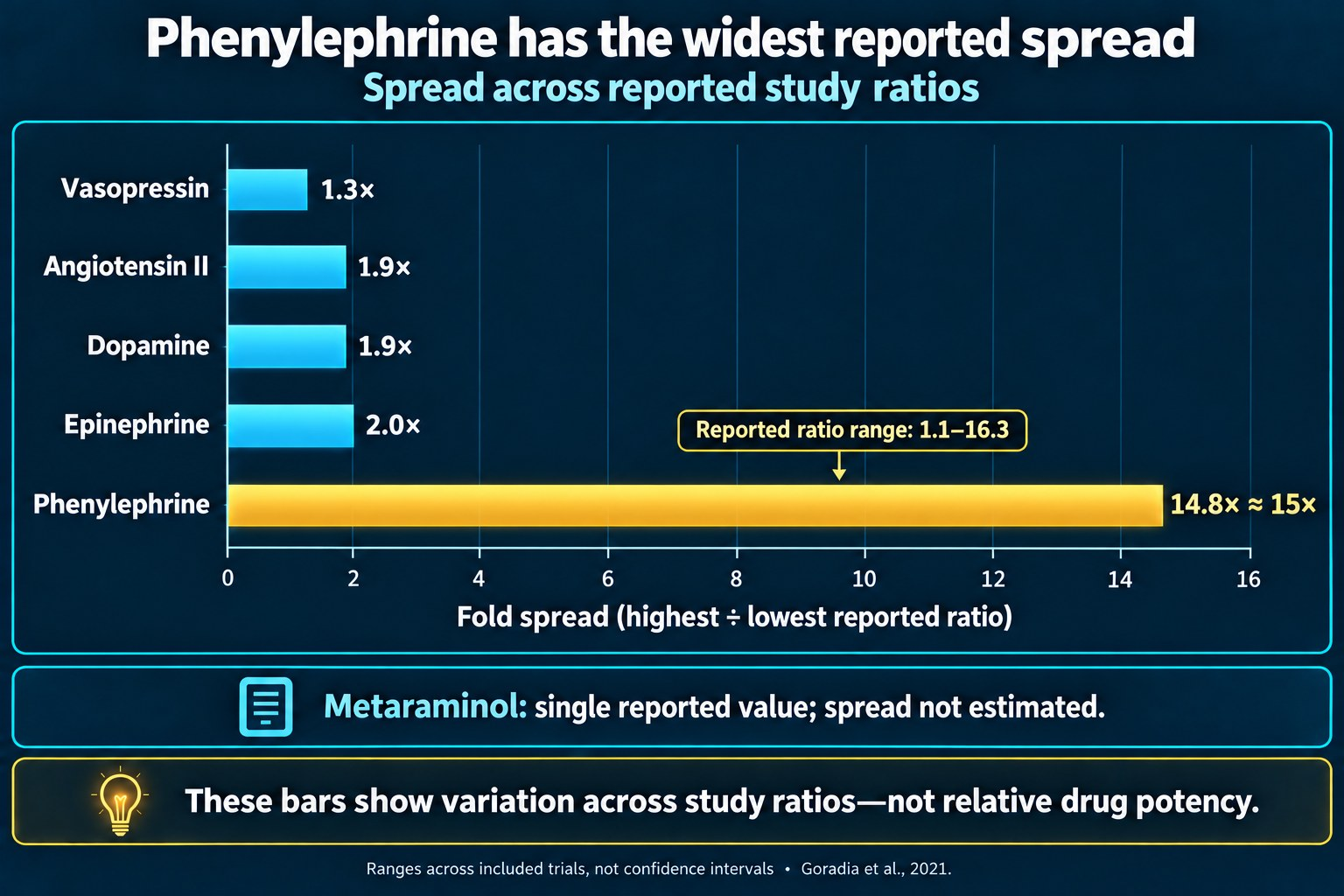
A scoping review screened 16,315 articles and included 21 clinical trials comparing the potency of at least two intravenous vasopressors against a blood pressure outcome. The conversion ratios equivalent to one unit of norepinephrine:1
| Agent | Reported range | Spread |
|---|---|---|
| Epinephrine | 0.7 – 1.4 | 2× |
| Vasopressin | 0.3 – 0.4 | 1.3× |
| Angiotensin II | 0.07 – 0.13 | 1.9× |
| Dopamine | 75.2 – 144.4 | 1.9× |
| Metaraminol | 8.3 | single value |
| Phenylephrine | 1.1 – 16.3 | 15× |
Phenylephrine is the problem. A fifteen-fold spread means the calculated norepinephrine equivalent for a patient on phenylephrine can differ by more than an order of magnitude depending on which trial’s factor is applied. Most modern formulas use ÷ 10, but some studies have used ÷ 2.2 — and using the lower divisor artificially inflates the apparent norepinephrine dose, which matters when the number is being used as a trial eligibility threshold or an outcome.2
This is in the app, with the infusion and vasopressor calculators — free tier, no card. Get it →
The formulas
Goradia 2021 — the scoping review’s proposal
All in mcg/kg/min except vasopressin in units/min:1
Kotani 2023 — the updated version
Same units. Eleven terms rather than seven, because it adds agents the 2021 formula did not cover:3
Only two coefficients actually moved. Norepinephrine, epinephrine, dopamine at 1/100, metaraminol at 1/8 and vasopressin at 2.5 are identical in both formulas — so a patient on dopamine or metaraminol scores the same either way.
| Agent | Goradia 2021 | Kotani 2023 |
|---|---|---|
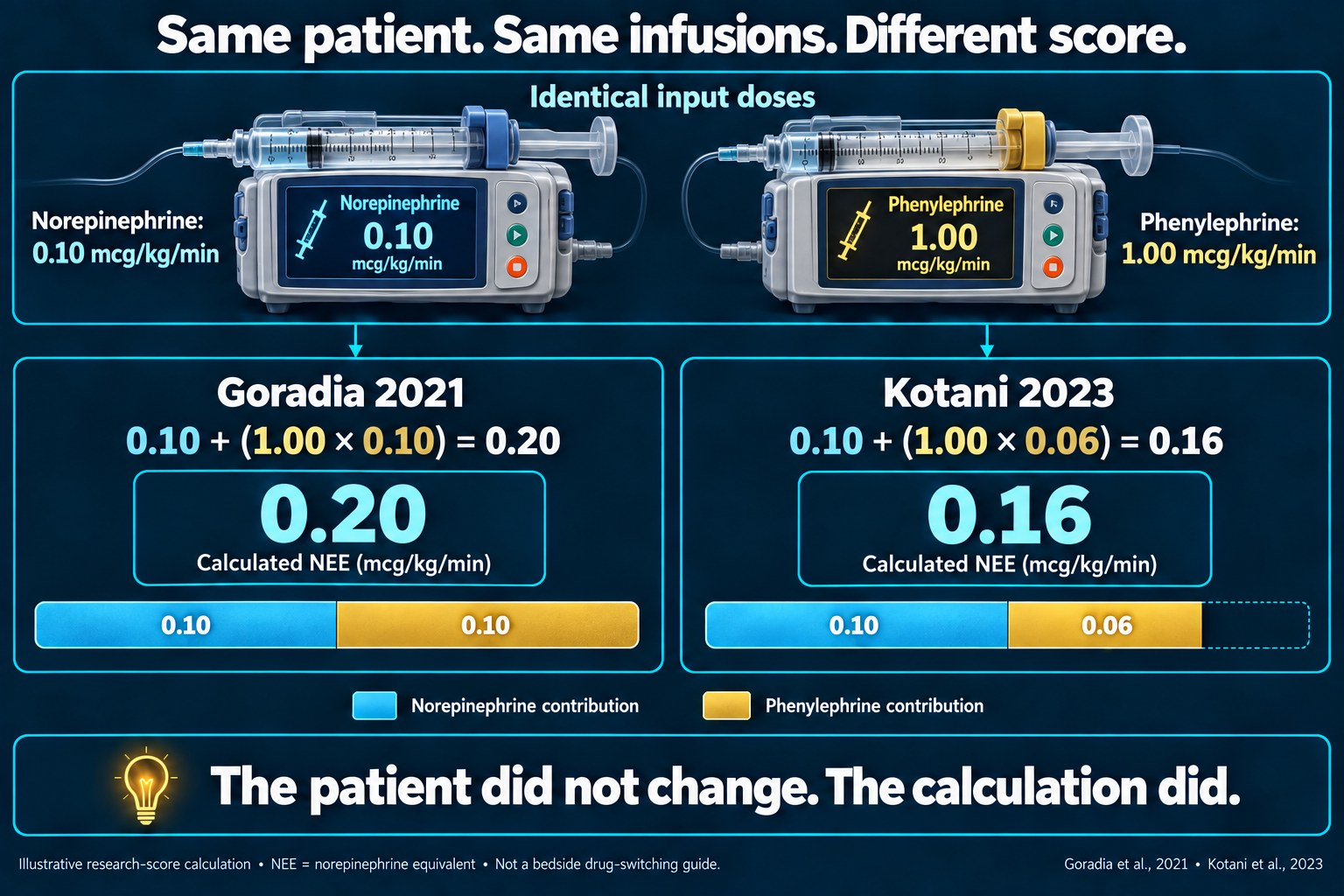
| Phenylephrine | ÷ 10 (i.e. 0.1) | 0.06 |
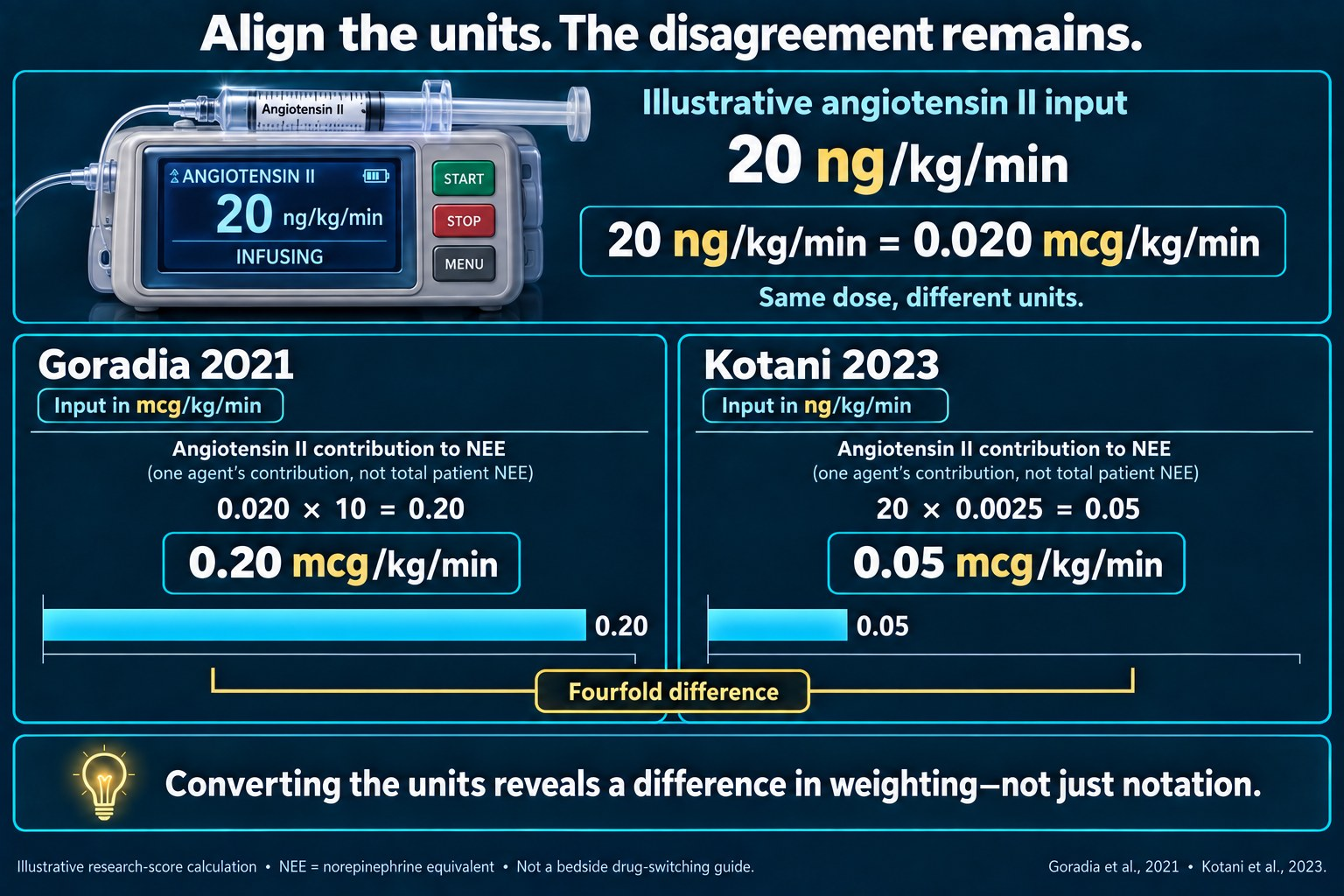
| Angiotensin II | × 10, in mcg/kg/min | 0.0025, in ng/kg/min |
| Terlipressin, methylene blue, hydroxocobalamin, midodrine | Not included | Added |
Note that 0.06 is not 1/10 — it is closer to 1/16, at the far end of the 1.1 to 16.3 range the scoping review itself reported for phenylephrine.1 Two published formulas, both current, differing by a factor of nearly two on the same drug.
The angiotensin II difference is larger and easier to miss, because the units change with the coefficient. Converted to a common basis, Goradia weights it at 10 per mcg/kg/min against Kotani’s 2.5 — a fourfold disagreement on the agent with the least established conversion of any in either formula. An independent post-hoc analysis of the ARAMIS trial supports a ratio near 10:1 for norepinephrine to angiotensin II, illustrating how much the choice of source trial drives the coefficient.12
VASST — the one embedded in trial protocols
Older, uses mcg/min rather than mcg/kg/min for most agents, and still gets written into trial documents. The version below is reproduced verbatim in the cytokine release syndrome grading appendix of a phase I cell therapy protocol:4
The mixed units are a genuine trap — dopamine is weight-indexed while the others are not.
What it is used for, and what it is not
Legitimate uses
- Trial eligibility and outcomes — vasopressor-free days, entry thresholds for shock trials.
- Tracking escalation in one patient over time, provided the same formula is used throughout.
- Describing severity in a way that is comparable across patients on different agents.
Where it misleads
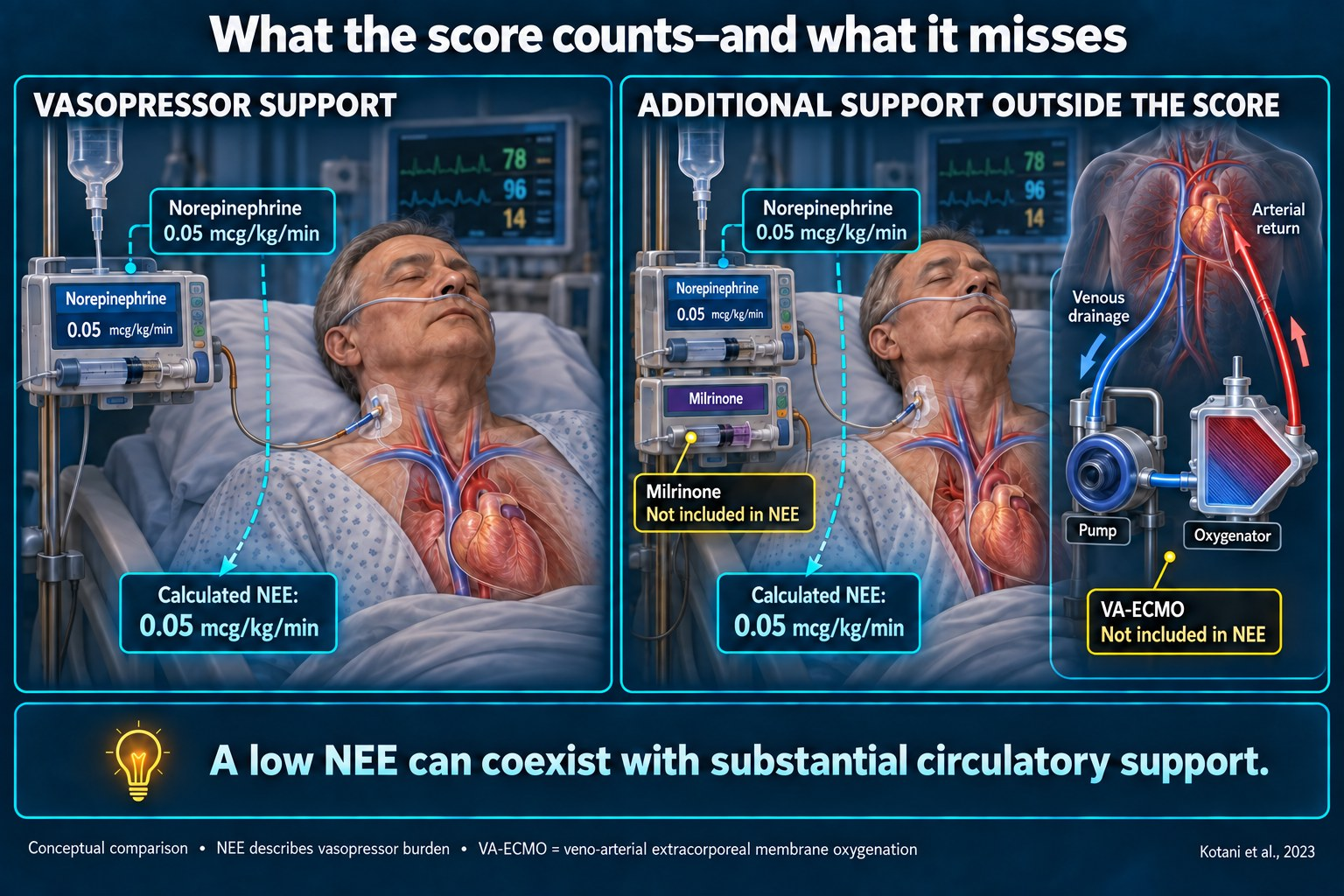
It measures vasopressor burden, not hemodynamic support. A patient with severe low cardiac output syndrome on veno-arterial ECMO and moderate-to-high dose inotropes, receiving only low-dose norepinephrine, will have a norepinephrine equivalent that is disproportionately low relative to the actual intensity of support.3 The score cannot see inotropes or mechanical circulatory support, and integrating them is genuinely difficult because mean arterial pressure is the single efficacy measure for vasopressors while inotropes and mechanical support are judged on other parameters.3
Two further limits worth stating:
- The conversion factors rest on unclear evidence. No prospective study has been done with the primary objective of determining the norepinephrine equivalence of the other agents; the published factors are inferences drawn from trials designed to answer other questions.5
- Novel agents lack established conversions, angiotensin II most notably, where the reported range spans nearly twofold and the two current formulas differ fourfold on the coefficient once units are aligned (10 versus 2.5 per mcg/kg/min).1,3,12
Thresholds
Conventions vary and no single validated cutoff exists. A norepinephrine equivalent above roughly 0.25–0.5 mcg/kg/min is commonly described as high-dose support, but that band originates largely from the Surviving Sepsis Campaign threshold at which vasopressin is typically added rather than from an outcome-validated definition.13 The externally validated cutoffs from a large multicenter dataset are lower — 0.2 and 0.4 mcg/kg/min, separating low, intermediate and high cardiovascular failure, with hospital mortality of roughly 14%, 26% and 40% across those bands.7 For a “very high” dose associated with excess mortality, published thresholds range widely from 0.5 to 2 mcg/kg/min, converging on about 1, so a single 0.5 cutoff labeled “refractory vasoplegia” overstates the consistency of the evidence.8
An individual protocol may define high-dose by monotherapy thresholds instead. The one cited here sets norepinephrine ≥ 20 mcg/min, phenylephrine ≥ 200 mcg/min, epinephrine ≥ 10 mcg/min and dopamine ≥ 10 mcg/kg/min, and qualifies the whole table with “all doses are required for > 3 hours” — so each figure is a sustained requirement, not a number touched once. Where more than one agent is running it applies the VASST equation, and it applies it to vasopressin as well: a norepinephrine equivalent of ≥ 10 mcg/min on top of vasopressin, or ≥ 20 mcg/min for combinations that do not contain vasopressin.4
Those numbers are one institution’s operational definition, written to grade cytokine release syndrome in a single phase I trial. They show how a protocol can make “high-dose” countable; they are not a convention, and nothing establishes them outside that document.4
The obstetric setting
Obstetric anesthesia is where the phenylephrine–norepinephrine ratio has actually been measured directly, in dose-response studies designed for that purpose — but even here the answer depends on whether the drugs are given as boluses or infusions.
Bolus studies cluster near the ÷ 10 convention. In 100 consecutive patients treated for post-spinal hypotension during elective cesarean section, the relative potency ratio of norepinephrine to phenylephrine was 11.3 (95% CI 8.1–16.9), making phenylephrine 100 mcg approximately equivalent to norepinephrine 9 mcg.6 A graded random-allocation bolus study found a similar ratio of about 13.1 (phenylephrine 100 mcg ≈ norepinephrine 8 mcg).9
Infusion studies diverge. One up-and-down infusion study reported a ratio near 12.6, close to the bolus figures, but another found a substantially lower ratio of about 6:1 — in that study the ÷ 10 convention would have underestimated the norepinephrine dose.10,11 So infusion-derived ratios span roughly 6 to 13, a twofold disagreement between two studies of the same route, rather than settling on either value. The spread across these directly measured studies mirrors the 1.1–16.3 range the scoping review reported and reinforces that no single conversion factor is correct for every context.1
For the agent-selection question in that setting, see spinal anesthesia in elderly patients, where norepinephrine versus phenylephrine is discussed on cardiac output grounds.
Practical reading
- State which formula you used. A norepinephrine equivalent without a named formula is not a reproducible number.
- Use the same formula throughout a comparison. Most of the disagreement disappears when the question is escalation in one patient rather than comparison across studies.
- Do not use it as a bedside conversion. It exists to describe burden retrospectively, not to switch a patient from one agent to another.
- Read a low number skeptically in a patient on inotropes or mechanical support.
- Vasoplegia after bypass is where it misleads most. A vasodilated high-output state and a failing ventricle need opposite treatment and the score cannot tell them apart — separating the two on echo before escalating is part of the separation checklist.
Frequently asked questions
How do you calculate norepinephrine equivalents?
The most commonly cited formula, from a 2021 scoping review, is: norepinephrine + epinephrine + phenylephrine/10 + dopamine/100 + metaraminol/8 + vasopressin×2.5 + angiotensin II×10, all in mcg/kg/min except vasopressin in units/min.1 A 2023 update keeps the norepinephrine, epinephrine, dopamine, metaraminol and vasopressin terms unchanged, uses 0.06 × phenylephrine instead of ÷ 10, revises the angiotensin II term, and adds terlipressin, methylene blue, hydroxocobalamin and midodrine.3 The older VASST formula uses mcg/min with dopamine divided by 2.4 Always state which formula was used.
What is the phenylephrine to norepinephrine conversion?
Conventionally 10:1 — phenylephrine divided by 10. But this is the least settled of all the conversions: the reported range across trials is 1.1 to 16.3 for one unit of norepinephrine, a fifteen-fold spread.1 Some studies have used 2.2:1, which inflates the calculated norepinephrine equivalent substantially compared with the modern convention.2 Directly measured obstetric studies land near 11–13 for boluses but as low as ~6 for infusions.6,9,10,11
What counts as a high dose of vasopressor?
A norepinephrine equivalent above roughly 0.25–0.5 mcg/kg/min is commonly described as high-dose support, but that band derives largely from the Surviving Sepsis Campaign vasopressin add-on threshold rather than an outcome-validated cutoff.13 Externally validated cutoffs are lower — 0.2 and 0.4 mcg/kg/min separating low, intermediate and high cardiovascular failure, with hospital mortality of roughly 14%, 26% and 40%.7 Thresholds for “very high” or refractory dose range widely, from 0.5 to 2, converging on about 1 mcg/kg/min.8 An individual protocol may set monotherapy thresholds instead (e.g. norepinephrine ≥ 20 mcg/min, phenylephrine ≥ 200 mcg/min, sustained > 3 hours), but those are one trial protocol’s definition, not a general one.4
What is the vasopressin norepinephrine equivalent?
Vasopressin in units per minute is multiplied by 2.5. This is one of the more consistent conversions — the reported range for the underlying ratio is narrow, 0.3 to 0.4 units equivalent to one unit of norepinephrine.1
Can norepinephrine equivalents be used to switch a patient between agents?
No. It is a research convention for describing total vasopressor burden retrospectively, built on conversion factors inferred from trials designed to answer other questions.5 No prospective study has been done with the primary objective of establishing these equivalences.
Why does a patient on ECMO have a low norepinephrine equivalent?
Because the score cannot see mechanical circulatory support or inotropes. A patient on veno-arterial ECMO with moderate-to-high dose inotropes and low-dose norepinephrine will have a norepinephrine equivalent that is disproportionately low relative to the actual intensity of hemodynamic support.3
References
- Goradia S, Sardaneh AA, Narayan SW, Penm J, Patanwala AE. Vasopressor dose equivalence: a scoping review and suggested formula. J Crit Care. 2021;61:233–240. PMID 33220576. 16,315 articles screened, 21 included.
- High dose vasopressors: never surrender. PulmCrit / EMCrit. emcrit.org/pulmcrit/high-dose-vasopressor. Discusses the effect of the 2.2:1 versus 10:1 phenylephrine convention on calculated norepinephrine equivalents.
- Kotani Y, Di Gioia A, Landoni G, Belletti A, Khanna AK. An updated “norepinephrine equivalent” score in intensive care as a marker of shock severity. Crit Care. 2023;27(1):29. doi:10.1186/s13054-023-04322-y. PMID 36670410. Eleven-term formula; dopamine 1/100 and metaraminol 1/8 unchanged from 2021, phenylephrine moves to 0.06, angiotensin II to 0.0025 in ng/kg/min, terlipressin, methylene blue, hydroxocobalamin and midodrine added. Includes the ECMO and inotrope limitation. Erratum in: Crit Care. 2025;29(1):104, which sets the metaraminol factor at 1/8. doi:10.1186/s13054-025-05250-9. PMID 40055820.
- City of Hope National Medical Center IRB protocol 13384, a phase I trial of IL13Rα2-targeted CAR T cells in recurrent or refractory malignant glioma. ClinicalTrials.gov NCT02208362, study protocol and statistical analysis plan, Amendment V21, protocol dated 08/07/2023. clinicaltrials.gov/study/NCT02208362. Section 16.3.3, within Appendix C on cytokine release syndrome grading, is headed “High-dose vasopressors (all doses are required for > 3 hours)” and carries both the monotherapy thresholds and the VASST equation quoted on this page, including the separate norepinephrine-equivalent bars for vasopressin-containing and non-vasopressin combinations. The protocol names the equation the VASST Trial vasopressor equivalent equation without citing a publication; the trial it refers to is Russell JA, Walley KR, Singer J, et al. Vasopressin versus norepinephrine infusion in patients with septic shock. N Engl J Med. 2008;358(9):877–887. PMID 18305265.
- Norepinephrine equivalent dose of vasopressin, phenylephrine and epinephrine in septic shock patients: a prospective study. Sanjay Gandhi Postgraduate Institute of Medical Sciences. ClinicalTrials.gov NCT06499467, registered 12 July 2024. Trial rationale noting that no prospective study has primarily determined the norepinephrine equivalence of the other agents.
- Mohta M, Dubey M, Malhotra RK, Tyagi A. Comparison of the potency of phenylephrine and norepinephrine bolus doses used to treat post-spinal hypotension during elective caesarean section. Int J Obstet Anesth. 2019;38:25–31. doi:10.1016/j.ijoa.2018.12.002. PMID 30685301. Bolus potency ratio 11.3 (95% CI 8.1–16.9) in 100 consecutive patients.
- Pölkki A, Pekkarinen PT, Hess B, et al. Noradrenaline dose cutoffs to characterise the severity of cardiovascular failure: data-based development and external validation. Acta Anaesthesiol Scand. 2024;68(10):1400–1408. doi:10.1111/aas.14519. PMID 39210783. Cutoffs of 0.2 and 0.4 mcg/kg/min separating low, intermediate and high cardiovascular failure; hospital mortality 14.0%, 26.4% and 40.2% across bands in the development cohort.
- Levy B, Fritz C, Tahon E, Jacquot A, Auchet T, Kimmoun A. Vasoplegia treatments: the past, the present, and the future. Crit Care. 2018;22(1):52. PMID 29486781. Notes that “very high dose” thresholds associated with excess mortality range from 0.5 to 2 mcg/kg/min, converging on about 1.
- Ngan Kee WD. A random-allocation graded dose-response study of norepinephrine and phenylephrine for treating hypotension during spinal anesthesia for cesarean delivery. Anesthesiology. 2017;127(6):934–941. PMID 28872480. Bolus potency ratio 13.1 (95% CI 10.4–15.8); phenylephrine 100 mcg ≈ norepinephrine 8 mcg (95% CI 6–10).
- Khatoon F, Kocarev M, Fernando R, et al. Optimal infusion rate of norepinephrine for prevention of spinal hypotension for cesarean delivery: a randomized controlled trial, using up-down sequential allocation. Anesth Analg. 2025;141(1):17–25. doi:10.1213/ANE.0000000000007231. PMID 39383097. Infusion-derived potency ratio 12.6 (95% CI 9.92–15.9).
- Qian J, Zhao YP, Deng JL, et al. Determination of the relative potency of norepinephrine and phenylephrine given as infusions for preventing hypotension during combined spinal-epidural anesthesia for cesarean delivery: a randomized up-and-down sequential allocation study. Front Pharmacol. 2022;13:942005. doi:10.3389/fphar.2022.942005. PMID 35910385. Infusion ED50 norepinephrine 0.061 versus phenylephrine 0.368 mcg/kg/min; relative potency ratio 6.03:1 (95% CI 5.26–6.98).
- See EJ, Chaba A, Spano S, et al. Exploring the norepinephrine to angiotensin II conversion ratio in patients with vasodilatory hypotension: a post-hoc analysis of the ARAMIS trial. J Crit Care. 2024;79:154453. doi:10.1016/j.jcrc.2023.154453. PMID 37890357. Median norepinephrine-equivalent to angiotensin II conversion ratio 10:1 (5:1 for norepinephrine base) in 37 patients.
- Evans L, Rhodes A, Alhazzani W, et al. Surviving Sepsis Campaign: international guidelines for management of sepsis and septic shock 2021. Crit Care Med. 2021;49(11):e1063–e1143. doi:10.1097/CCM.0000000000005337. PMID 34605781. Updated edition: Prescott HC, Antonelli M, Alhazzani W, et al. Surviving Sepsis Campaign: international guidelines for management of sepsis and septic shock 2026. Crit Care Med. 2026;54(4):725–812. doi:10.1097/CCM.0000000000007075. PMID 41869847. Norepinephrine first-line, vasopressin second-line and typically added at a norepinephrine equivalent of roughly 0.25–0.5 mcg/kg/min.
Further reading
- Surviving Sepsis Campaign: international guidelines for management of sepsis and septic shock (2021, updated 2026). Crit Care Med. Norepinephrine first-line, vasopressin second-line.13
Disclaimer. Reference information for licensed clinicians and students. Not a medical device, and not a substitute for clinical judgment. Norepinephrine equivalence is a research convention for describing burden and is not a bedside conversion between agents. Verify against your institutional protocol.
Infusion concentrations and vasoactive dosing ship inside Helix Anesthesia — a point-of-care reference built by a practicing CRNA, cited and available offline. See how we source clinical content.
Built for the anesthesia machine, not the desk. It opens in one tap, works with no signal in an OR that has none, and shows the citation on screen beside the number rather than making you go and find it.
Free tier, no card: every calculator, every crisis checklist, the full drug library and glossary, three complete regional blocks, five complete surgical cases, and 15 AI questions a month.
Get Helix Anesthesia How we source itSign up for our newsletter and special offers. New answer pages, improvements to the ones already here, and the occasional offer. Nothing else, and not often.